An exquisite late 18th-century oak Welsh dresser, divided into two parts, exemplifies the quintessential South Wales “pot board” design. This dresser is renowned for its harmonious blend of practical utility and restrained decorative charm. Unlike the enclosed North Wales dressers, which incorporate lower cupboards, this South Wales variant features an open pot board—a broad, sturdy bottom shelf originally intended for storing large butter crocks, mixing bowls, and heavy ironware. The open-backed rack above is characteristic of the period, enabling plates to rest directly against the wall, often nestled in shallow, pre-cut grooves. A decorative scalloped apron runs beneath five well-proportioned drawers, while elegantly turned legs rise to support the upper structure with both grace and solidity. Crafted from solid oak, the dresser benefits from a timber esteemed for exceptional durability and a warm, rich patina that deepens with centuries of use.
Originally, dressers such as this served as the central workhorse of the farmhouse kitchen—utilized for food preparation (the “dressing” of food), storage, and display—and were frequently regarded as a family’s prized possession, often passed down through generations or included in a daughter’s dowry.
Brasses replaced; however, date to period.
Size: 81” H x 69” W x 16” D
C. 1780, Wales
An exquisite late 18th-century oak Welsh dresser, divided into two parts, exemplifies the quintessential South Wales “pot board” design. This dresser is renowned for its harmonious blend of practical utility and restrained decorative charm. Unlike the enclosed North Wales dressers, which incorporate lower cupboards, this South Wales variant features an open pot board—a broad, sturdy bottom shelf originally intended for storing large butter crocks, mixing bowls, and heavy ironware. The open-backed rack above is characteristic of the period, enabling plates to rest directly against the wall, often nestled in shallow, pre-cut grooves. A decorative scalloped apron runs beneath five well-proportioned drawers, while elegantly turned legs rise to support the upper structure with both grace and solidity. Crafted from solid oak, the dresser benefits from a timber esteemed for exceptional durability and a warm, rich patina that deepens with centuries of use.
Originally, dressers such as this served as the central workhorse of the farmhouse kitchen—utilized for food preparation (the “dressing” of food), storage, and display—and were frequently regarded as a family’s prized possession, often passed down through generations or included in a daughter’s dowry.
Brasses replaced; however, date to period.
Size: 81” H x 69” W x 16” D
C. 1780, Wales

 Image 1 of 6
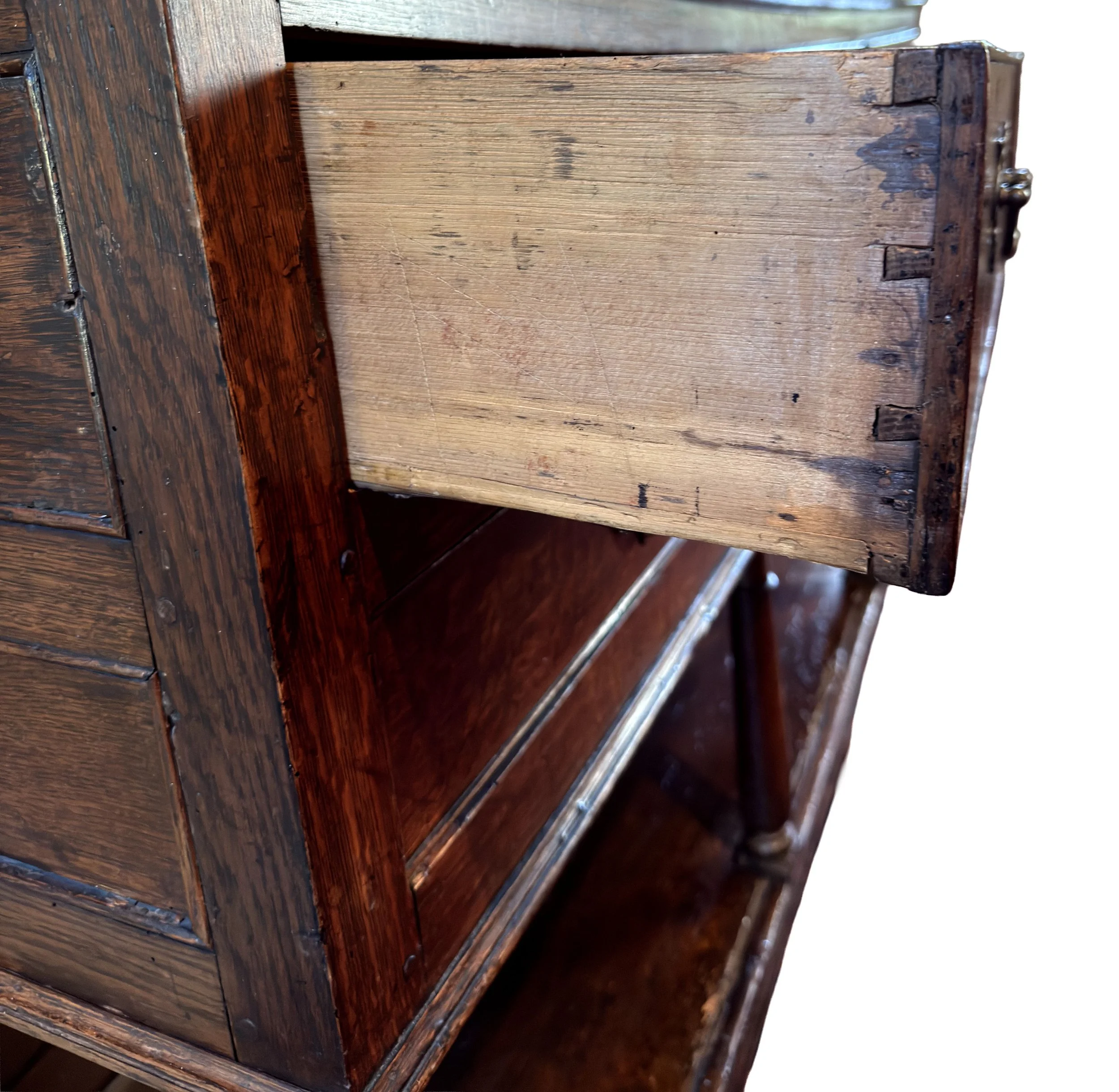 Image 2 of 6
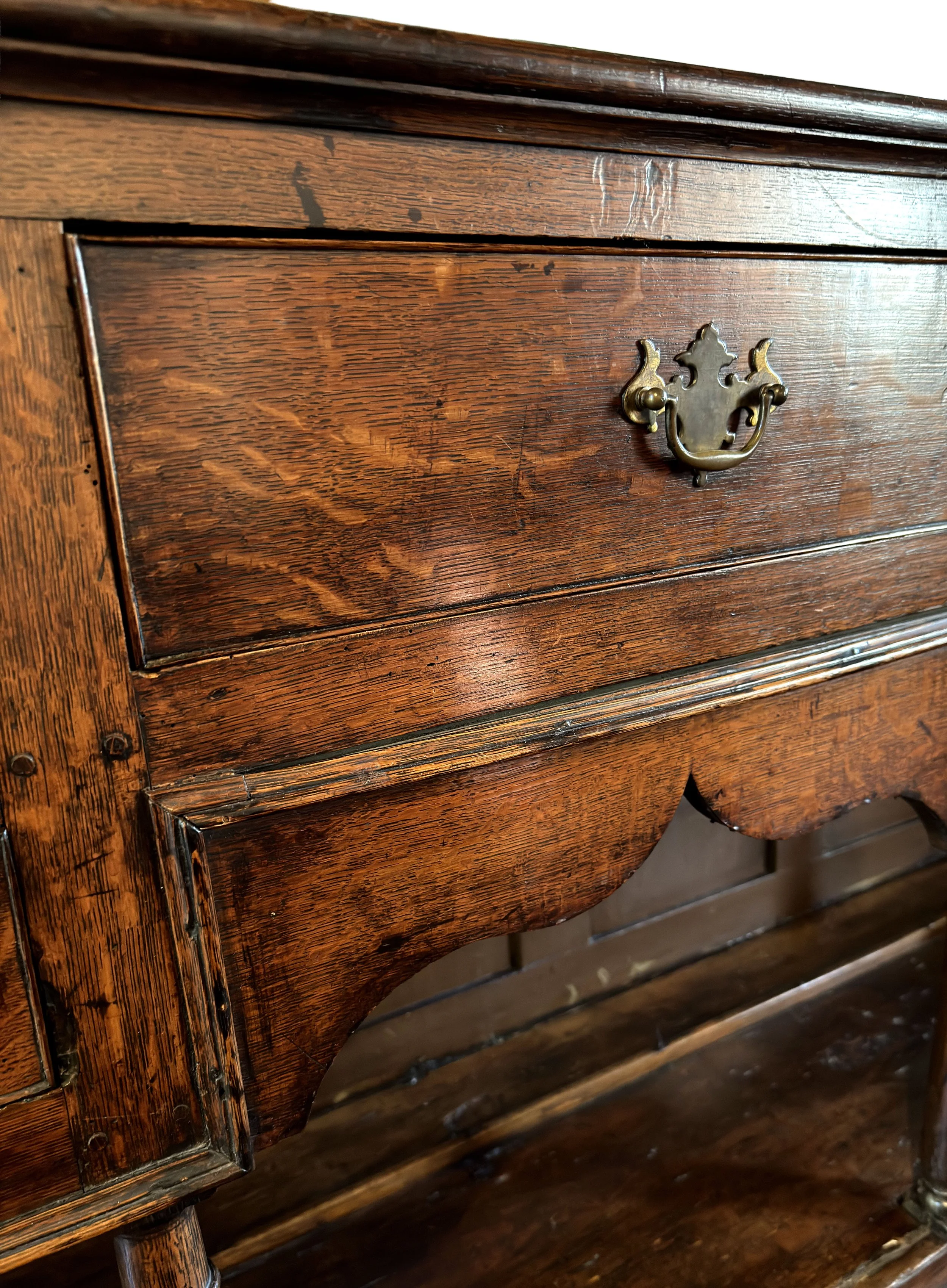 Image 3 of 6
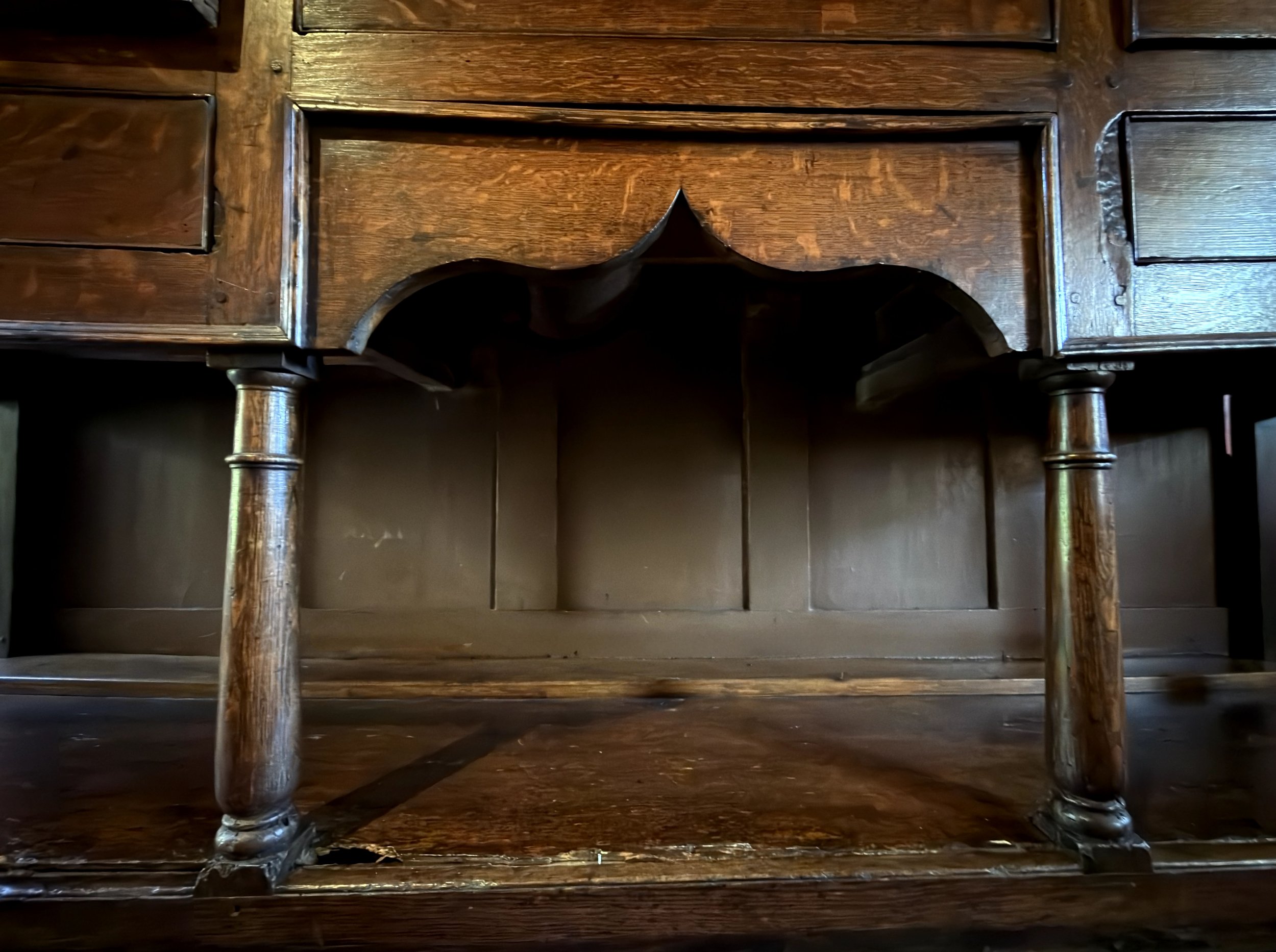 Image 4 of 6
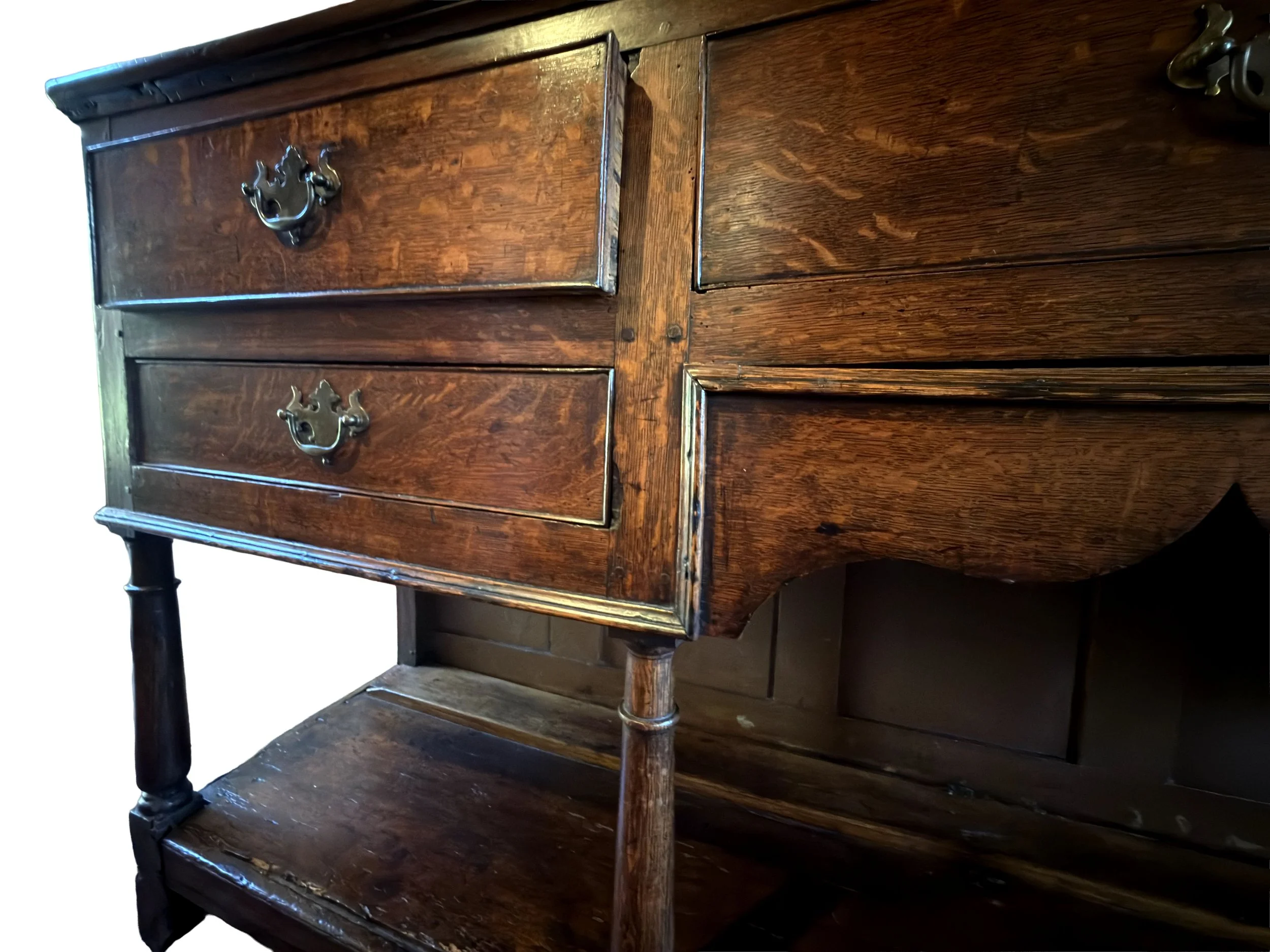 Image 5 of 6
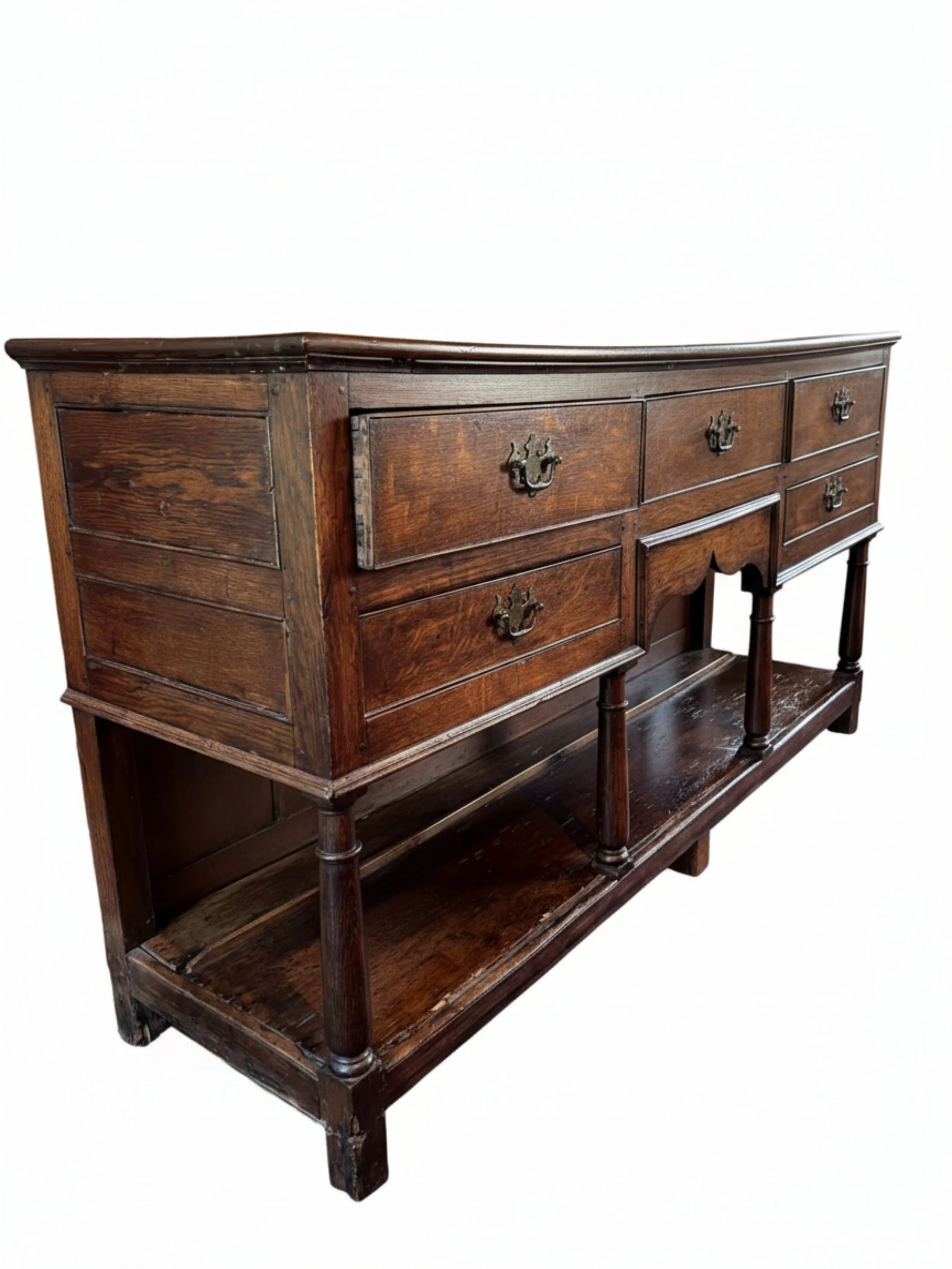 Image 6 of 6