Image 1 of 5
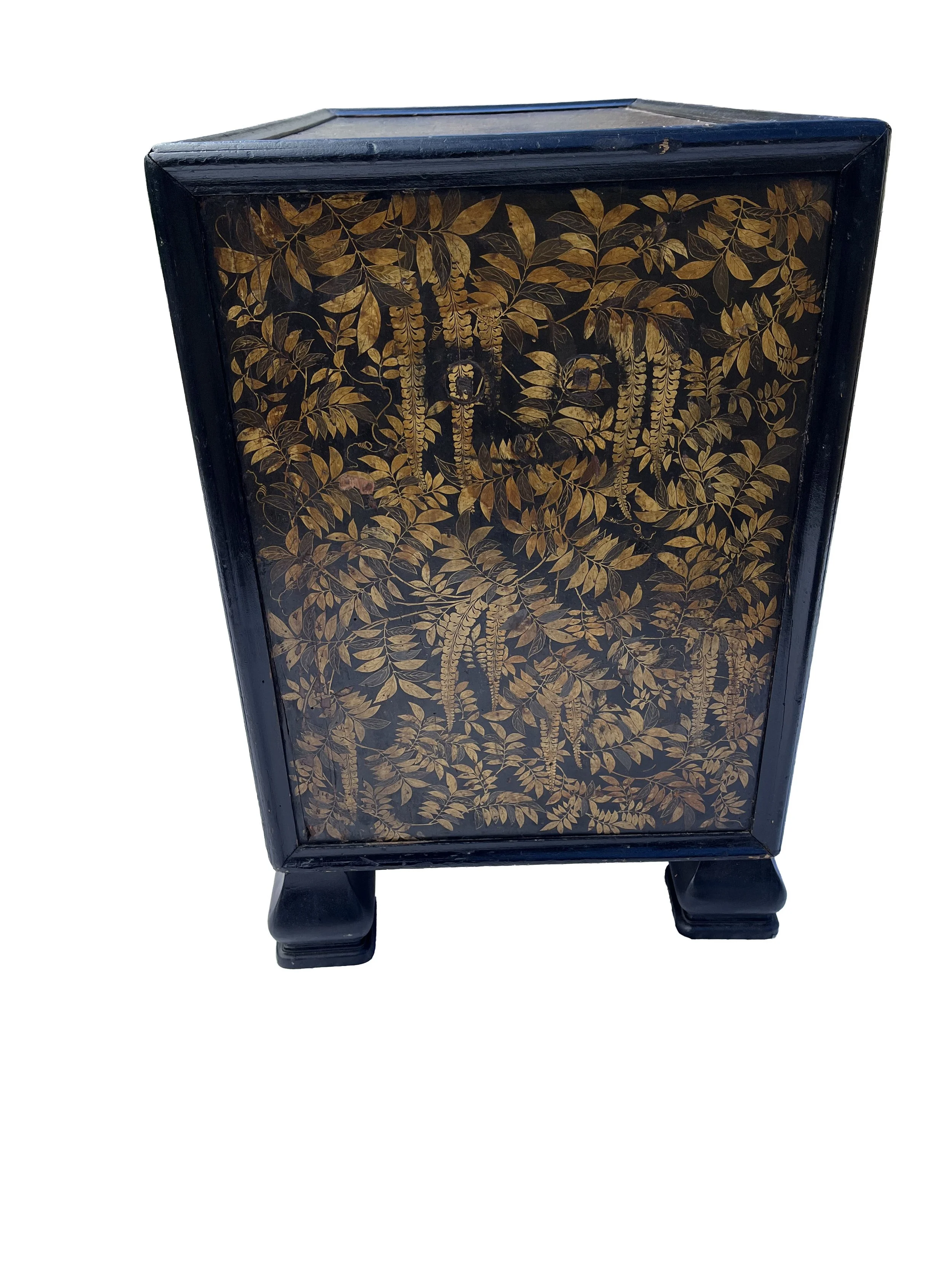 Image 2 of 5
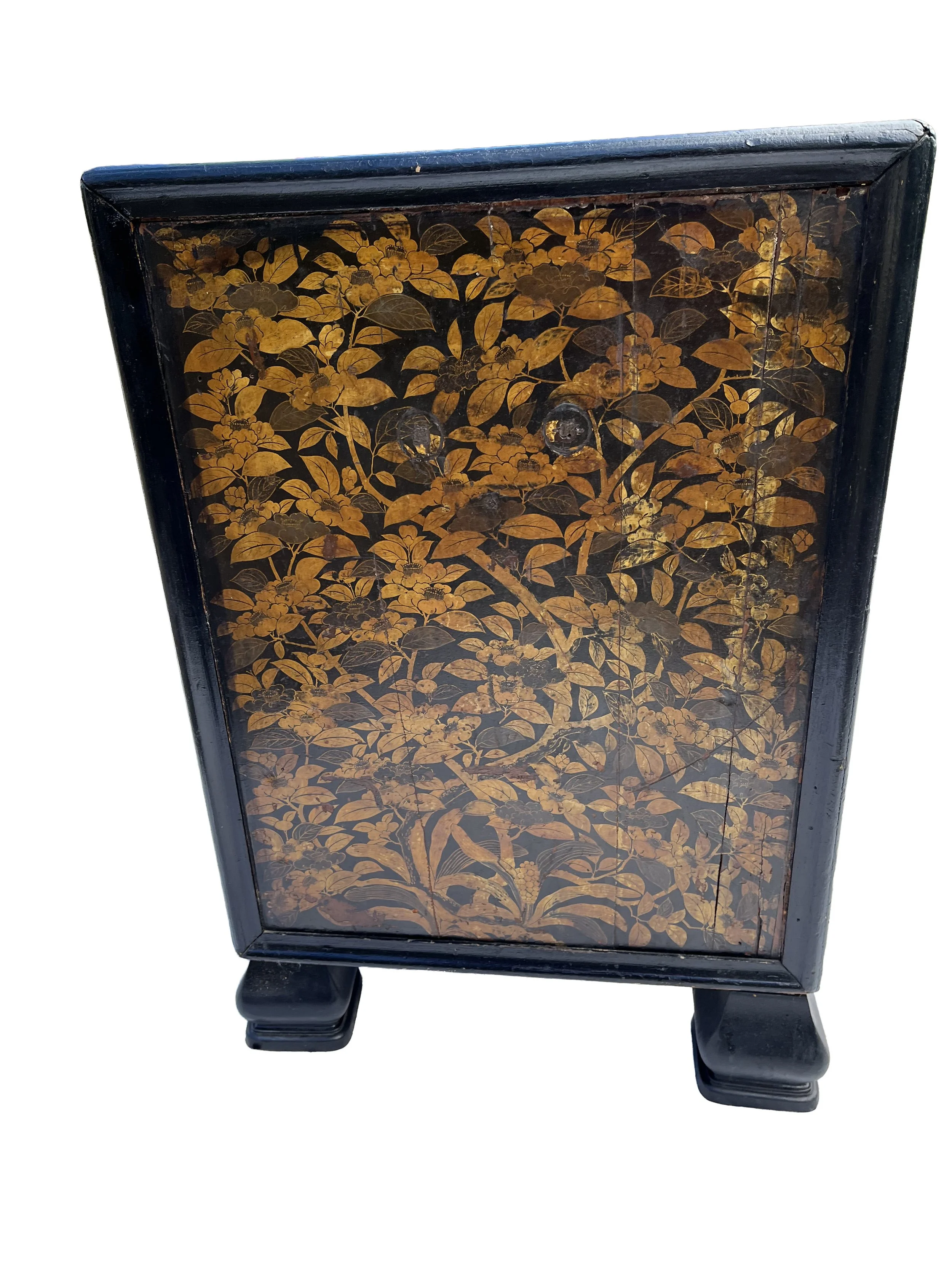 Image 3 of 5
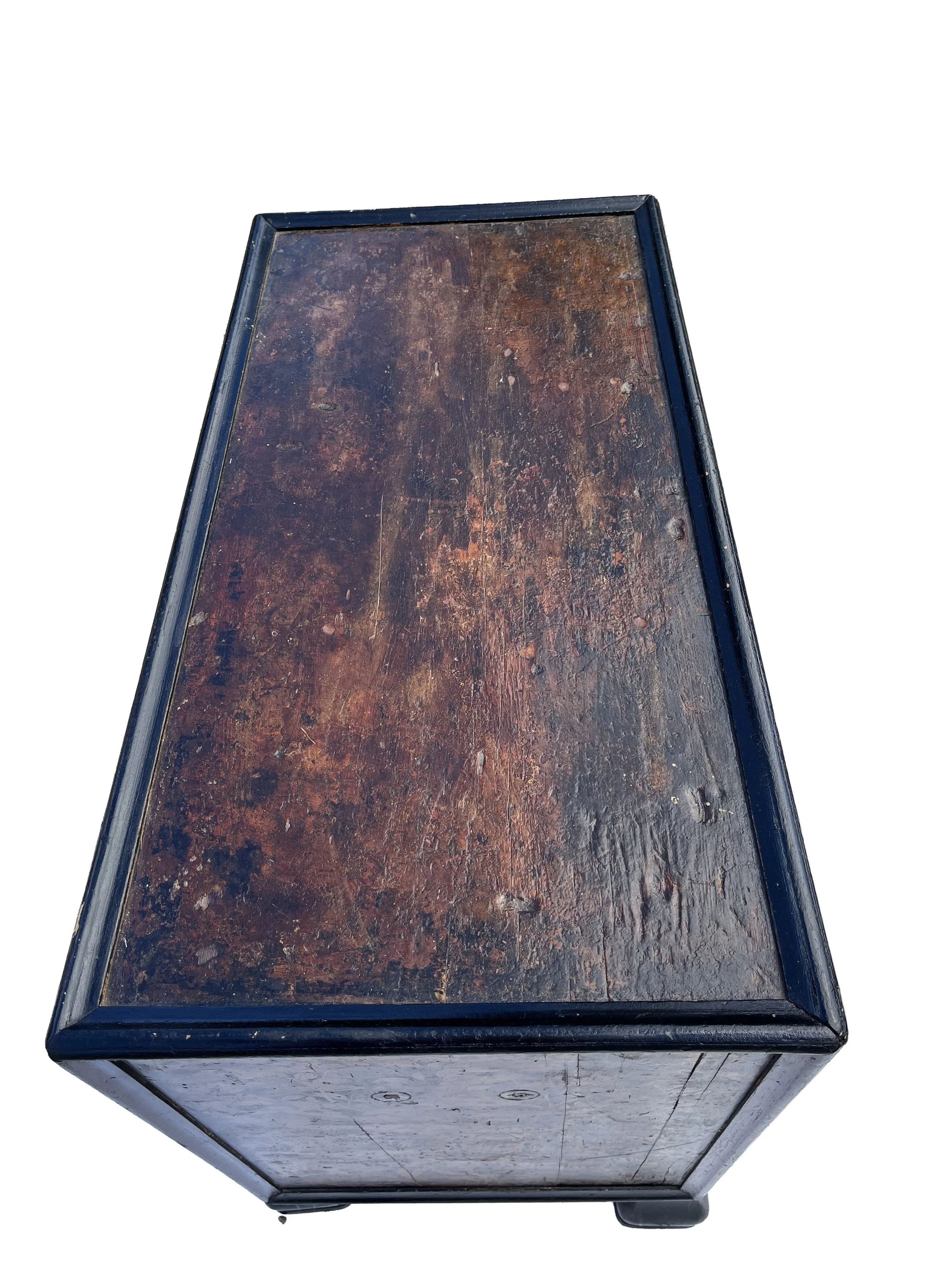 Image 4 of 5
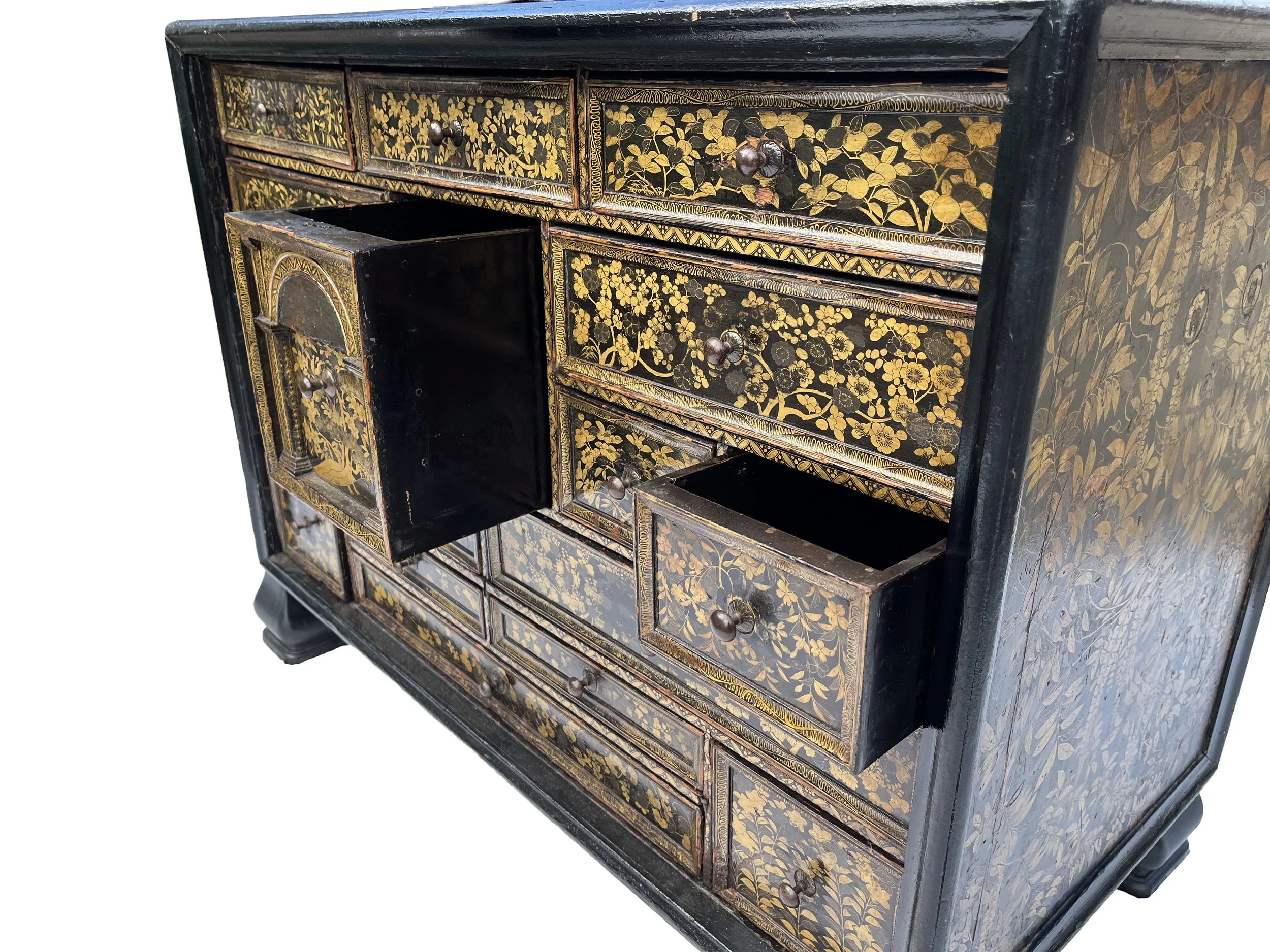 Image 5 of 5
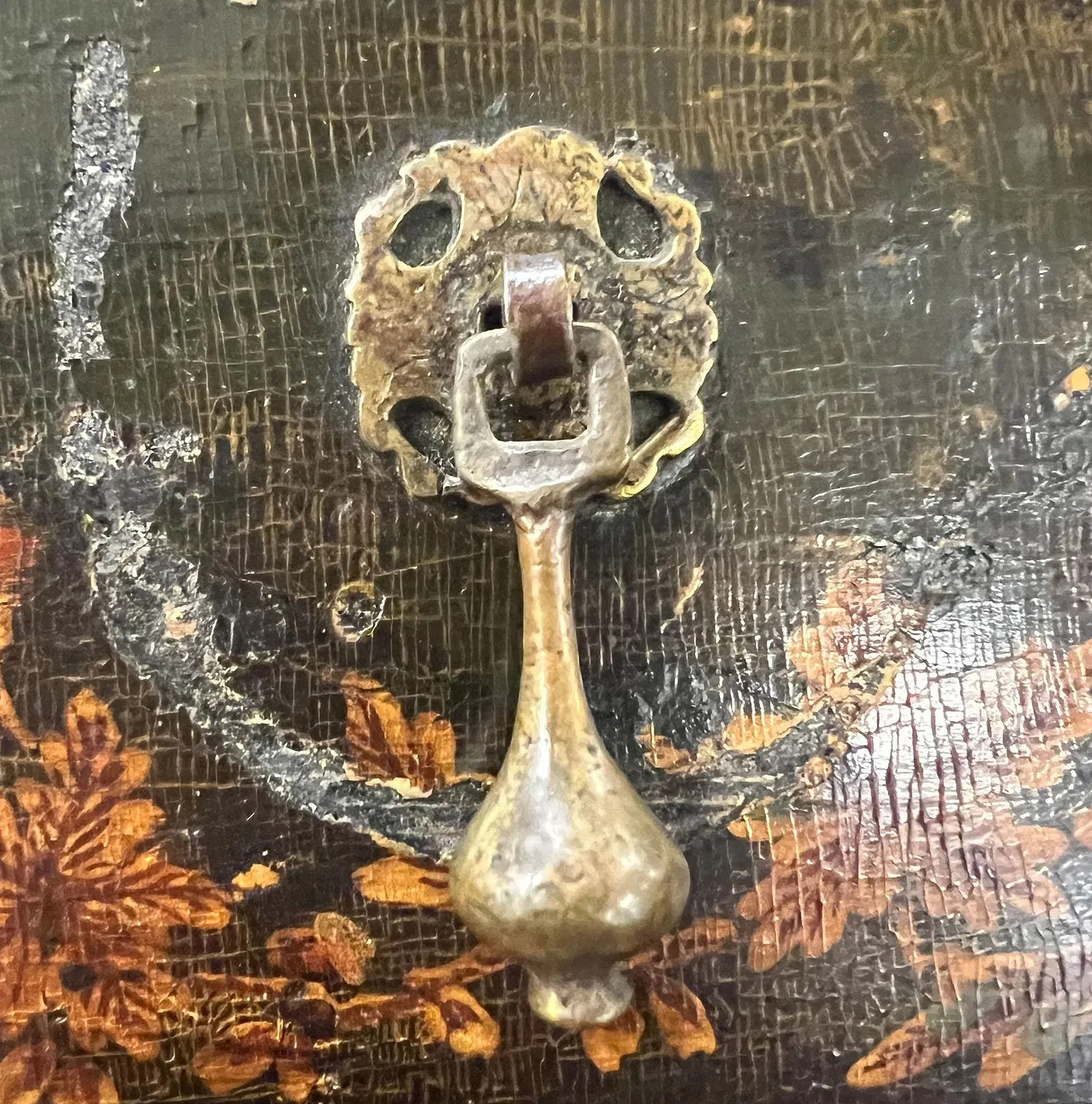
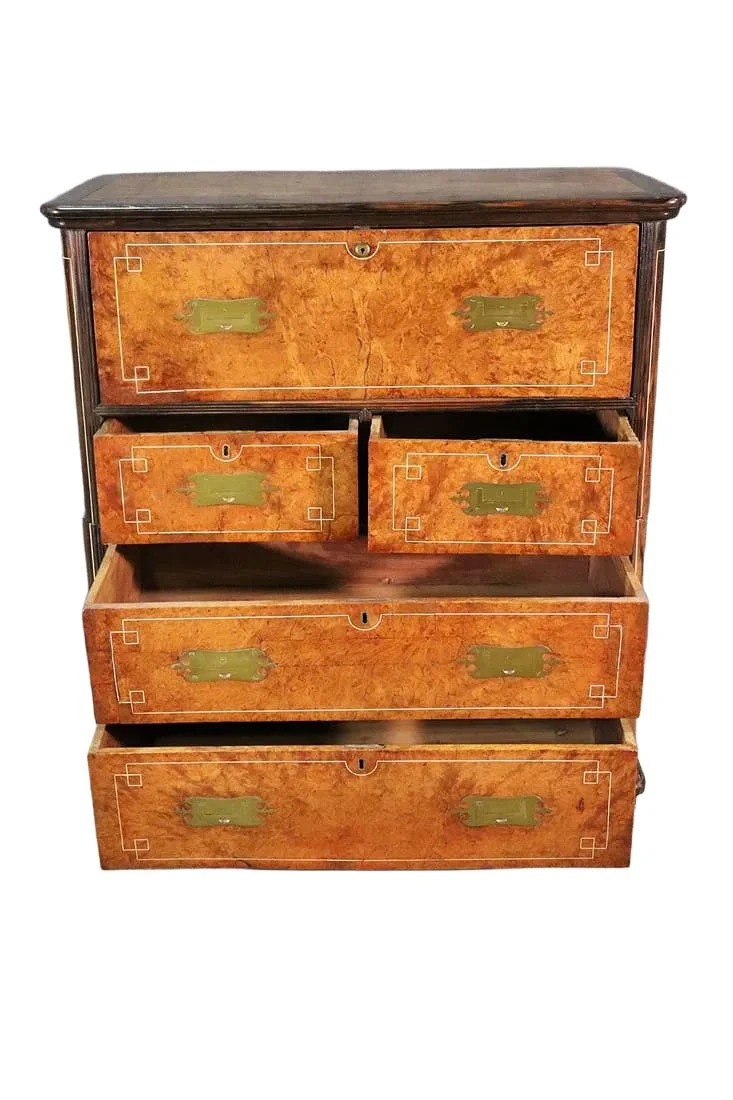
A rare 17th-century oak and pine Urushi Nanban-style Japanese export chest, originally crafted for the Portuguese market, is a remarkable artifact. It features seventeen drawers and is adorned with a deep black lacquer finish, often referred to as “japanned” in Western terminology. The chest is beautifully enhanced with extensive gold gilt ornamentation.
The drawer configuration is intricate and meticulously planned. It includes a central cabinet with an arched top, flanked by multiple smaller drawers designed for convenient access. This particular layout is typically associated with the storage of a diverse range of items, such as valuables, important documents, intimate correspondence, spices, or apothecary supplies. Each drawer is individually decorated with a distinct plant motif.
This piece stands as a striking statement object, offering significant historical resonance alongside notable artistic merit. While some light restoration has been undertaken, the piece retains its rarity, importance and charm.
Urushi Nanban-style refers to early 17th-century Japanese lacquerware for European markets, which combined Japanese techniques with Western shapes, creating a unique hybrid style.
Original carrying handles missing.
Size: 38” L x 20.5” D x 28.5” H
C. 1690, Japan
A rare 17th-century oak and pine Urushi Nanban-style Japanese export chest, originally crafted for the Portuguese market, is a remarkable artifact. It features seventeen drawers and is adorned with a deep black lacquer finish, often referred to as “japanned” in Western terminology. The chest is beautifully enhanced with extensive gold gilt ornamentation.
The drawer configuration is intricate and meticulously planned. It includes a central cabinet with an arched top, flanked by multiple smaller drawers designed for convenient access. This particular layout is typically associated with the storage of a diverse range of items, such as valuables, important documents, intimate correspondence, spices, or apothecary supplies. Each drawer is individually decorated with a distinct plant motif.
This piece stands as a striking statement object, offering significant historical resonance alongside notable artistic merit. While some light restoration has been undertaken, the piece retains its rarity, importance and charm.
Urushi Nanban-style refers to early 17th-century Japanese lacquerware for European markets, which combined Japanese techniques with Western shapes, creating a unique hybrid style.
Original carrying handles missing.
Size: 38” L x 20.5” D x 28.5” H
C. 1690, Japan