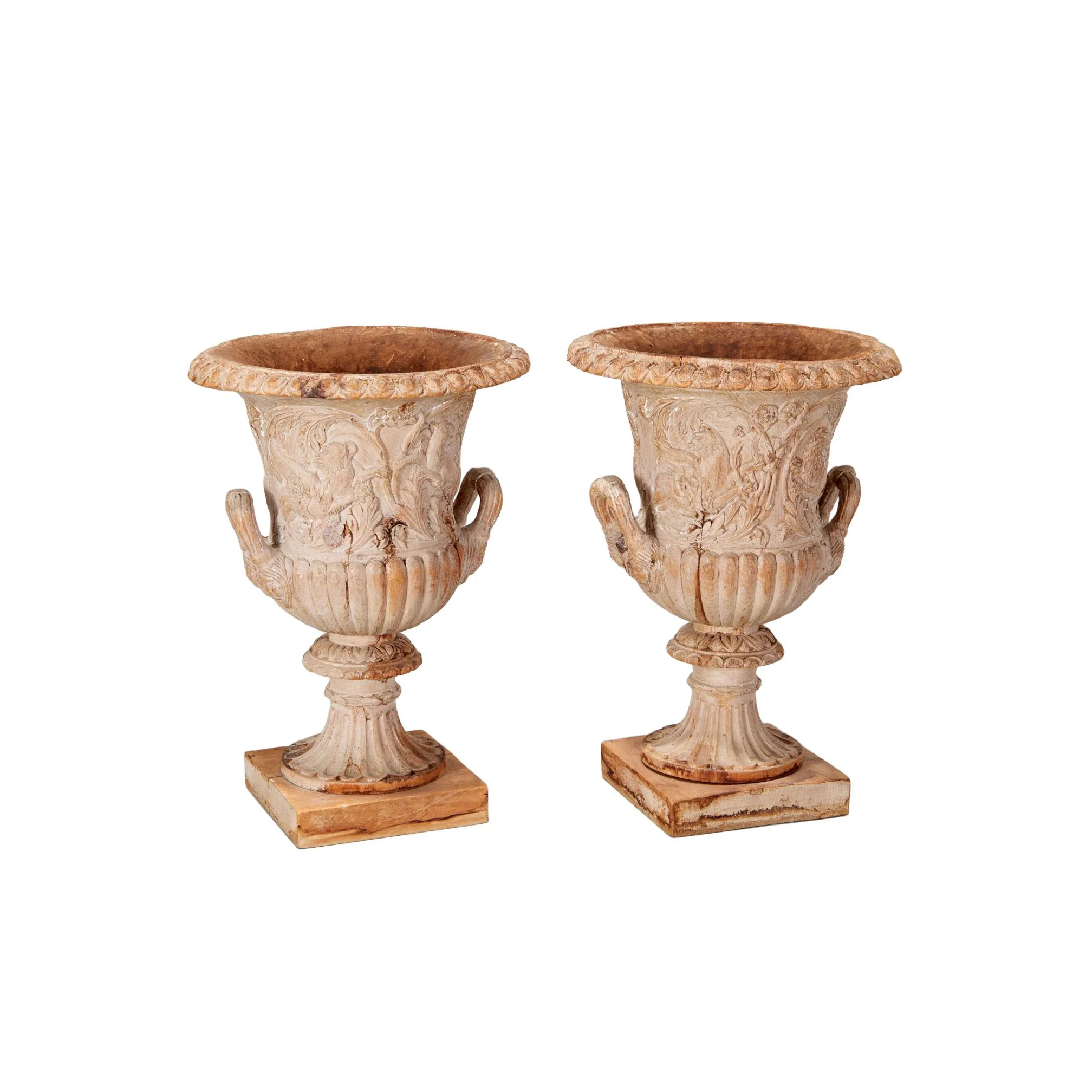
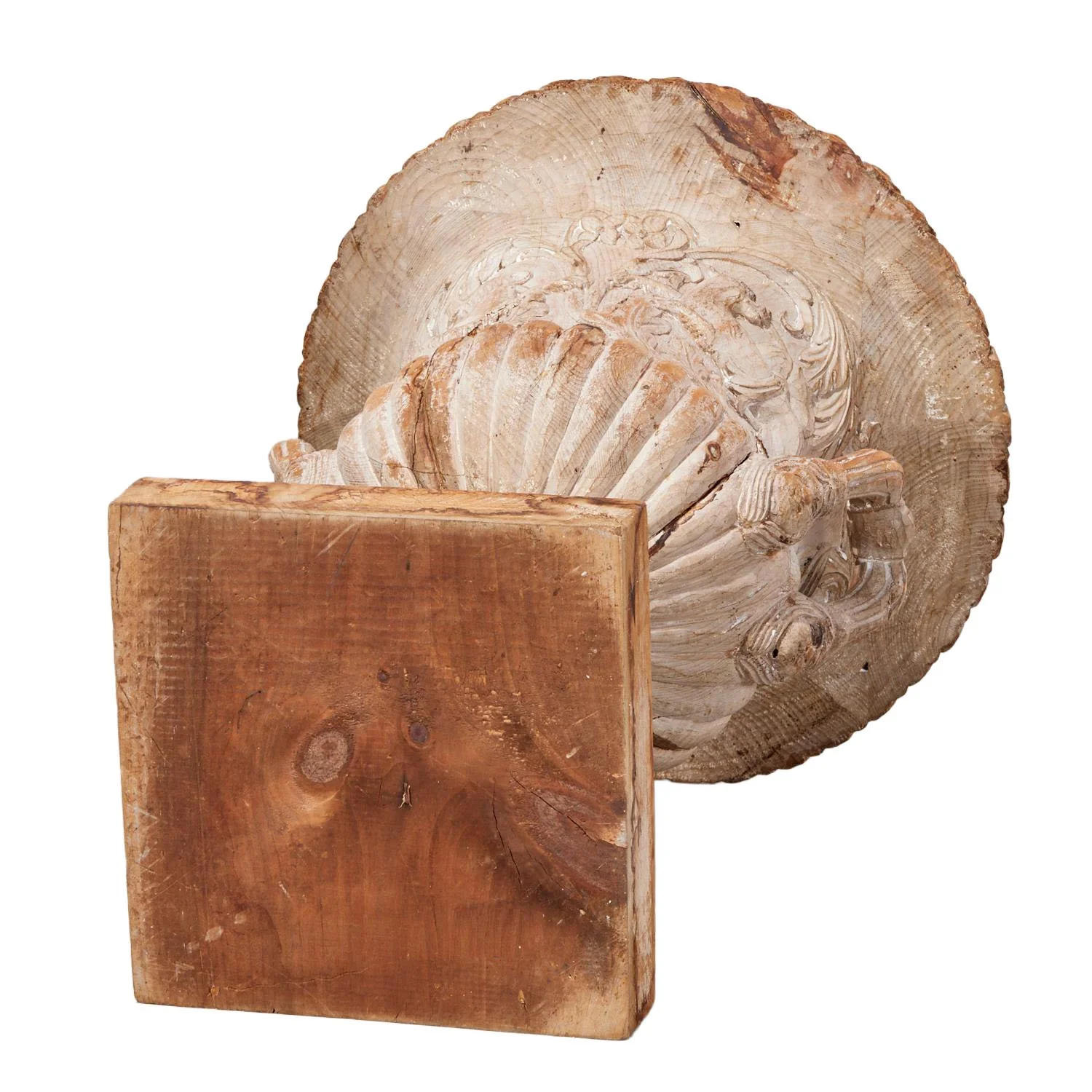
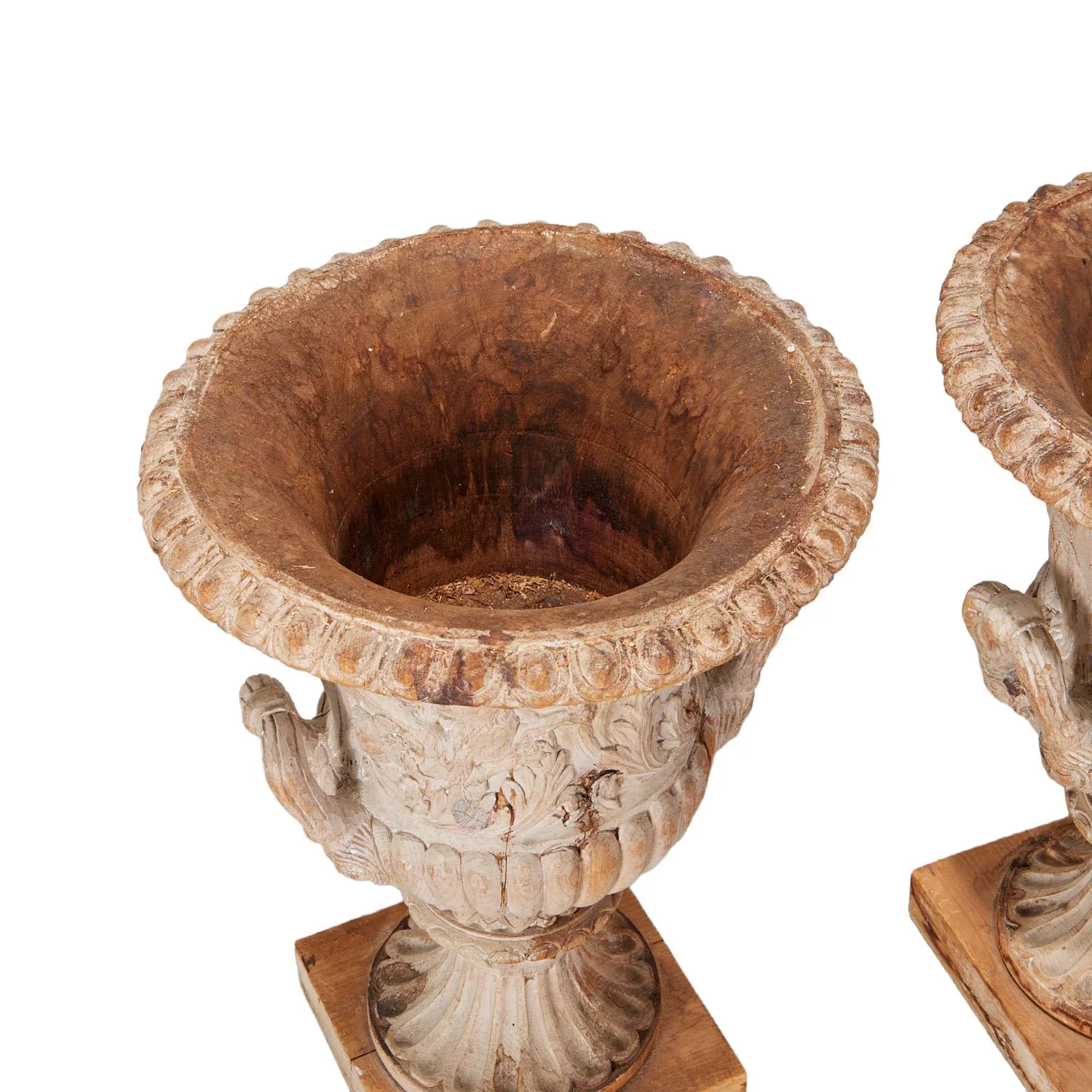
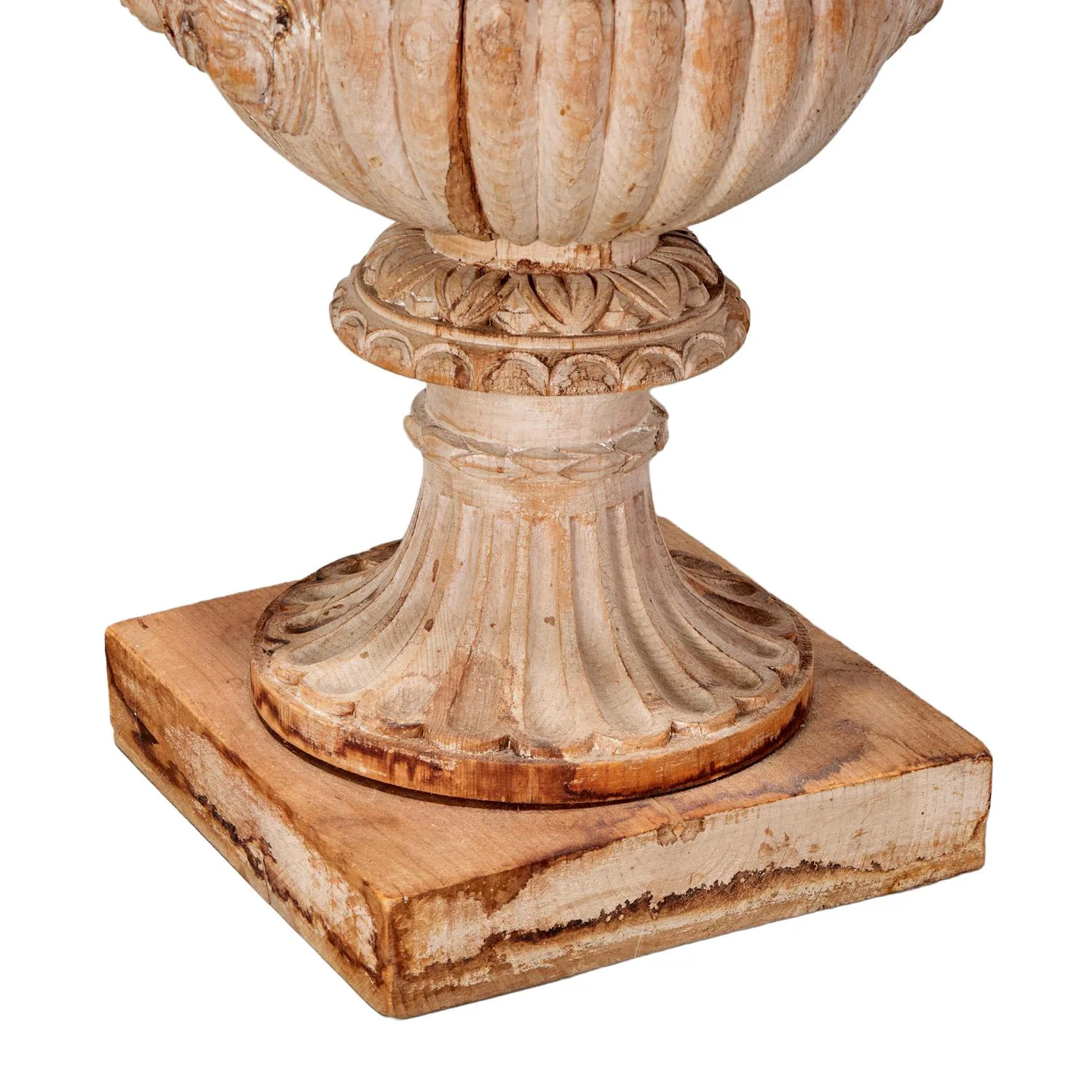
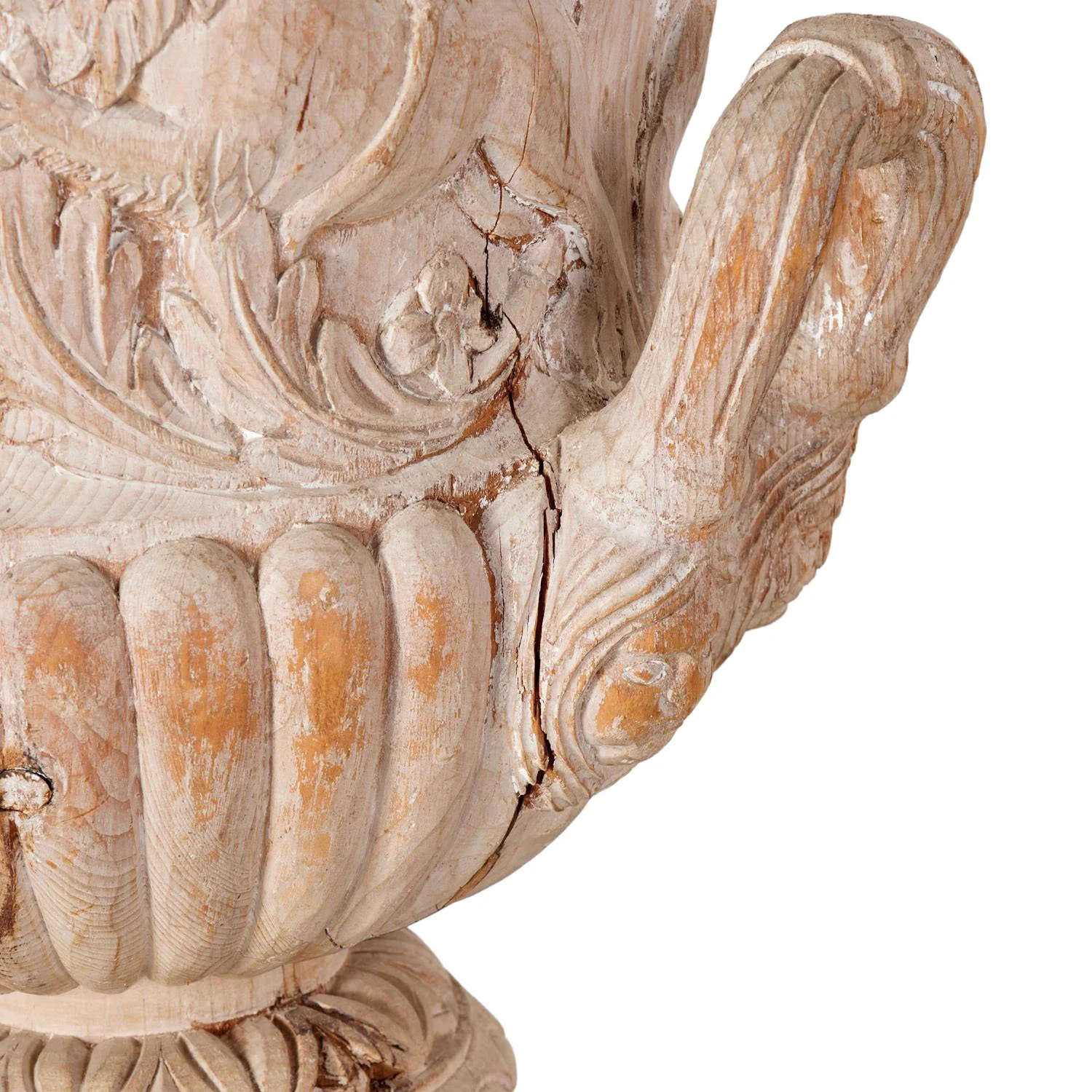
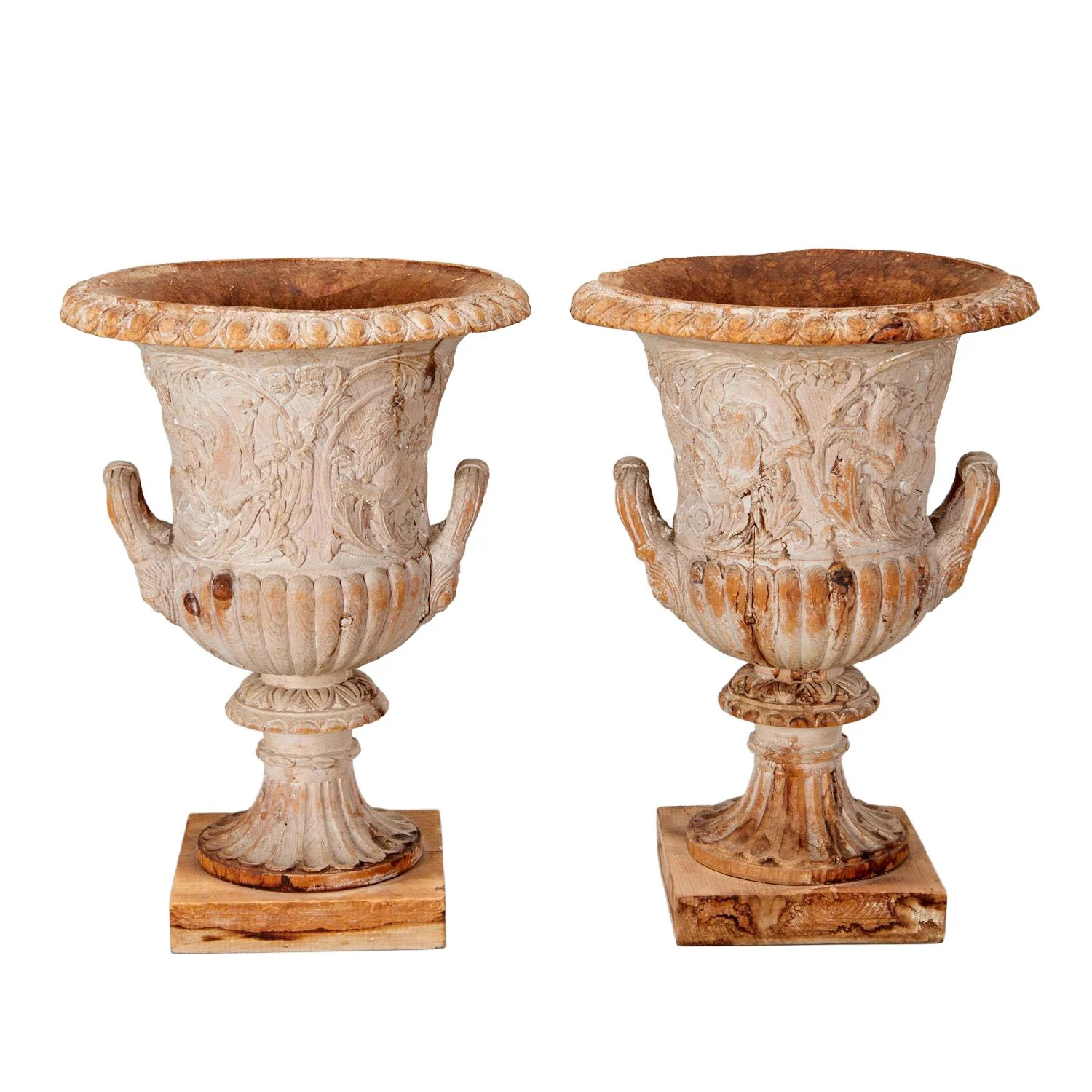
A remarkable and uncommon pair of late 18th-century George III limed oak campagna-form urns. The overall design is firmly neoclassical, characterized by a gently flared rim, a ribbed socle (base), and substantial square plinth bases that confer each urn a measured, architectural presence. The ovoid bodies are richly adorned with elaborate bas-relief scenes, likely depicting classical figures such as putti or other mythological episodes, and are accentuated by elegant scrolled handles that enhance the period character.
These are substantial architectural pieces, equally suitable for use as planters for lush greenery or as striking freestanding decorative statements in a hall, on a terrace, or in a garden. Their distressed patina, featuring warm rustic brown undertones and subtle limed highlights, imparts considerable character and an authentic old-world appeal that will complement both traditional and thoughtfully styled contemporary interiors.
Size: 25” H x 17.5” D
C. 1790, England
A remarkable and uncommon pair of late 18th-century George III limed oak campagna-form urns. The overall design is firmly neoclassical, characterized by a gently flared rim, a ribbed socle (base), and substantial square plinth bases that confer each urn a measured, architectural presence. The ovoid bodies are richly adorned with elaborate bas-relief scenes, likely depicting classical figures such as putti or other mythological episodes, and are accentuated by elegant scrolled handles that enhance the period character.
These are substantial architectural pieces, equally suitable for use as planters for lush greenery or as striking freestanding decorative statements in a hall, on a terrace, or in a garden. Their distressed patina, featuring warm rustic brown undertones and subtle limed highlights, imparts considerable character and an authentic old-world appeal that will complement both traditional and thoughtfully styled contemporary interiors.
Size: 25” H x 17.5” D
C. 1790, England