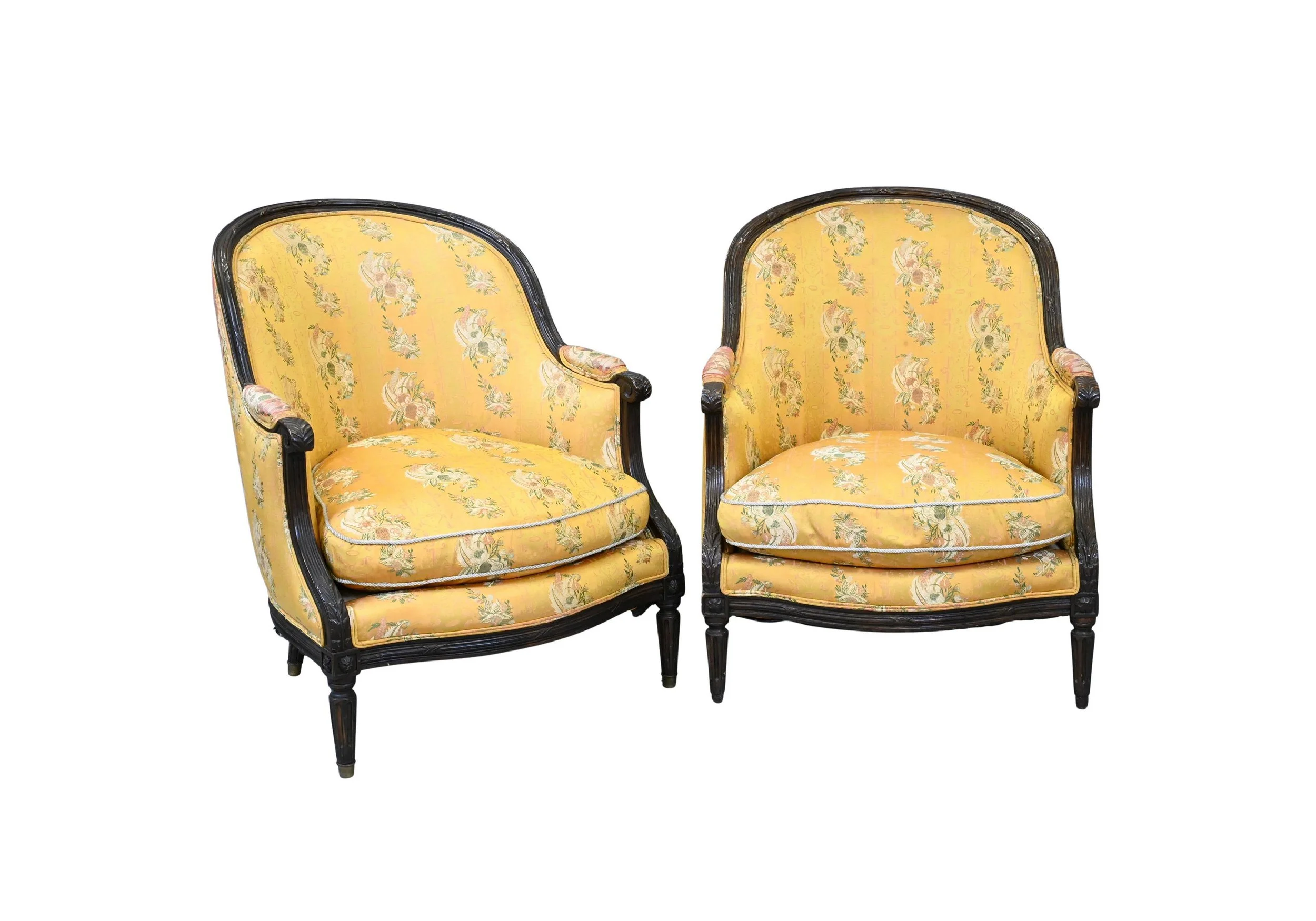
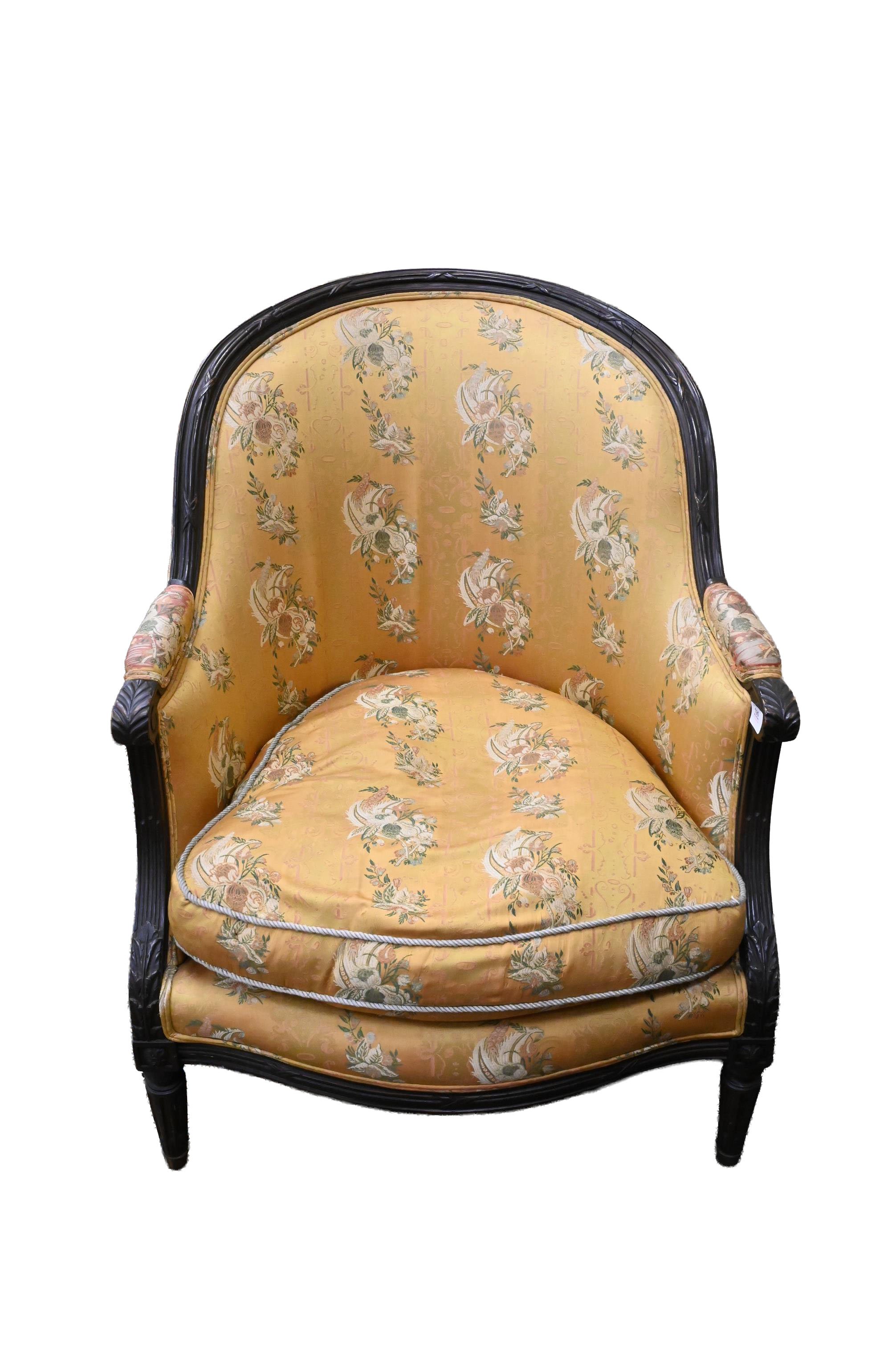
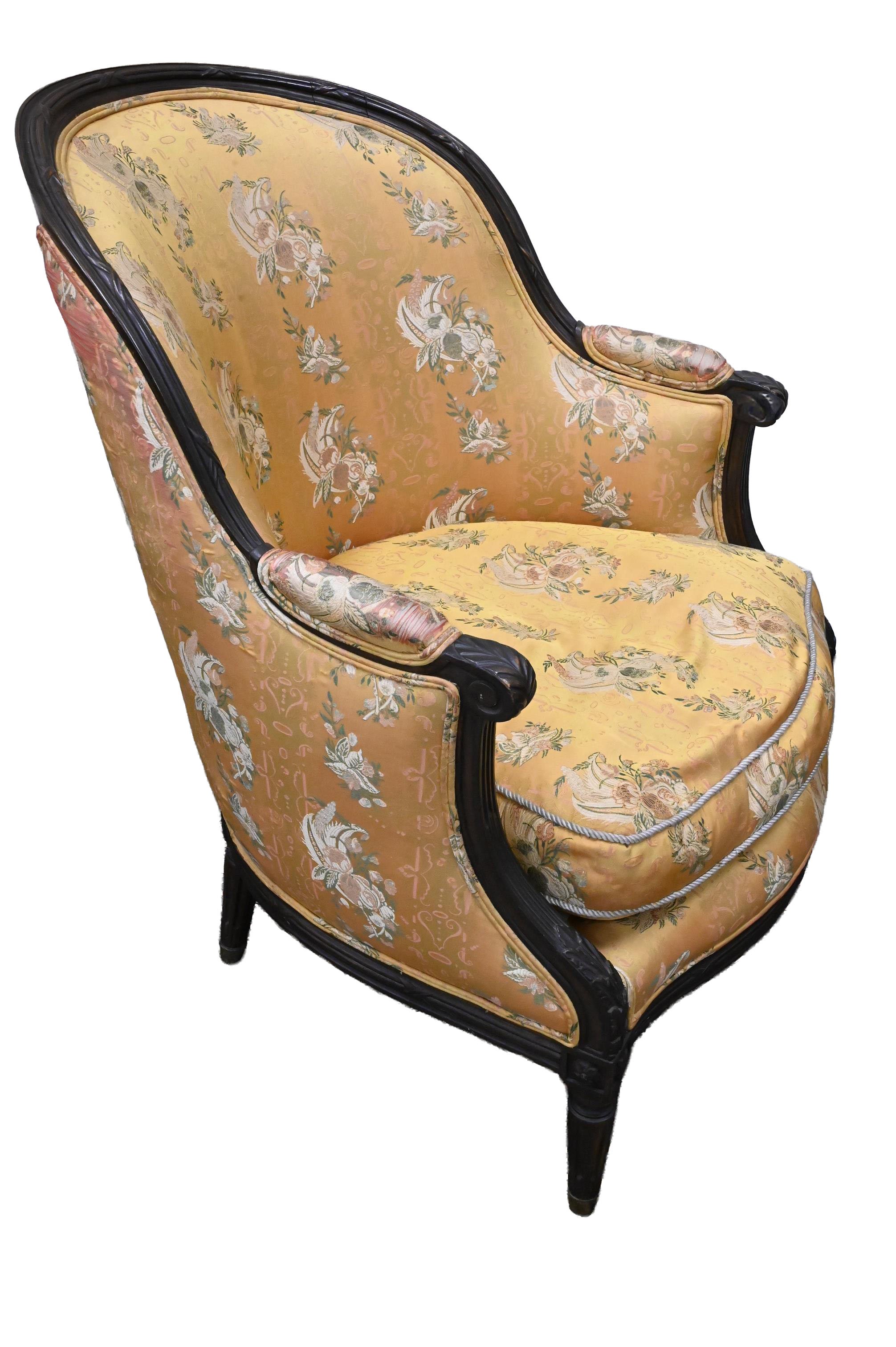
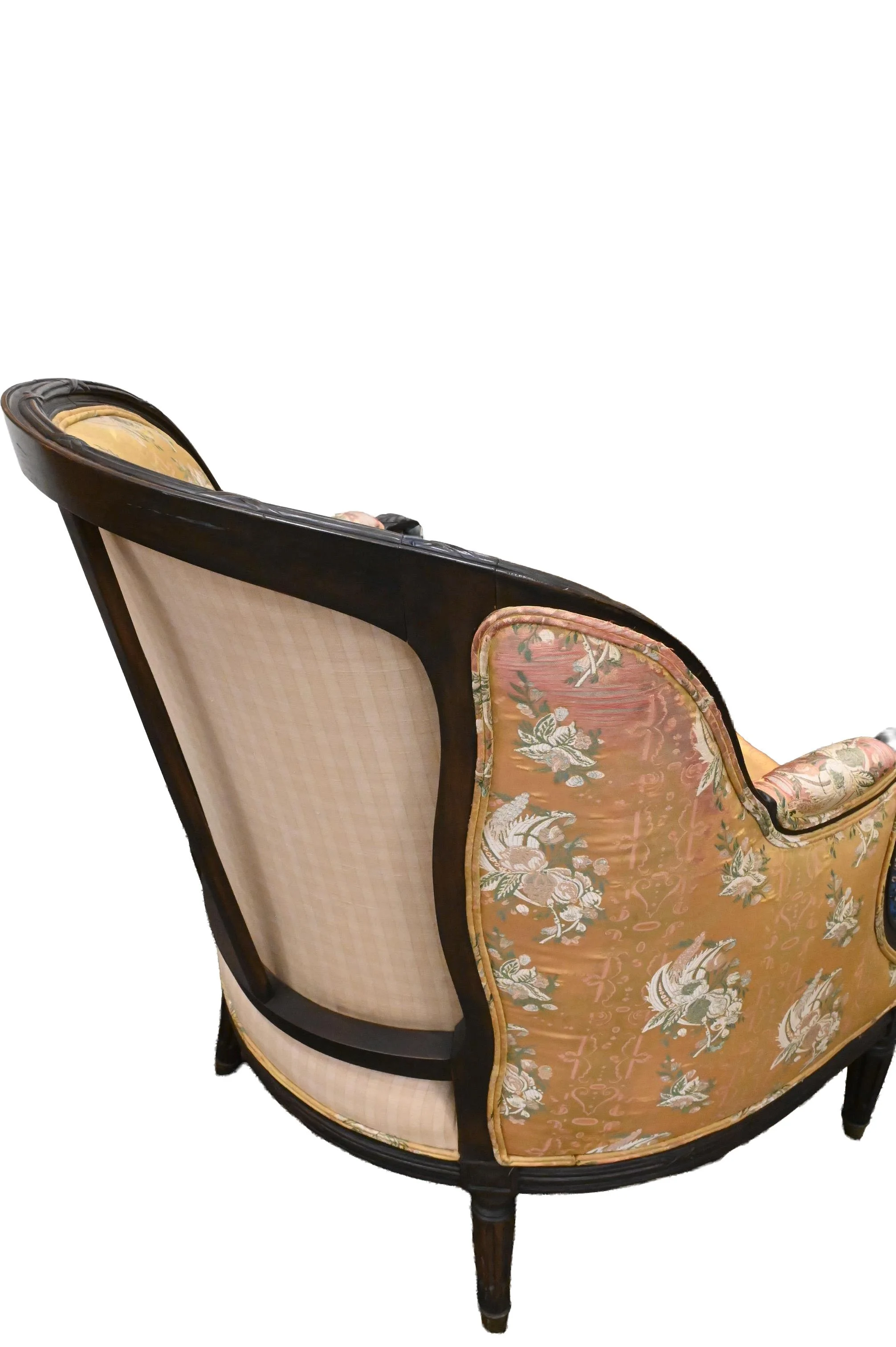
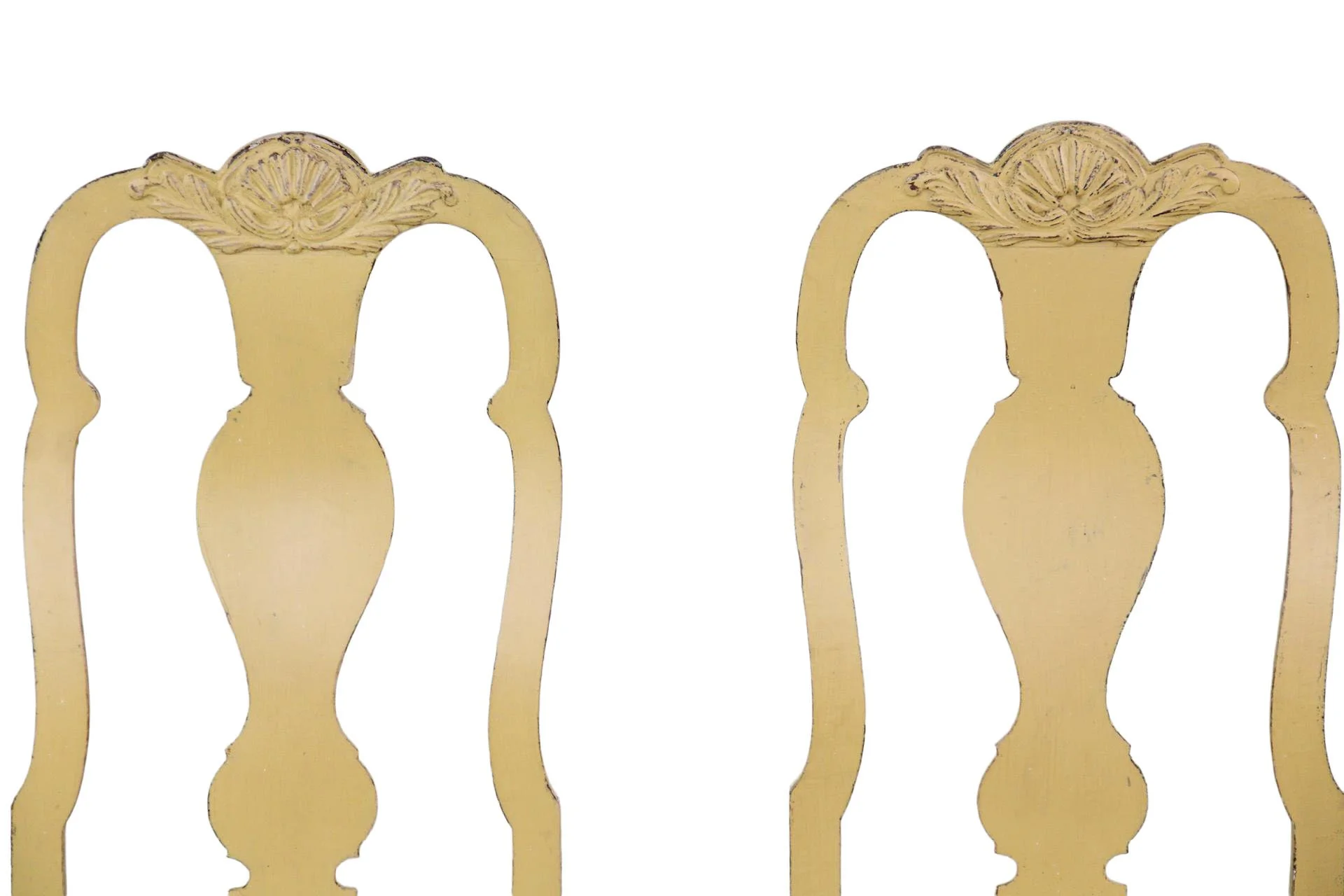
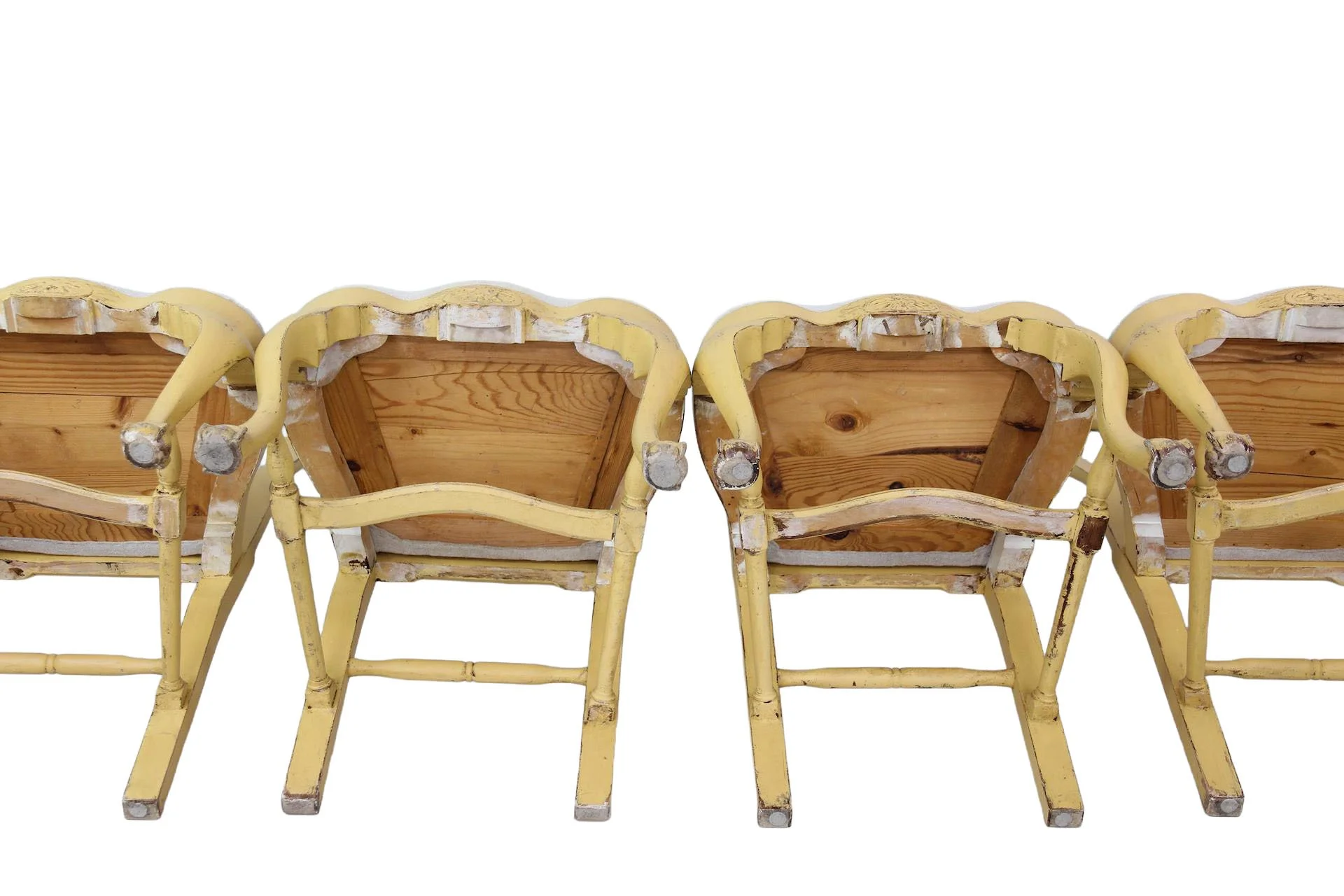
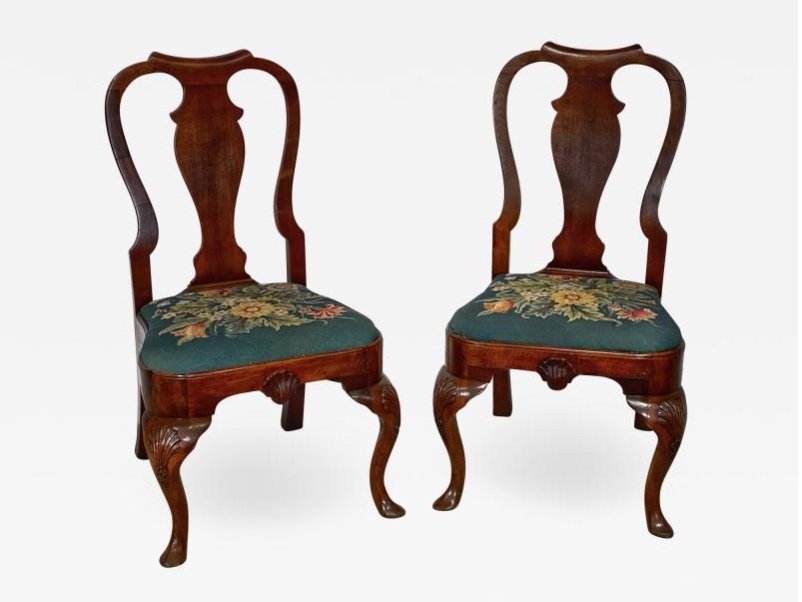
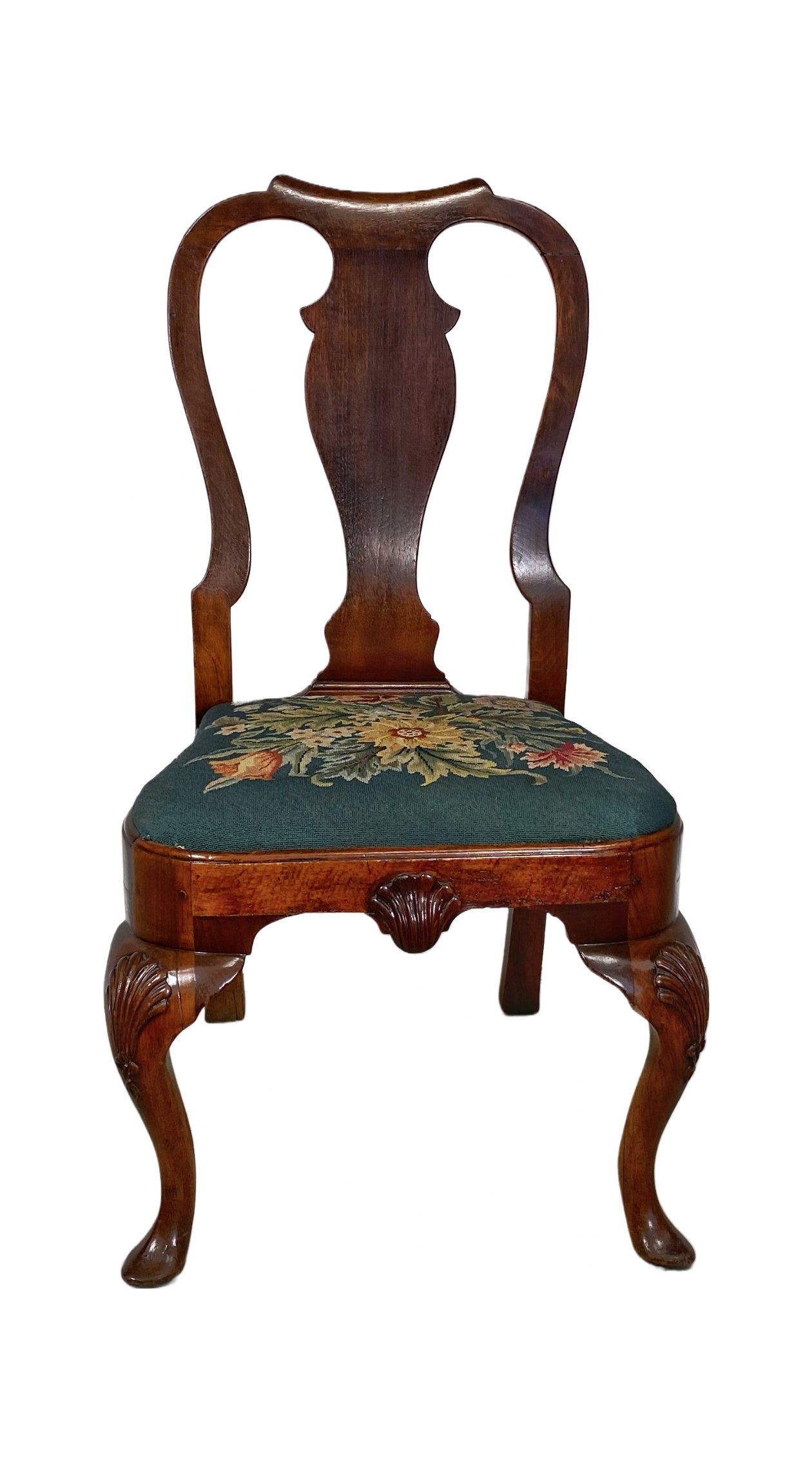
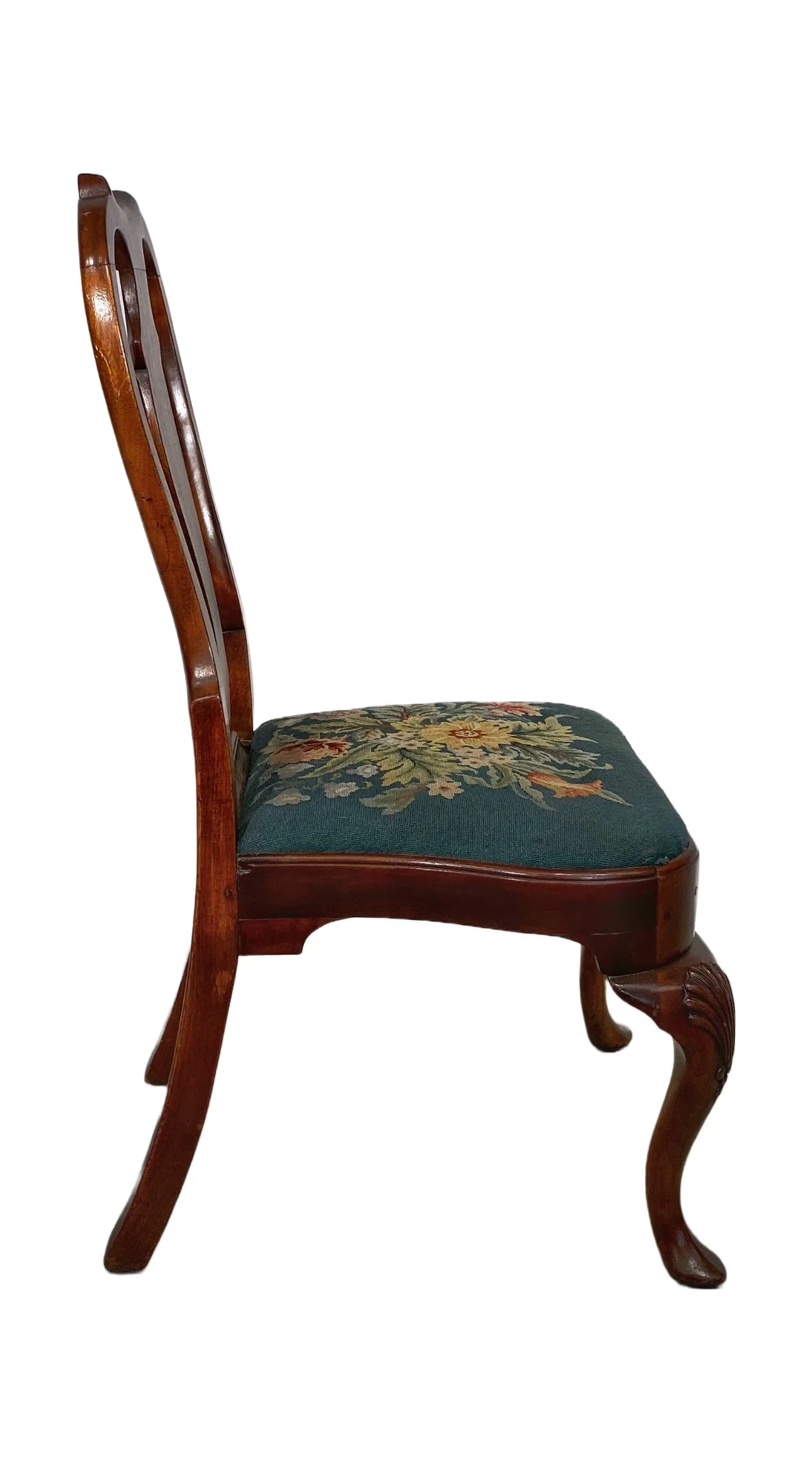
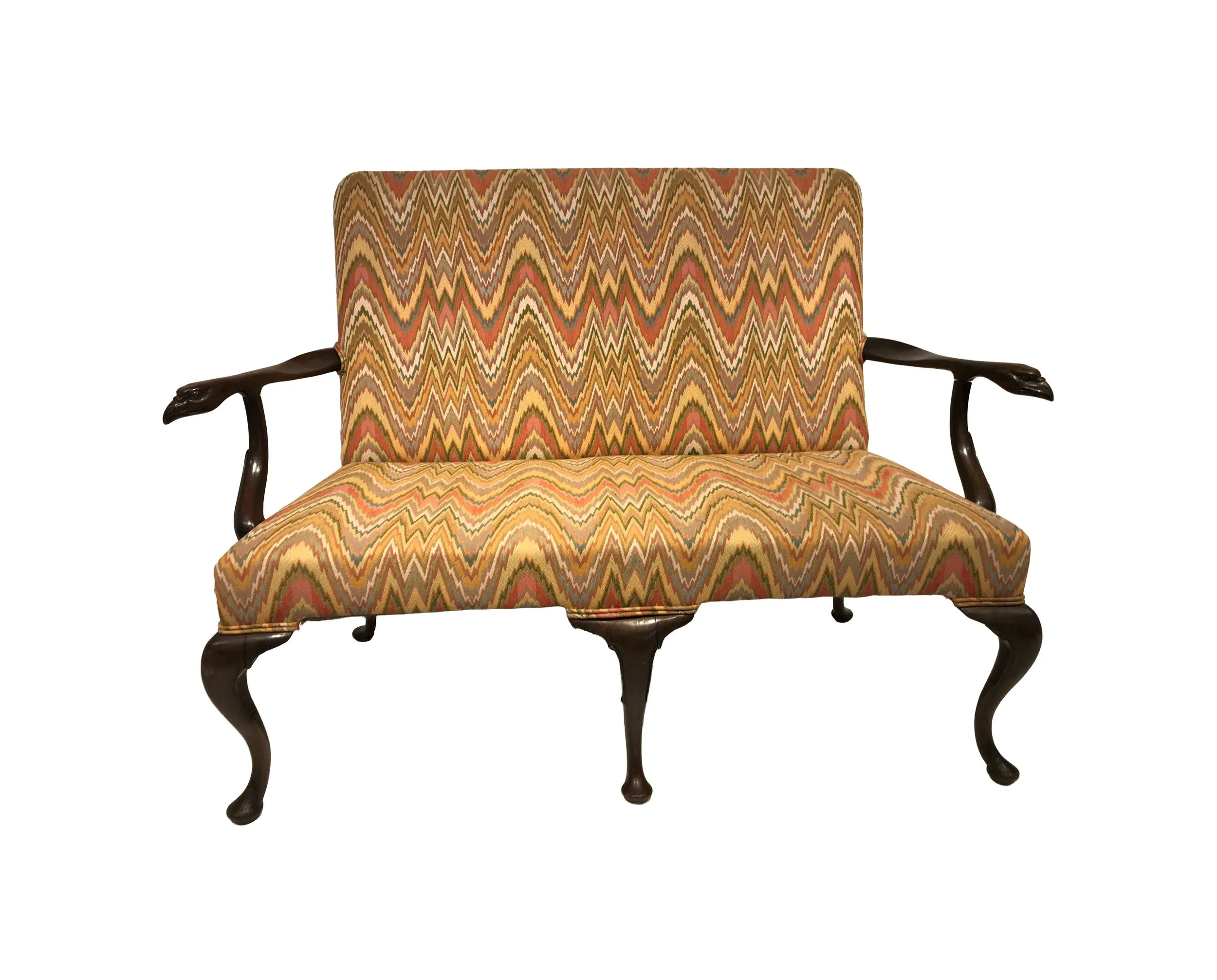
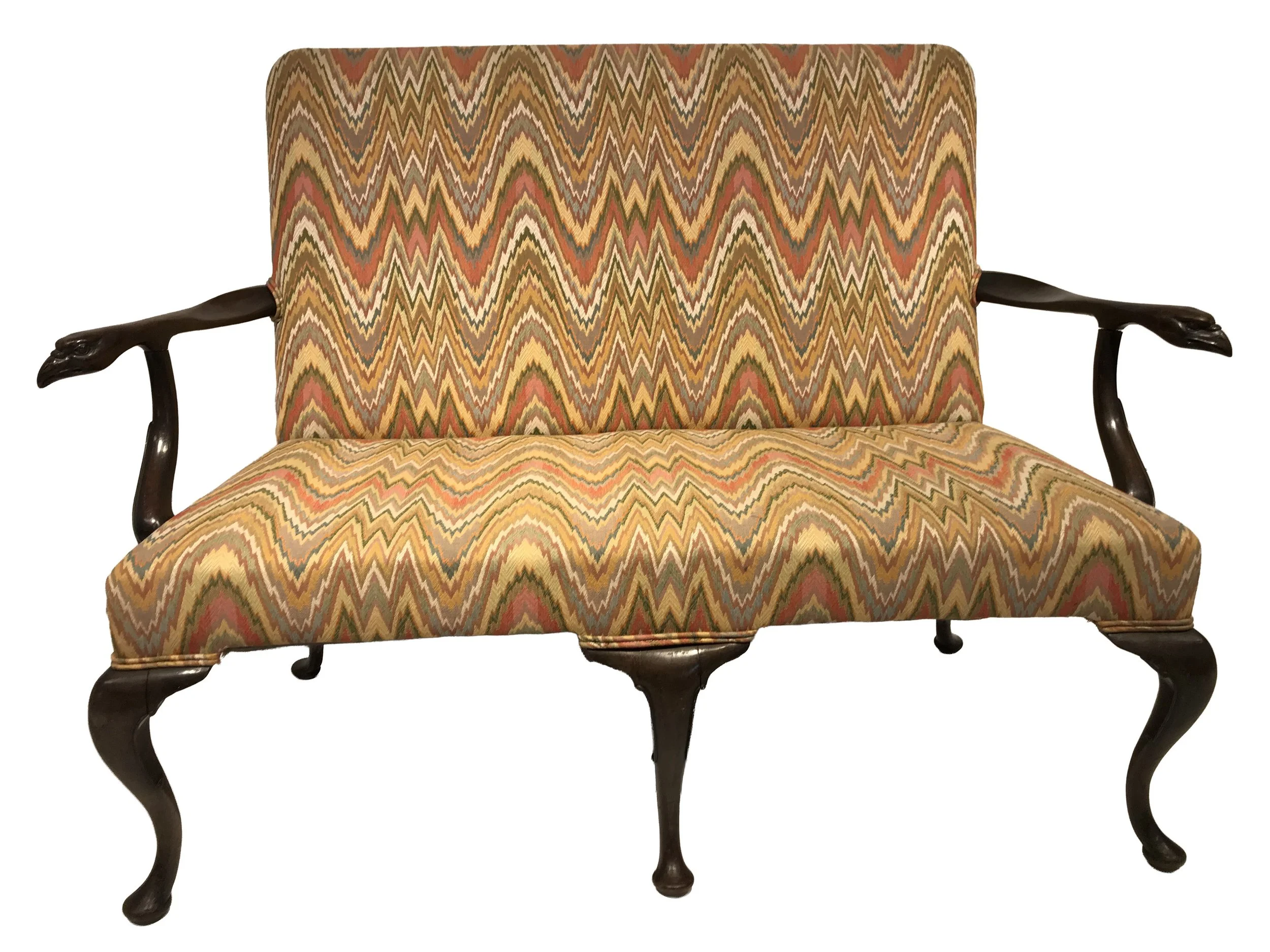
A rare and exquisite pair of 18th-century George II walnut writing chairs, characterized by their three front legs and a high back that predates the later, more prevalent “corner chair” design with four evenly spaced legs, typically set on a squared seat.
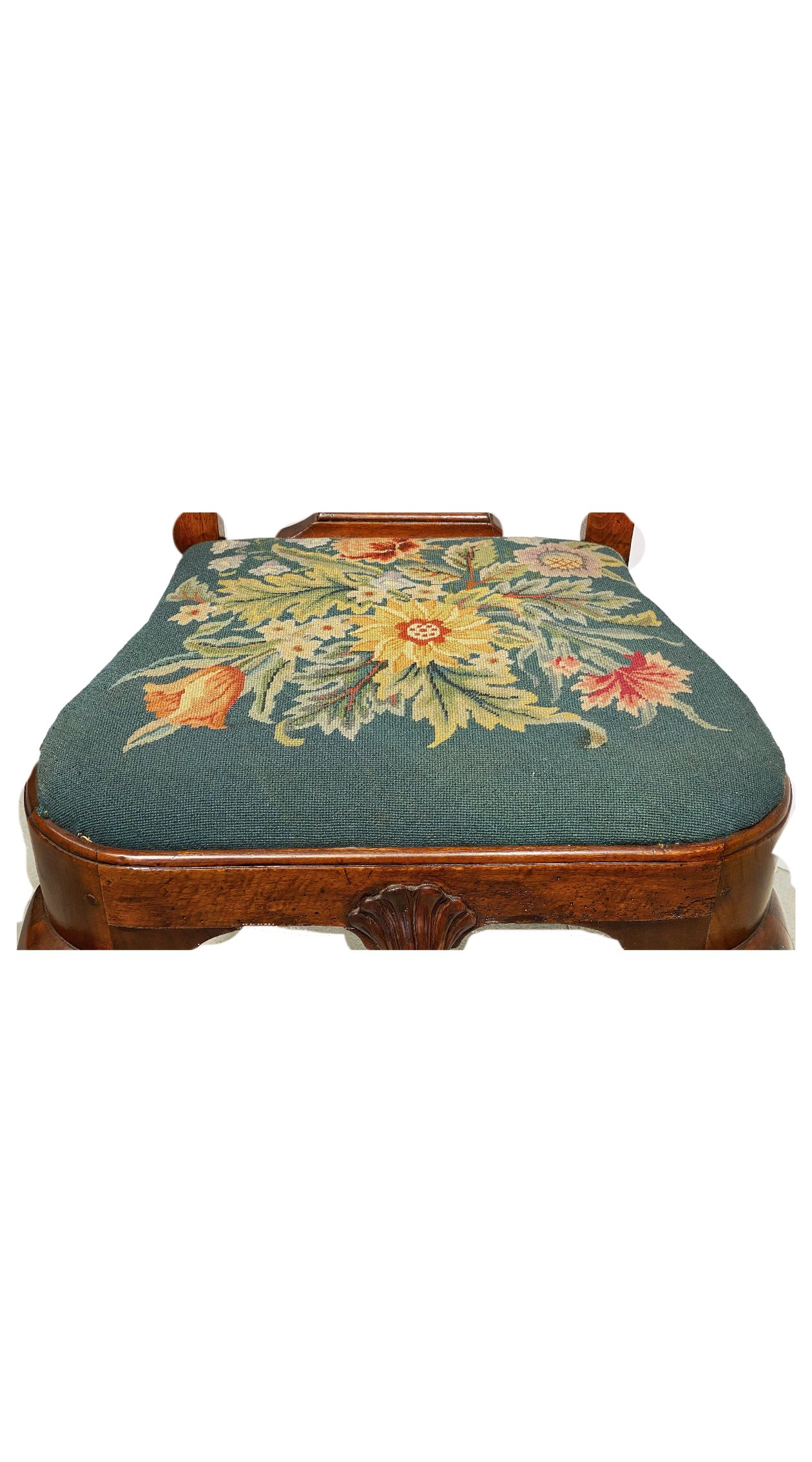
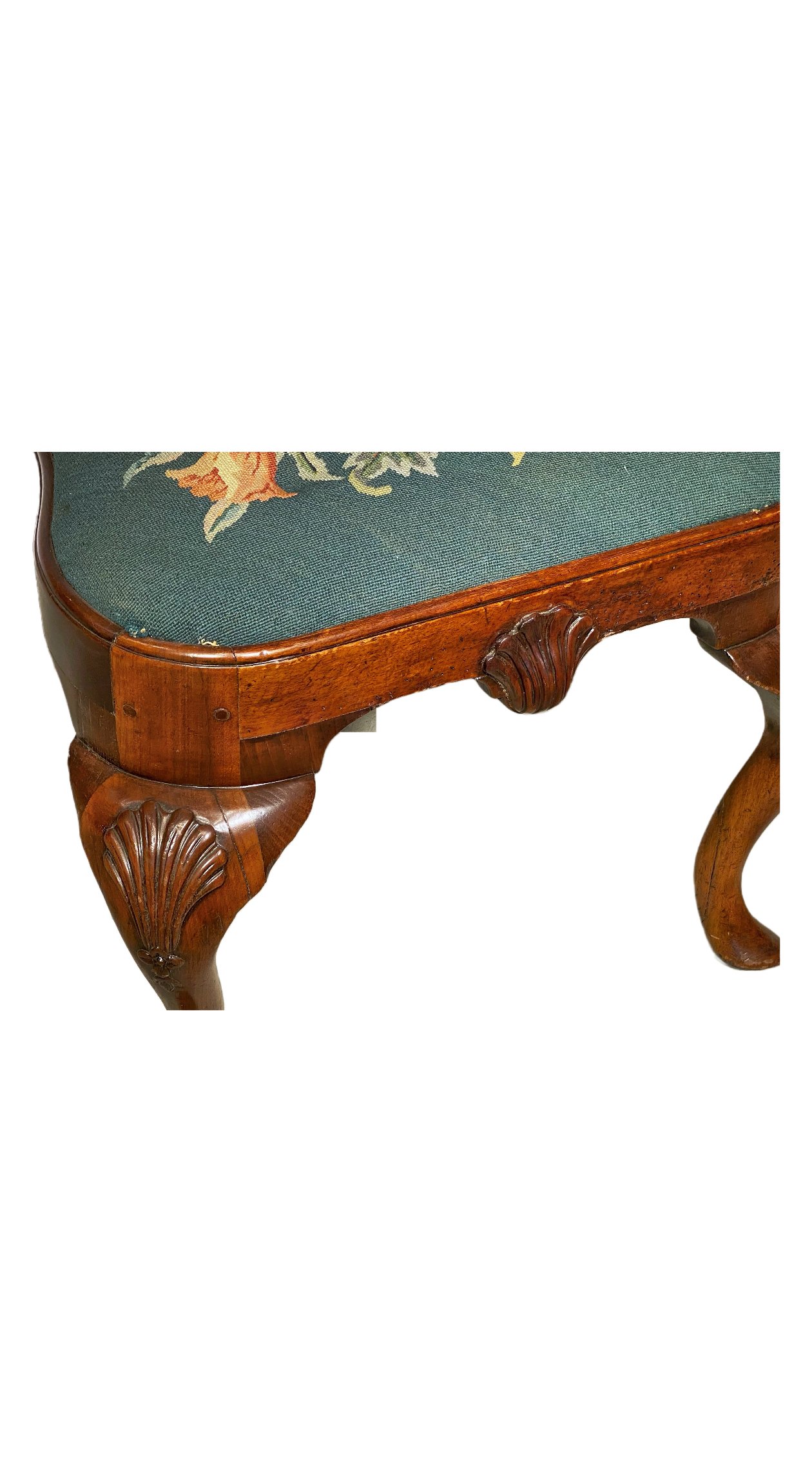
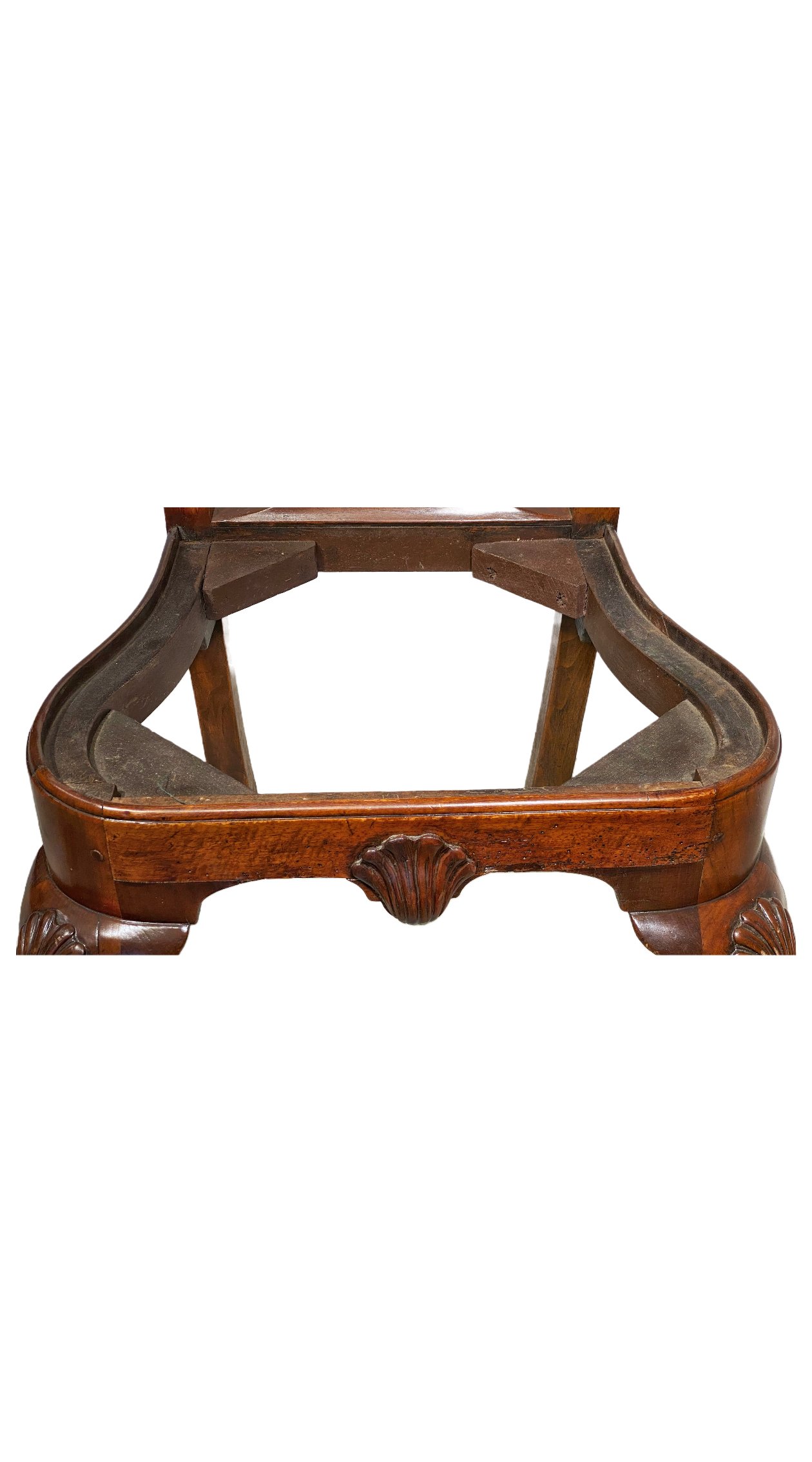
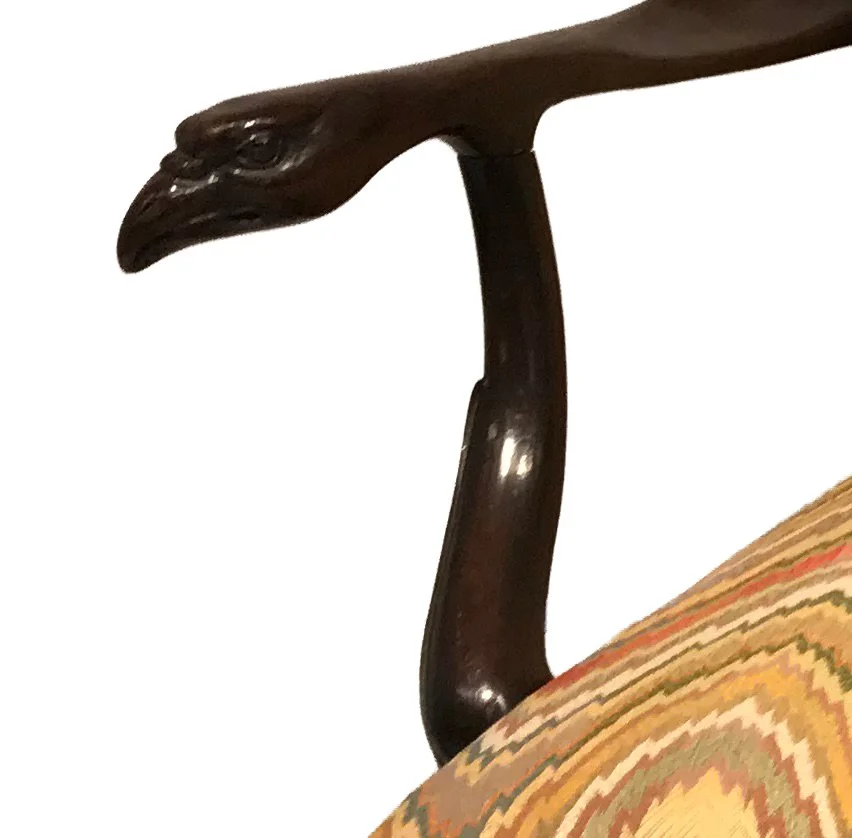
Each chair showcases a single, intricately carved back plate that curves and scroll-cuts elegantly, connecting to out-curved arms finished with disk-shaped terminals. Turned spindles connect these arms to the serpentine seat frame, which is elevated at the front and supported by a carved scallop-shell front leg alongside three other cabriole legs.
Crafted from heavy, solid walnut, both chairs have developed a rich, deep, and warm patina over approximately 300 years, exhibiting the mellow surface and character that only prolonged use and age can impart.
A similar form is illustrated and referred to as a “Writing Chair” in R. Edwards’s “The Shorter Dictionary of English Furniture,” published in London in 1969, page 137, figure 81. Edwards dates this example to approximately 1720 and notes that this relatively rare three-front-leg, single-rear-leg configuration was predominantly produced during the initial quarter of the 18th century.
Size: 39.25” H x 26.5” W x 20” D, seat height 18”
C. 1730, England
A rare and exquisite pair of 18th-century George II walnut writing chairs, characterized by their three front legs and a high back that predates the later, more prevalent “corner chair” design with four evenly spaced legs, typically set on a squared seat.
Each chair showcases a single, intricately carved back plate that curves and scroll-cuts elegantly, connecting to out-curved arms finished with disk-shaped terminals. Turned spindles connect these arms to the serpentine seat frame, which is elevated at the front and supported by a carved scallop-shell front leg alongside three other cabriole legs.
Crafted from heavy, solid walnut, both chairs have developed a rich, deep, and warm patina over approximately 300 years, exhibiting the mellow surface and character that only prolonged use and age can impart.
A similar form is illustrated and referred to as a “Writing Chair” in R. Edwards’s “The Shorter Dictionary of English Furniture,” published in London in 1969, page 137, figure 81. Edwards dates this example to approximately 1720 and notes that this relatively rare three-front-leg, single-rear-leg configuration was predominantly produced during the initial quarter of the 18th century.
Size: 39.25” H x 26.5” W x 20” D, seat height 18”
C. 1730, England

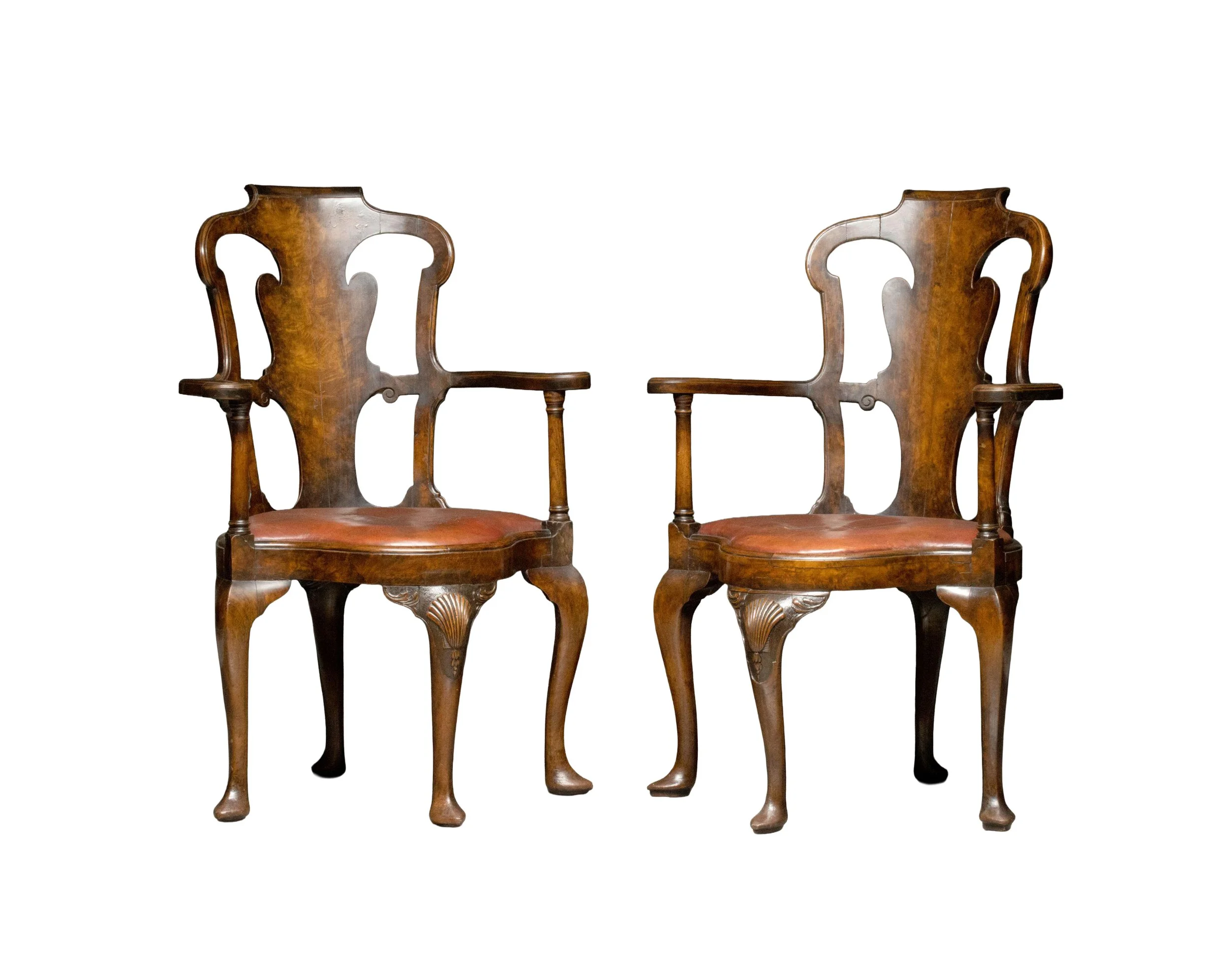 Image 1 of 9
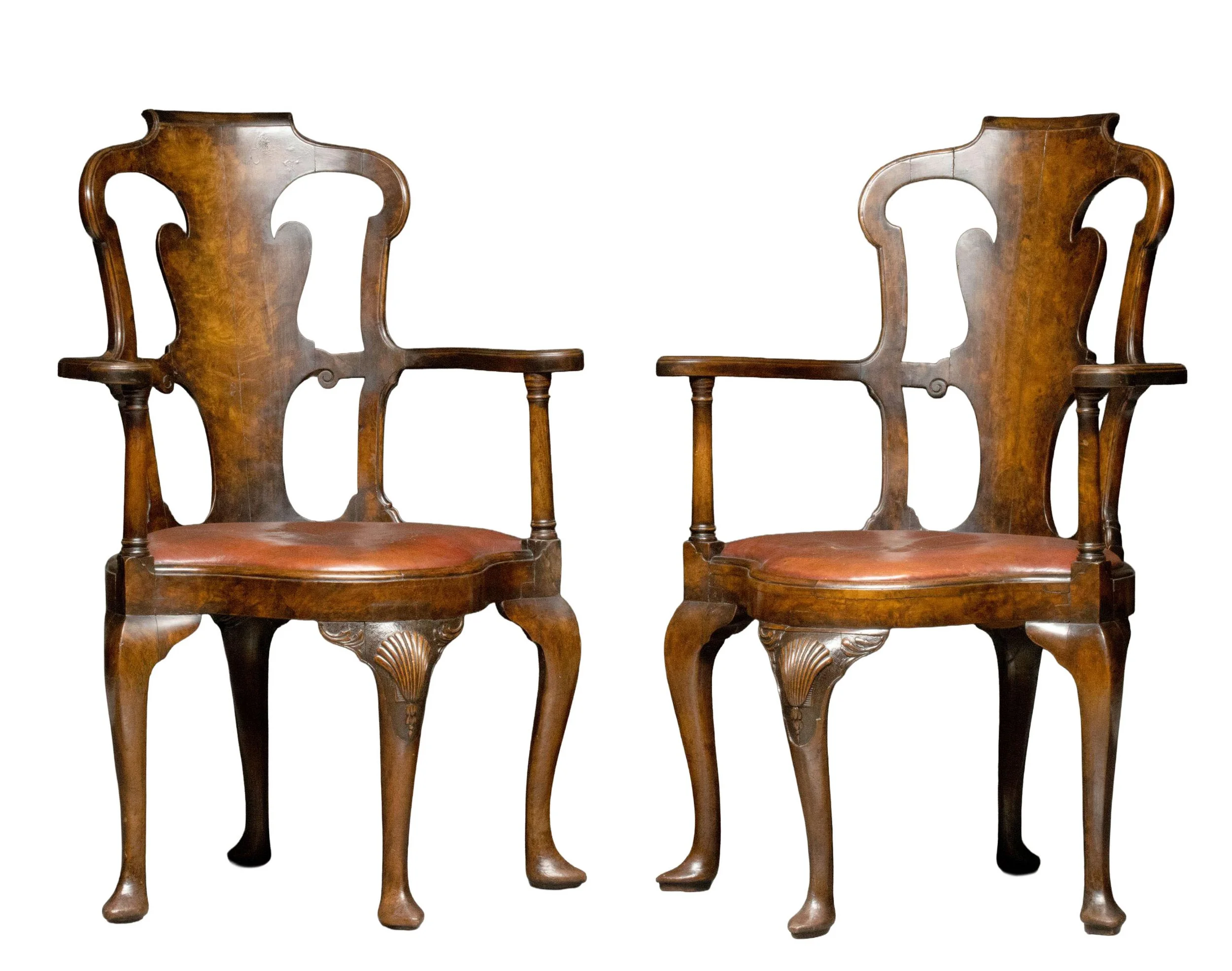 Image 2 of 9
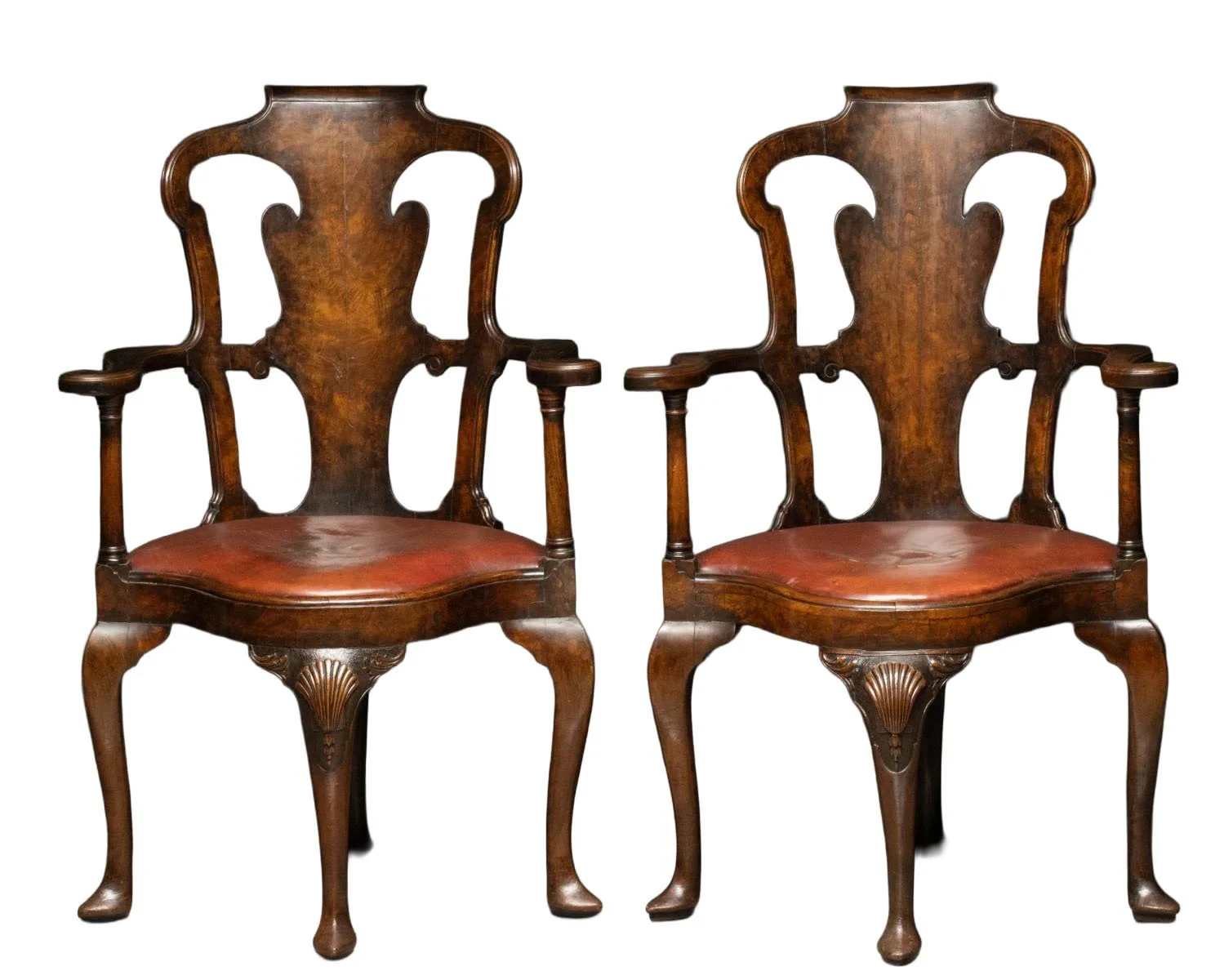 Image 3 of 9
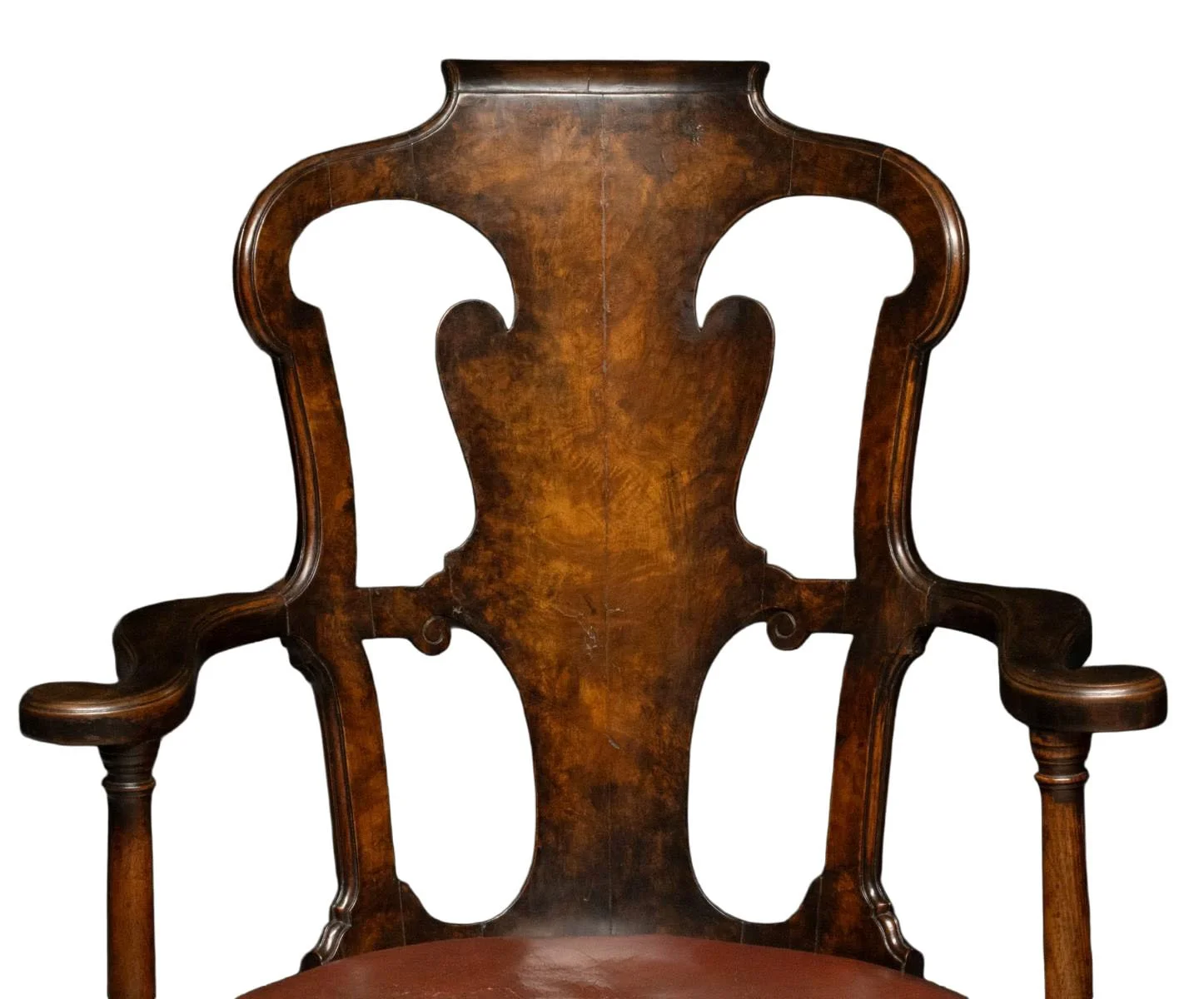 Image 4 of 9
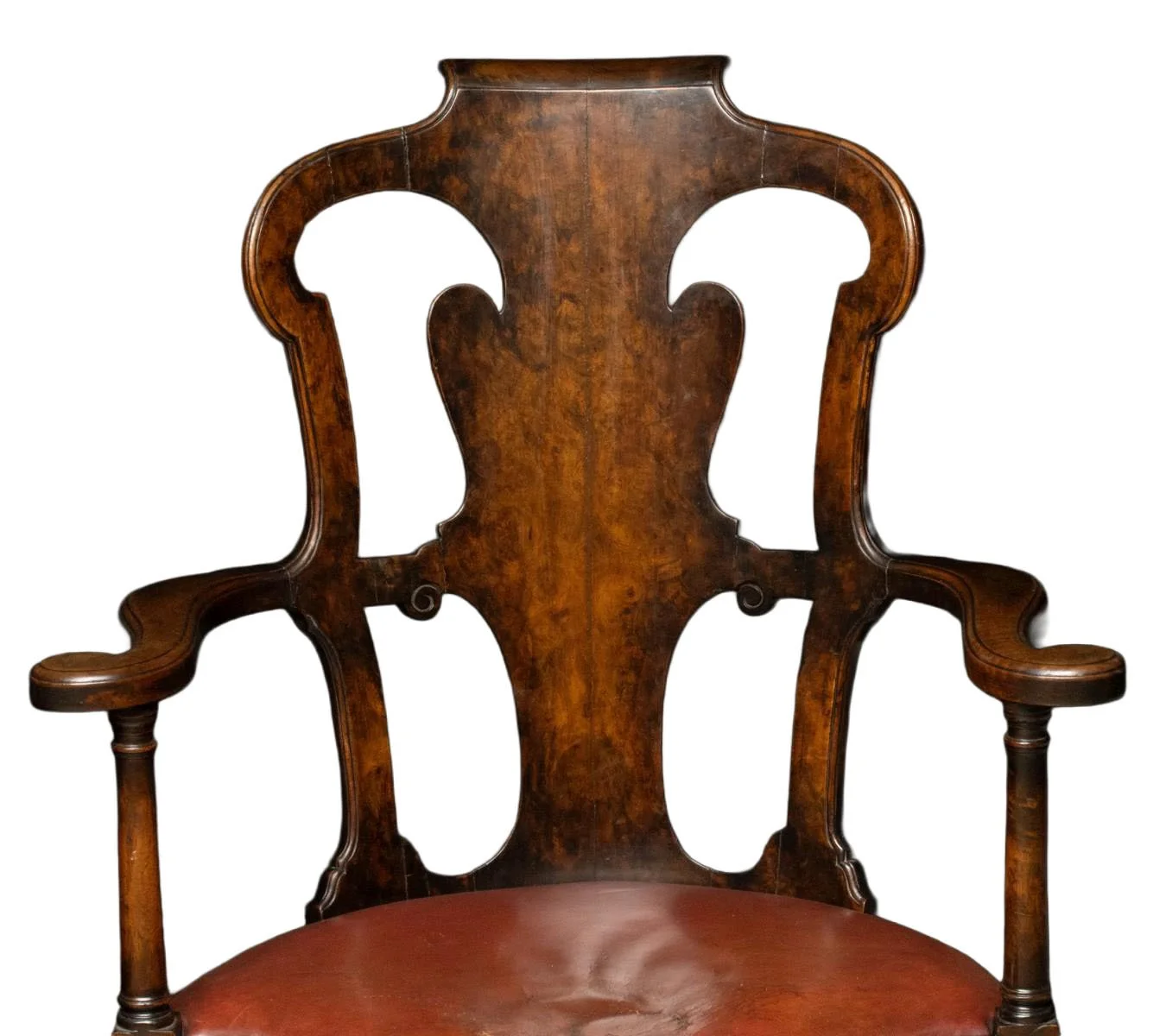 Image 5 of 9
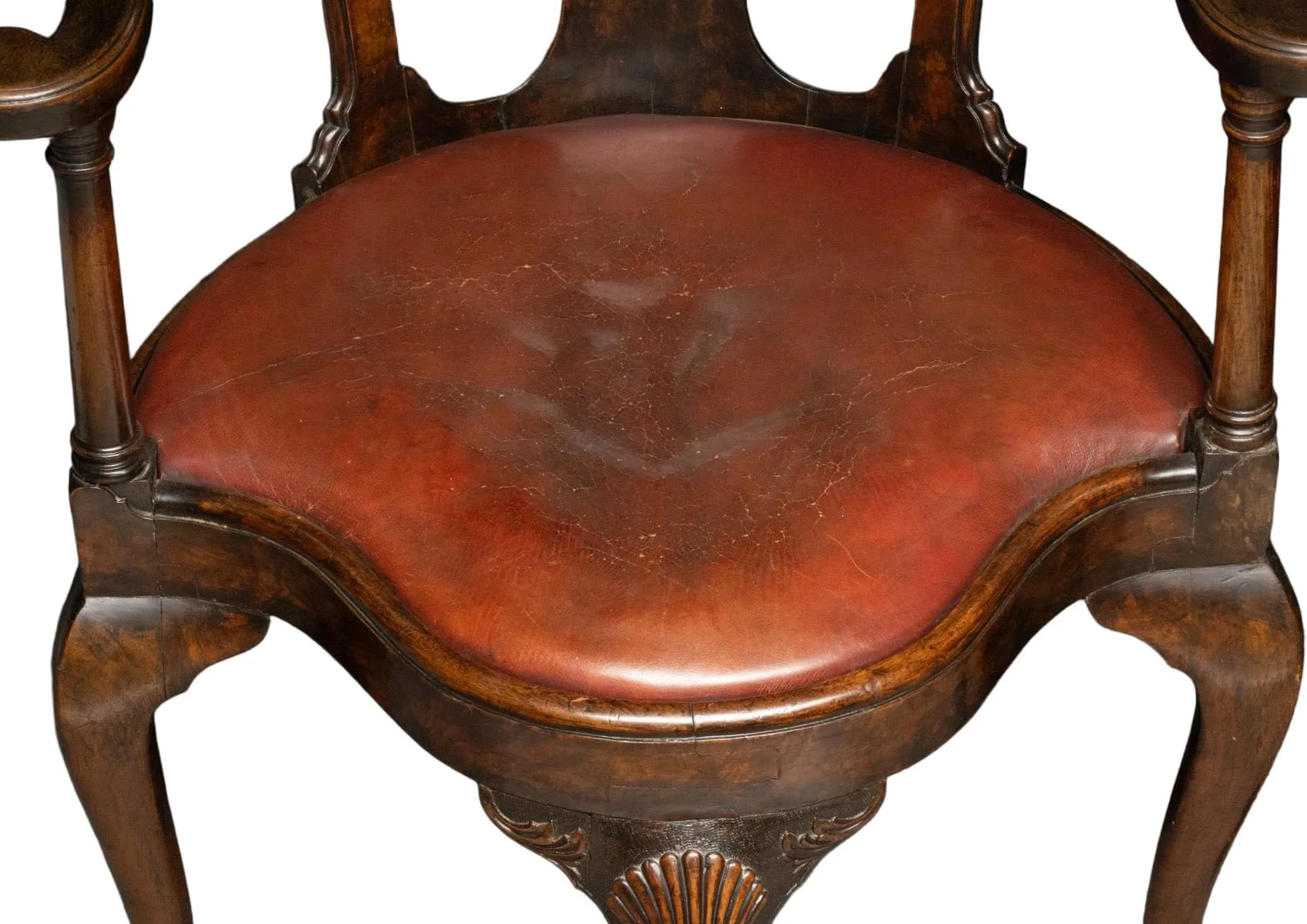 Image 6 of 9
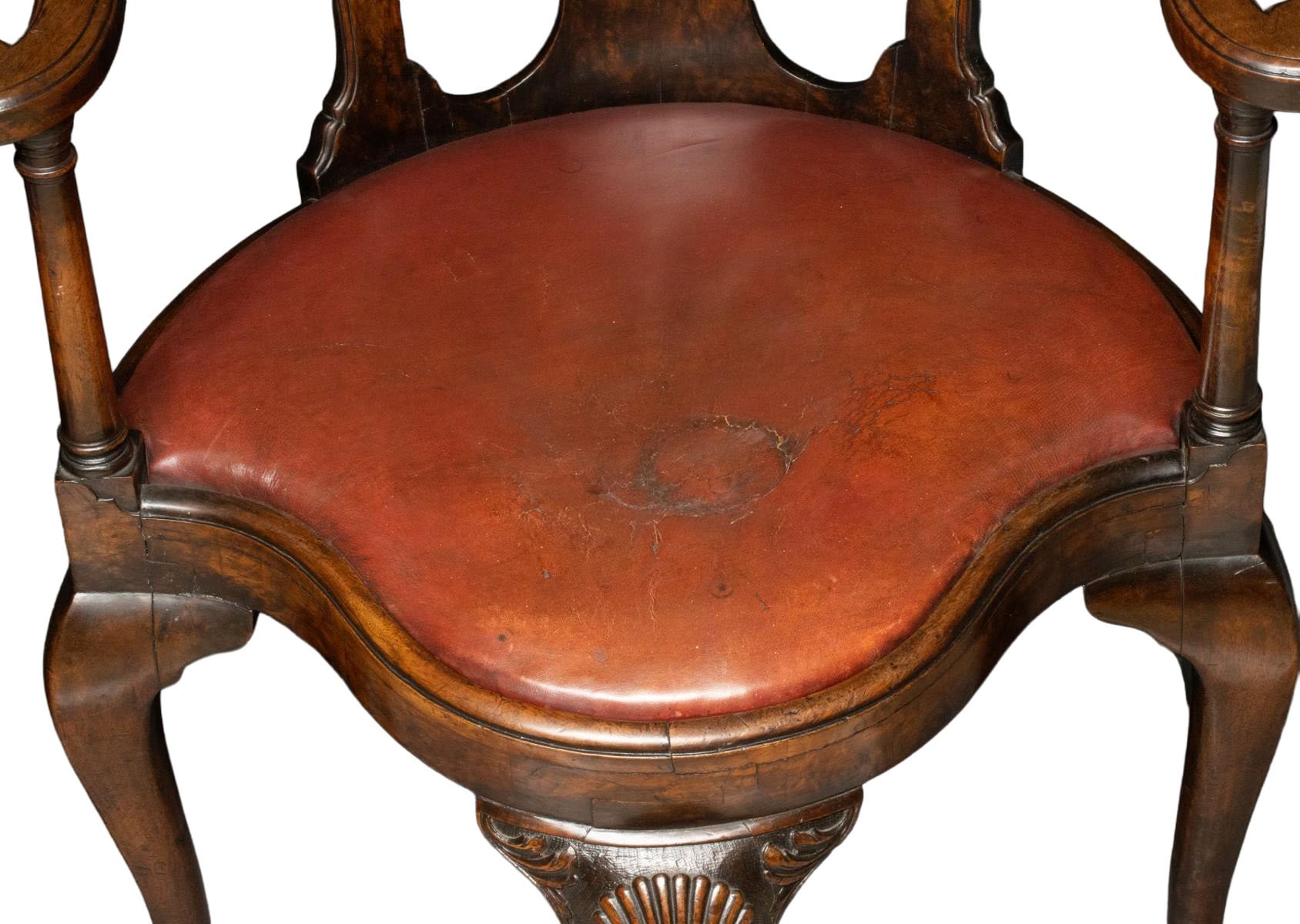 Image 7 of 9
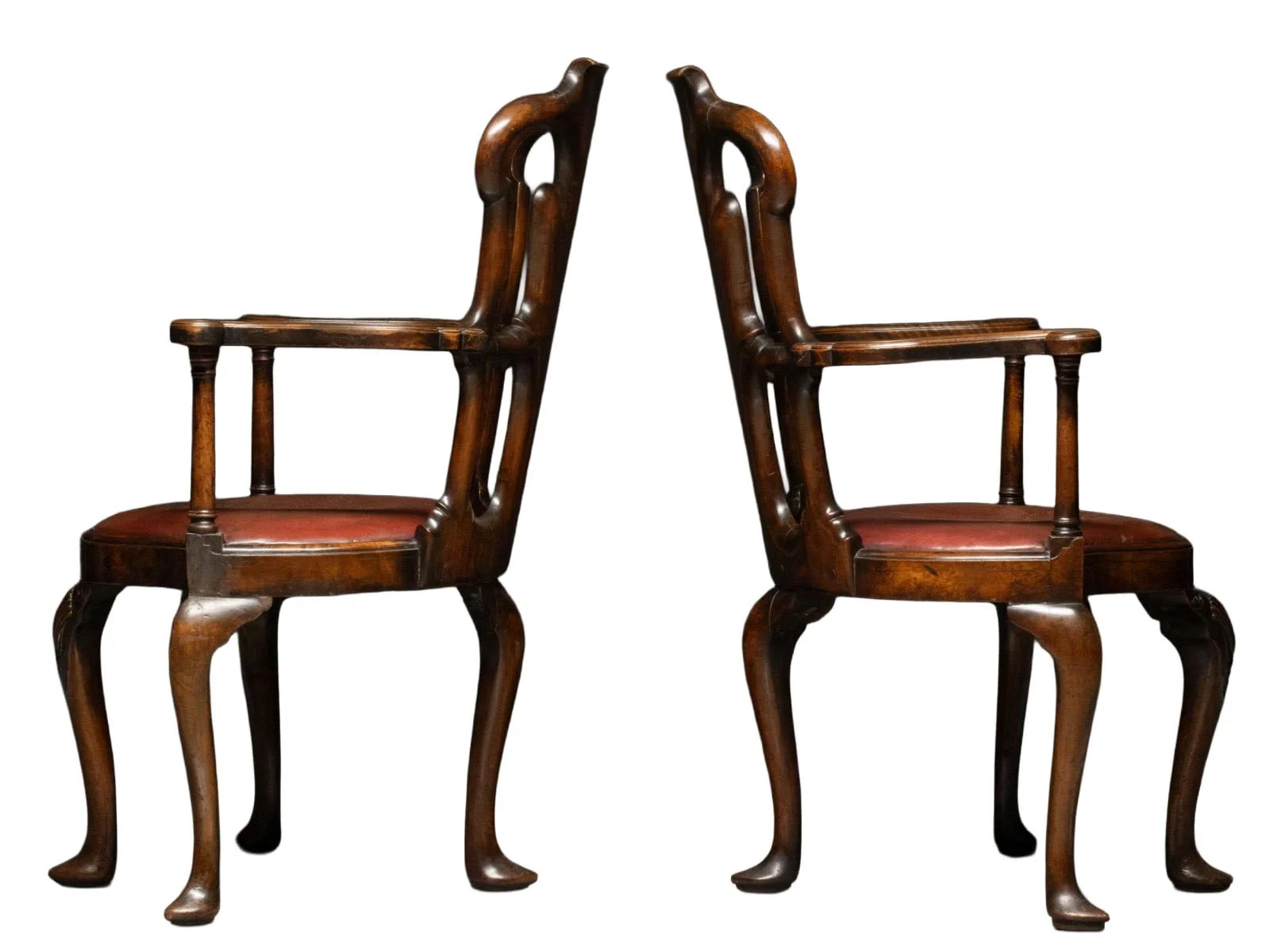 Image 8 of 9
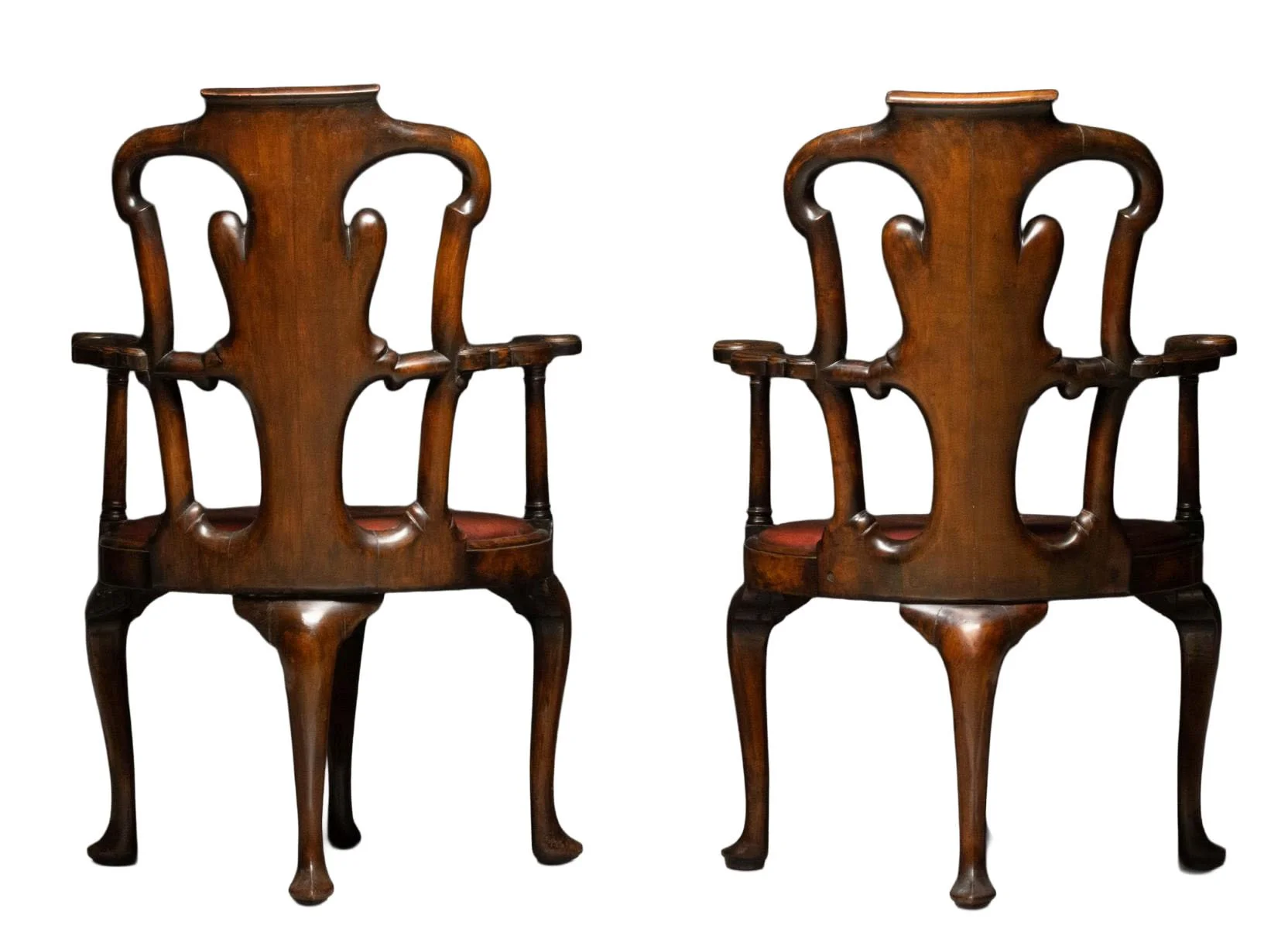 Image 9 of 9