A captivating illustration captures the majestic sight of the paddle steamer “Vulcan” gracefully departing from the Clyde canal. Her paddles create a rhythmic churning of the water beneath a serene sky. The “Vulcan” was the world’s first all-iron-hulled boat (1819), which served Scotland’s Forth & Clyde Canal. This vessel is now commemorated by a replica housed at Summerlee Museum.
William Clark (June 26, 1803 – November 11, 1883) was a Scottish artist renowned for his meticulous depictions of ships and maritime scenes. His meticulously observed works are housed in the National Maritime Museum and several other esteemed collections.
Born in Greenock, a town near Glasgow, Clark spent the majority of his life there. His father, a seaman who later served as a customs officer, initially apprenticed Clark to a house painter. However, Clark established his reputation as a professional artist around 1830. In 1835, he was commissioned to document the regatta of the Royal Northern Yacht Club, and in 1838, he was elected a member of the club. It has been noted that Clark was fortunate to live during the peak of Clyde shipbuilding, when commissions from owners and masters ensured a consistent flow of work. This enabled Clark to spend his career in his native town without seeking patrons elsewhere. In Greenock, an 1868 clock tower designed by Clark stands in front of the Custom House and is affectionately known as “The Beacon.” This name was later adopted by the Greenock Arts Guild for its Beacon Arts Centre.
Clark’s work is exhibited in various galleries, including the National Maritime Museum, the McLean Museum in his native Greenock, the Walker Art Gallery in Liverpool, the National Library of Australia, the Peabody Essex Museum in Salem, Massachusetts, and the Yale Center for British Art.
Oil on canvas.
Artist: William Clark of Greenock
Signed: W. Clark, 1834 (lower left)
Size: 38.75” x 53.25”, framed
C. 1834, Scotland
A captivating illustration captures the majestic sight of the paddle steamer “Vulcan” gracefully departing from the Clyde canal. Her paddles create a rhythmic churning of the water beneath a serene sky. The “Vulcan” was the world’s first all-iron-hulled boat (1819), which served Scotland’s Forth & Clyde Canal. This vessel is now commemorated by a replica housed at Summerlee Museum.
William Clark (June 26, 1803 – November 11, 1883) was a Scottish artist renowned for his meticulous depictions of ships and maritime scenes. His meticulously observed works are housed in the National Maritime Museum and several other esteemed collections.
Born in Greenock, a town near Glasgow, Clark spent the majority of his life there. His father, a seaman who later served as a customs officer, initially apprenticed Clark to a house painter. However, Clark established his reputation as a professional artist around 1830. In 1835, he was commissioned to document the regatta of the Royal Northern Yacht Club, and in 1838, he was elected a member of the club. It has been noted that Clark was fortunate to live during the peak of Clyde shipbuilding, when commissions from owners and masters ensured a consistent flow of work. This enabled Clark to spend his career in his native town without seeking patrons elsewhere. In Greenock, an 1868 clock tower designed by Clark stands in front of the Custom House and is affectionately known as “The Beacon.” This name was later adopted by the Greenock Arts Guild for its Beacon Arts Centre.
Clark’s work is exhibited in various galleries, including the National Maritime Museum, the McLean Museum in his native Greenock, the Walker Art Gallery in Liverpool, the National Library of Australia, the Peabody Essex Museum in Salem, Massachusetts, and the Yale Center for British Art.
Oil on canvas.
Artist: William Clark of Greenock
Signed: W. Clark, 1834 (lower left)
Size: 38.75” x 53.25”, framed
C. 1834, Scotland

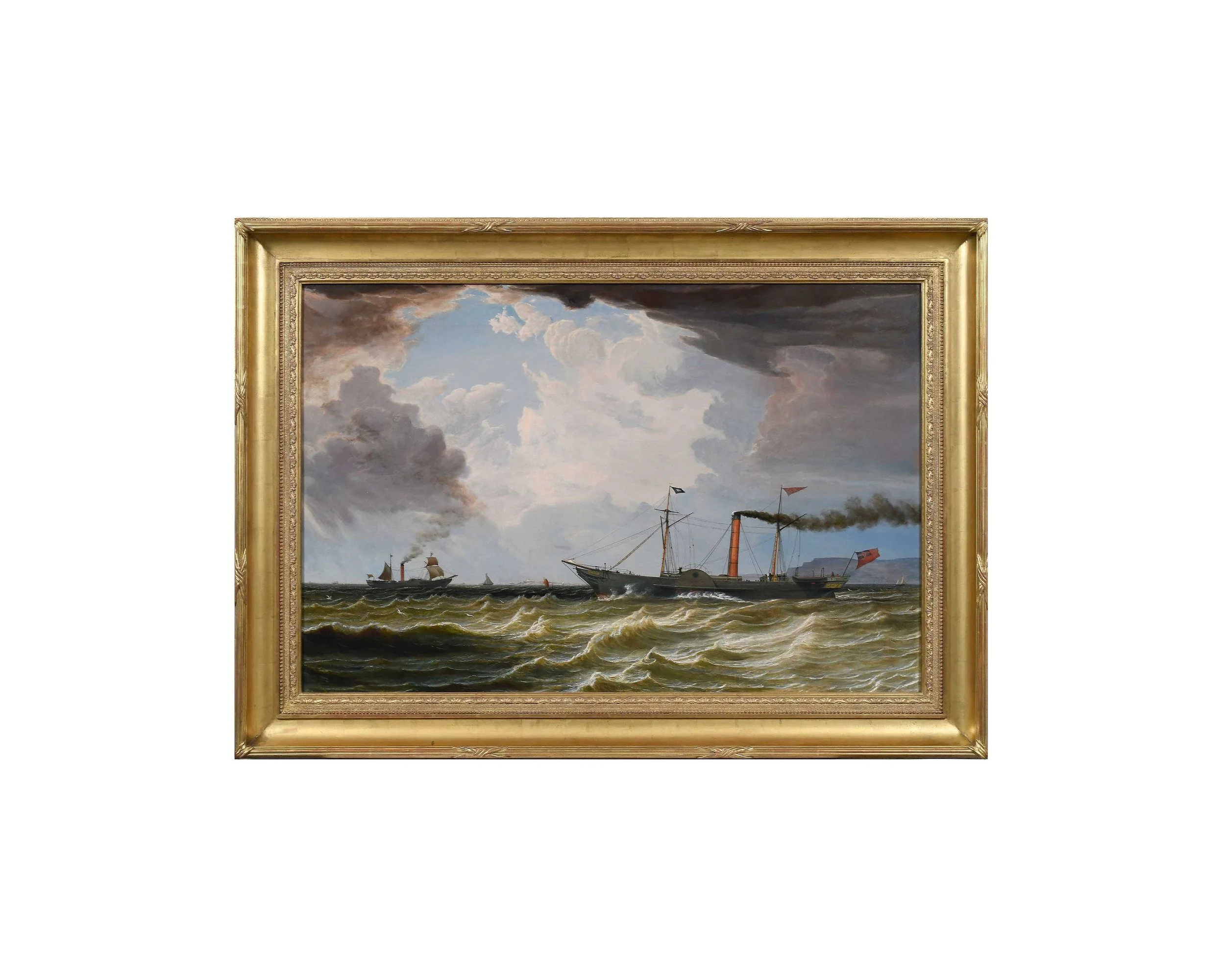 Image 1 of 11
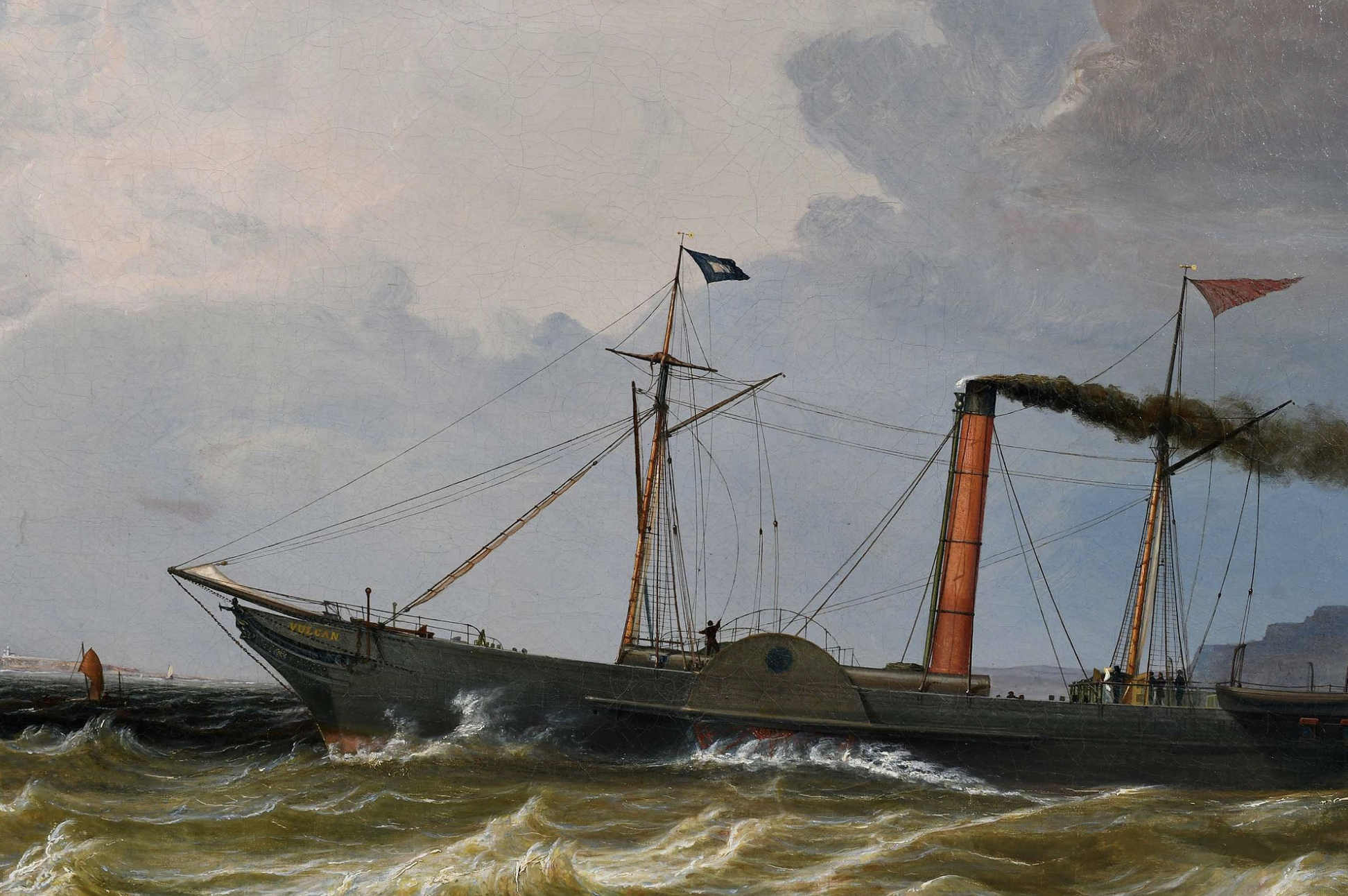 Image 2 of 11
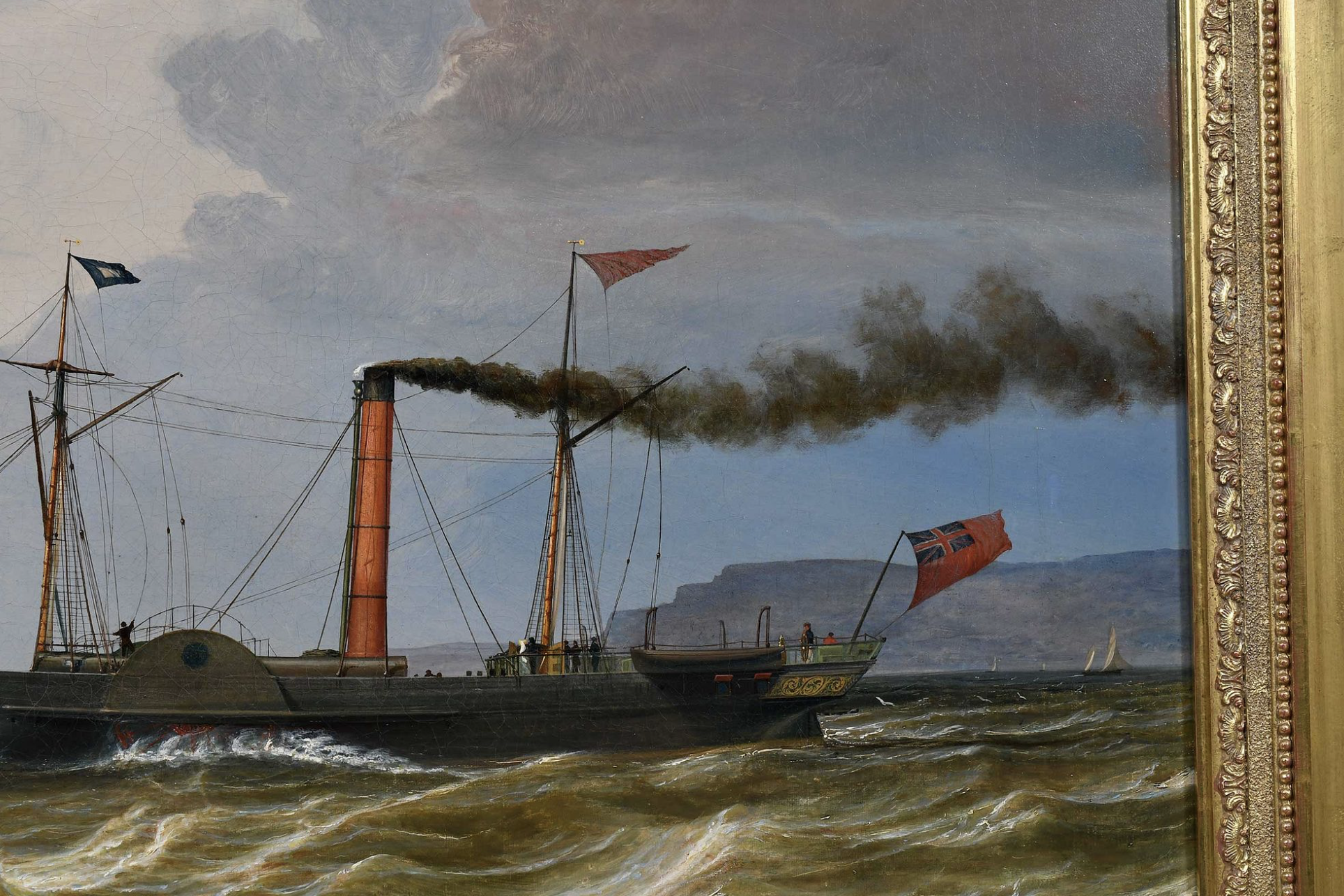 Image 3 of 11
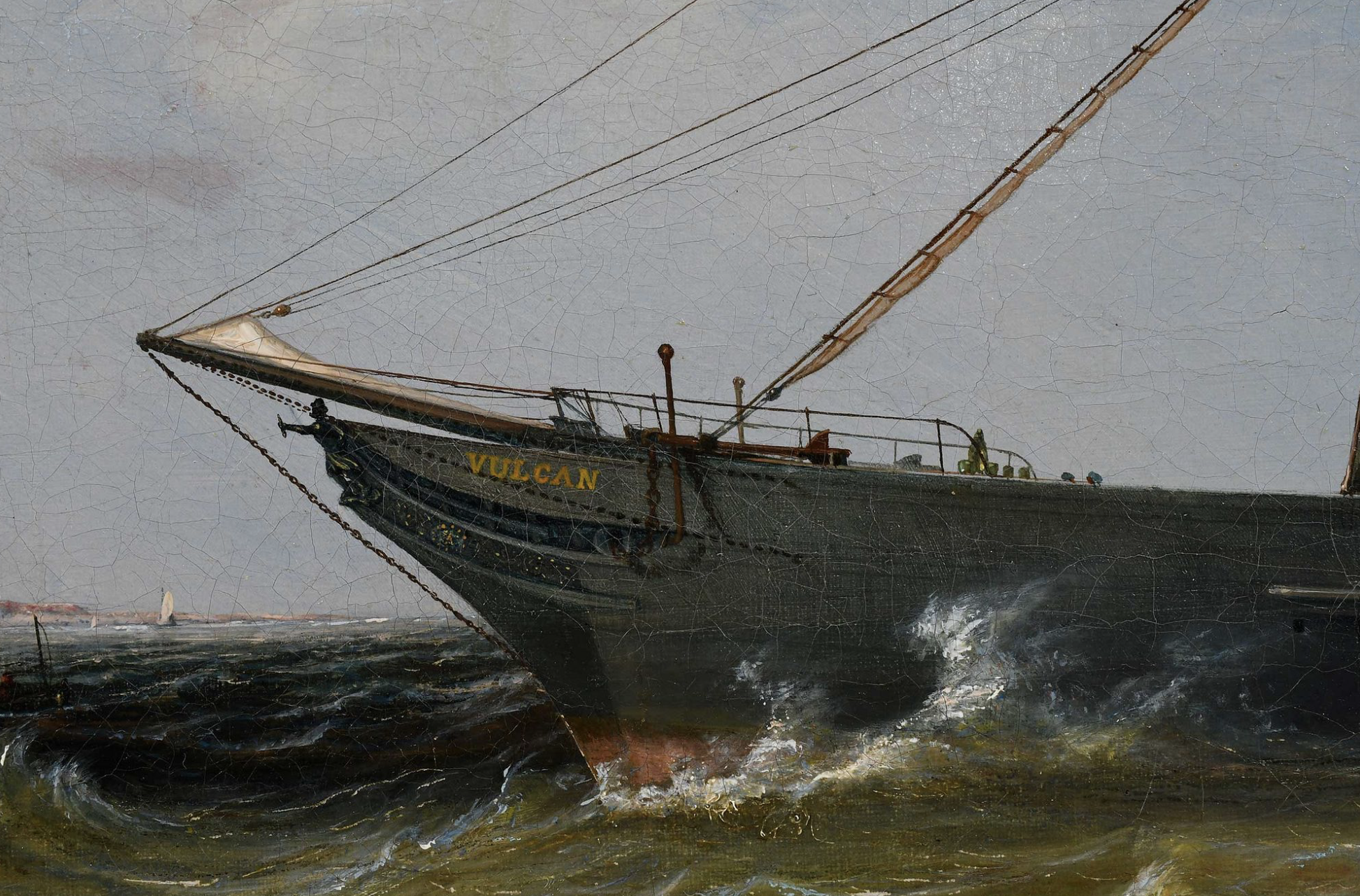 Image 4 of 11
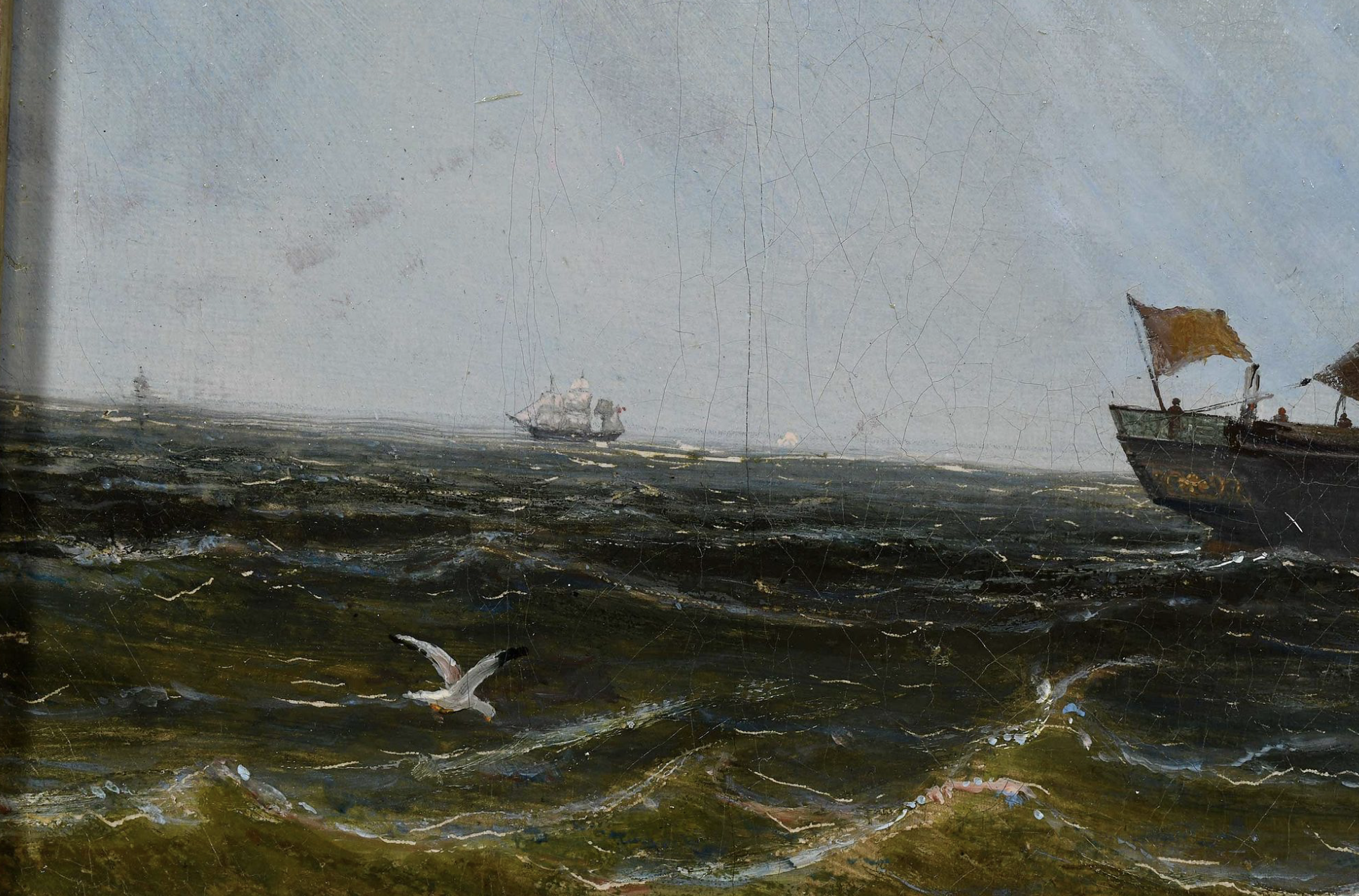 Image 5 of 11
 Image 6 of 11
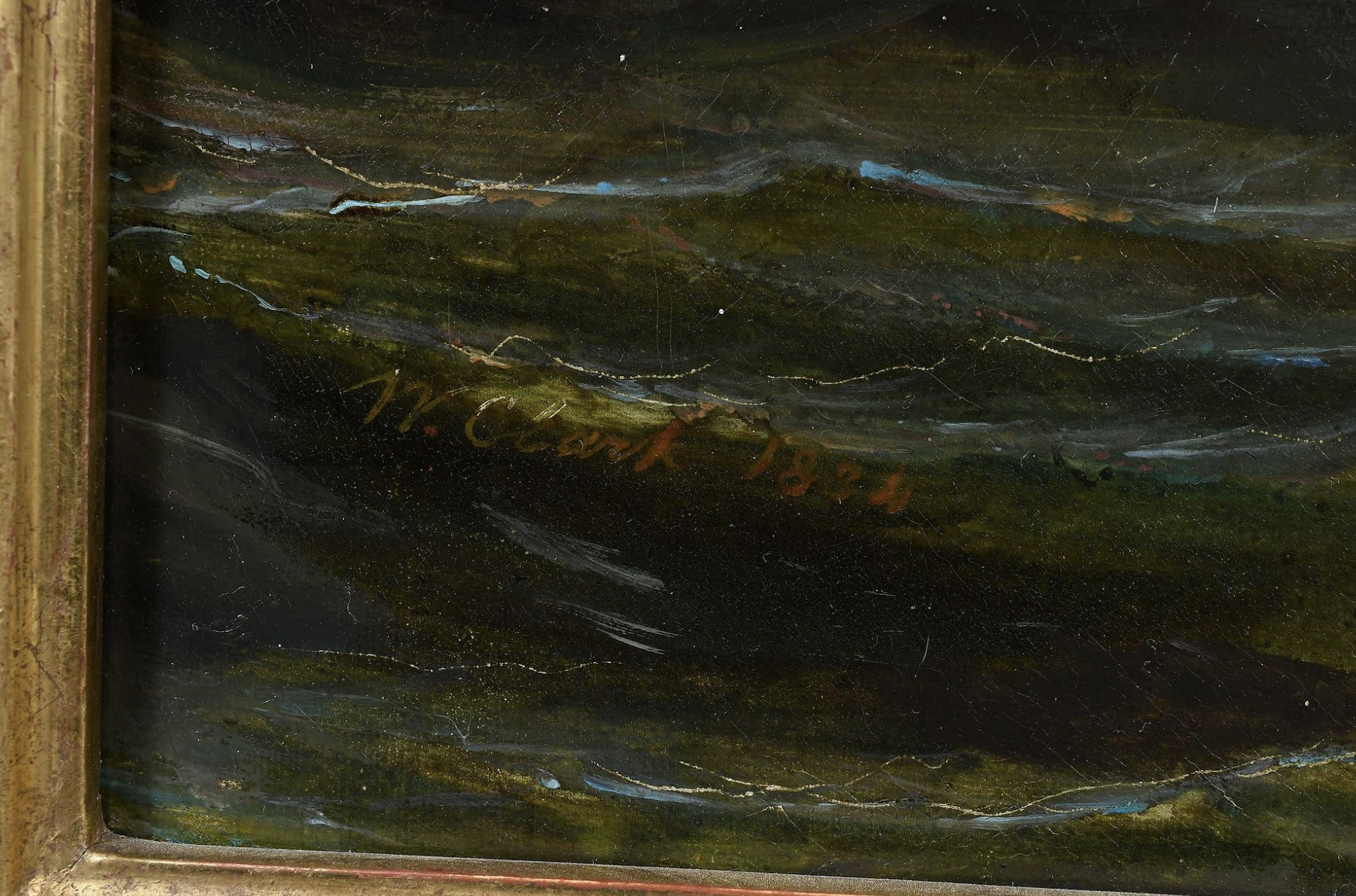 Image 7 of 11
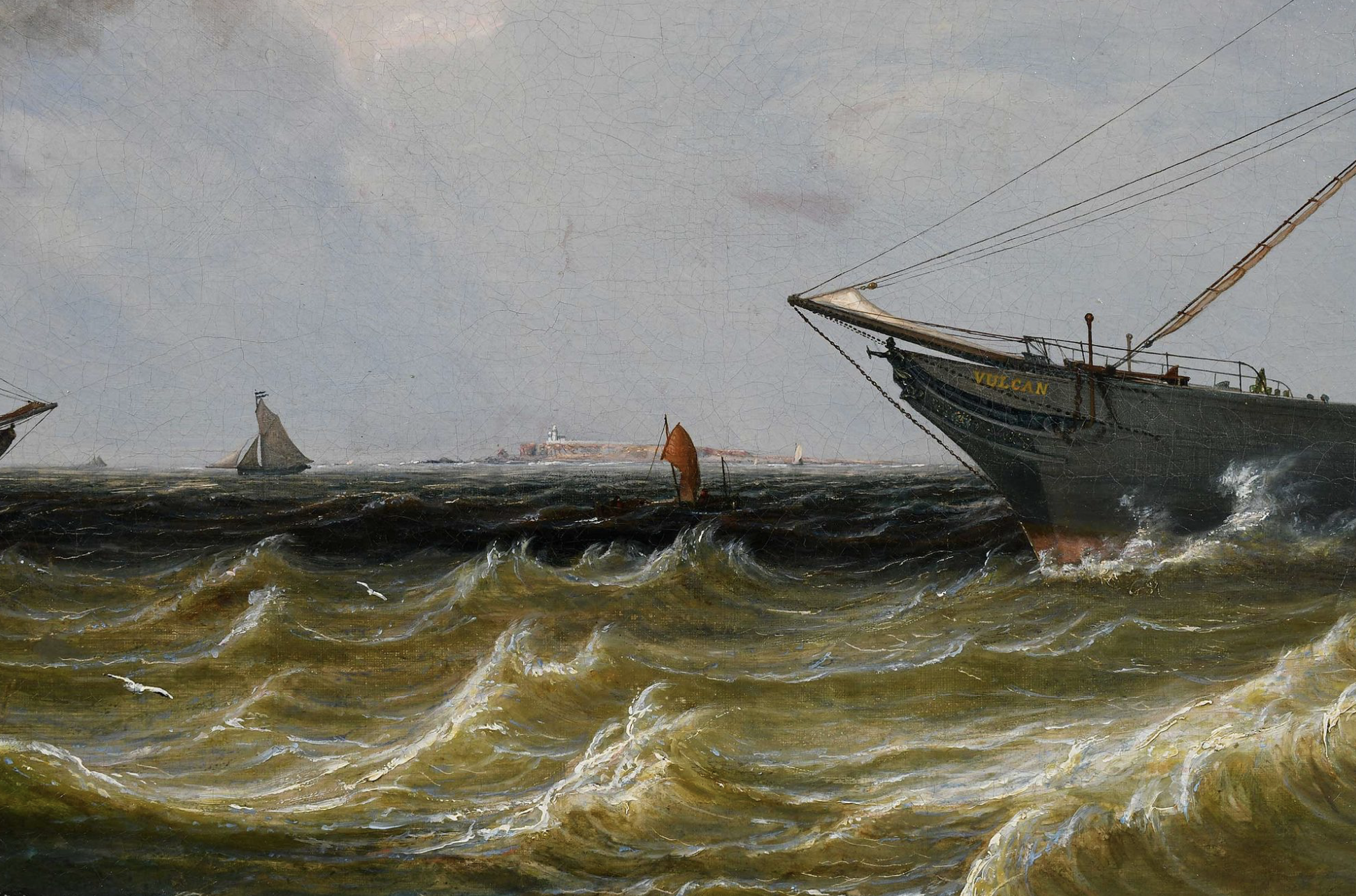 Image 8 of 11
 Image 9 of 11
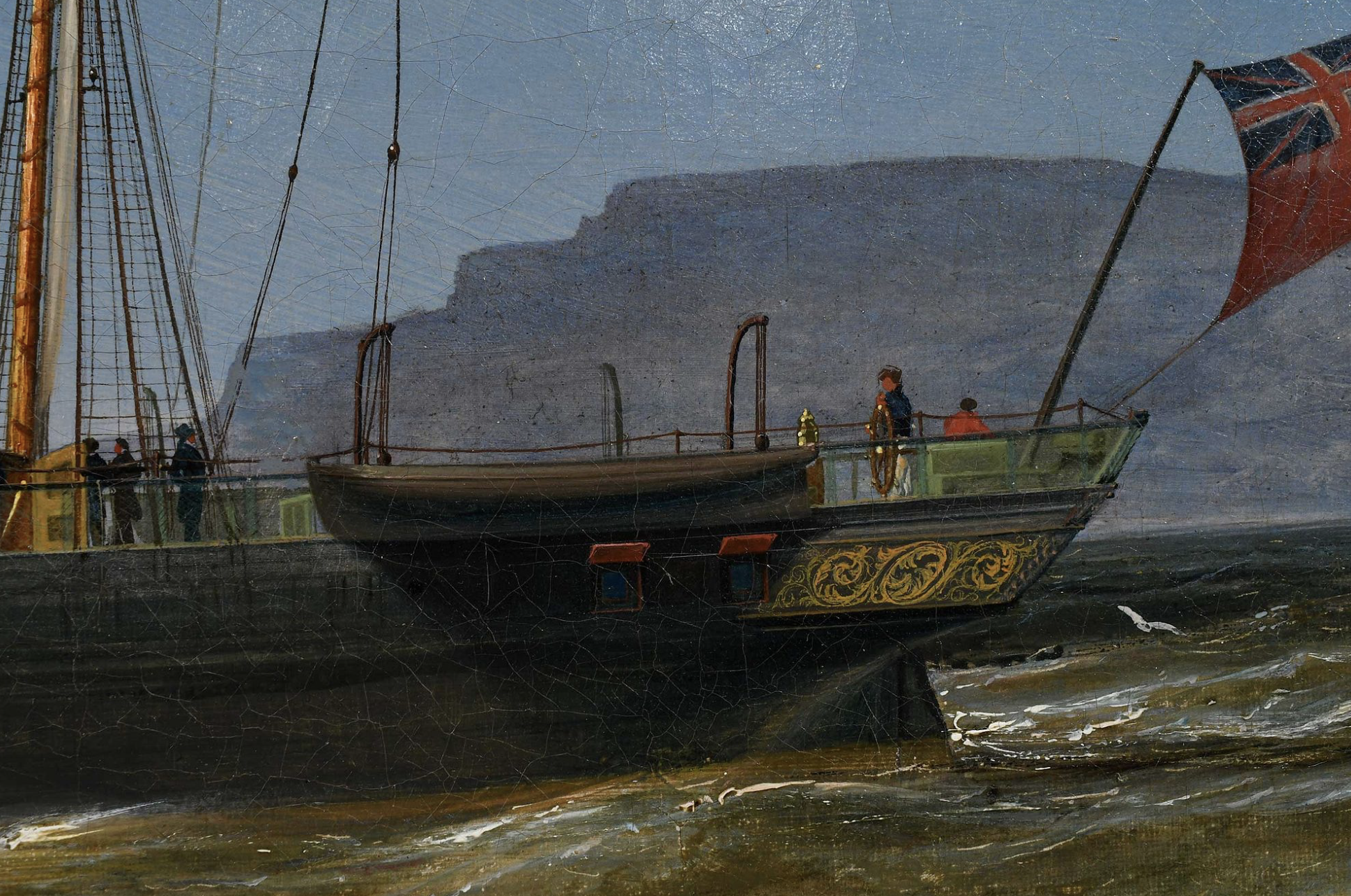 Image 10 of 11
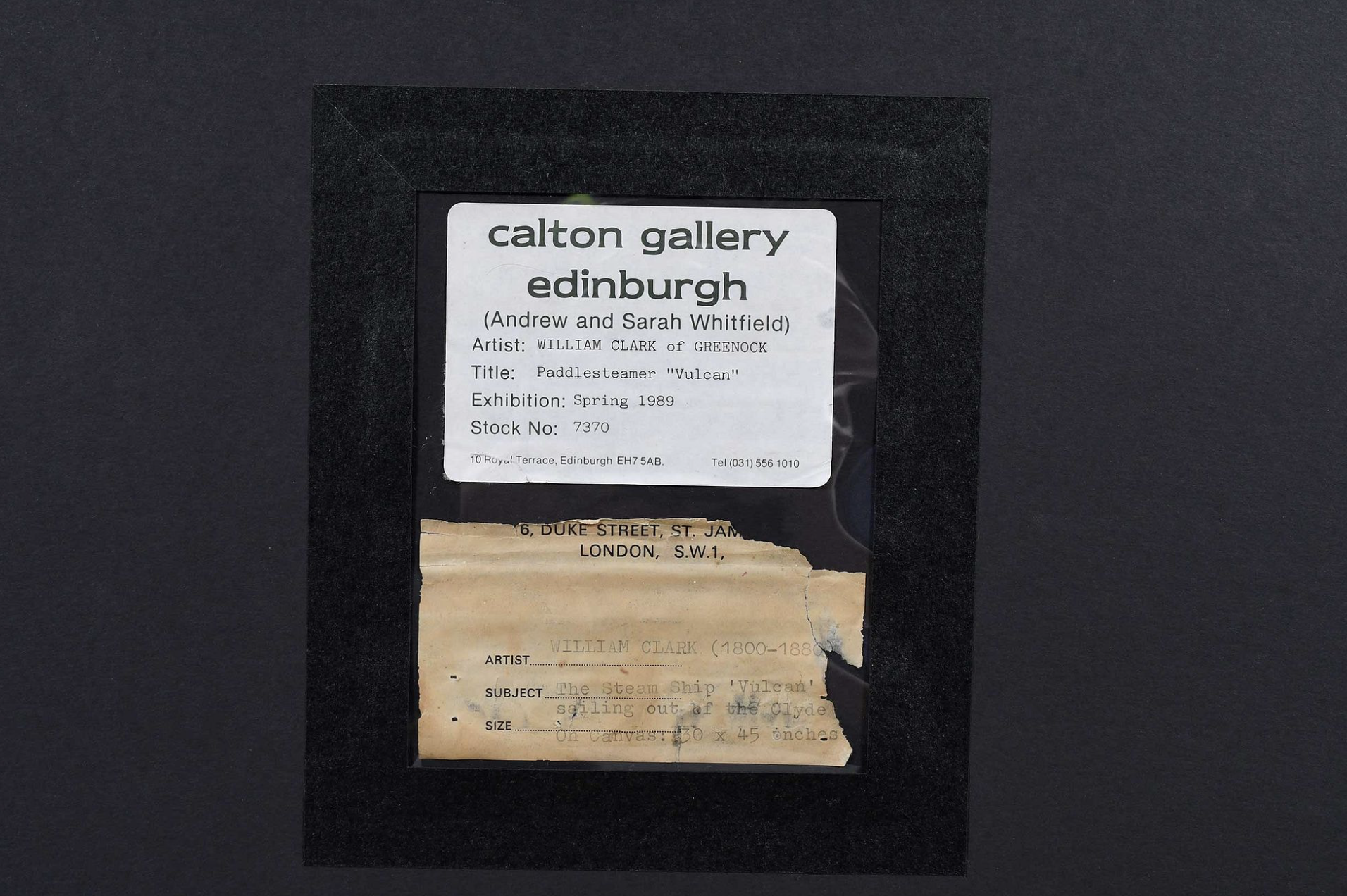 Image 11 of 11