Image 1 of 4
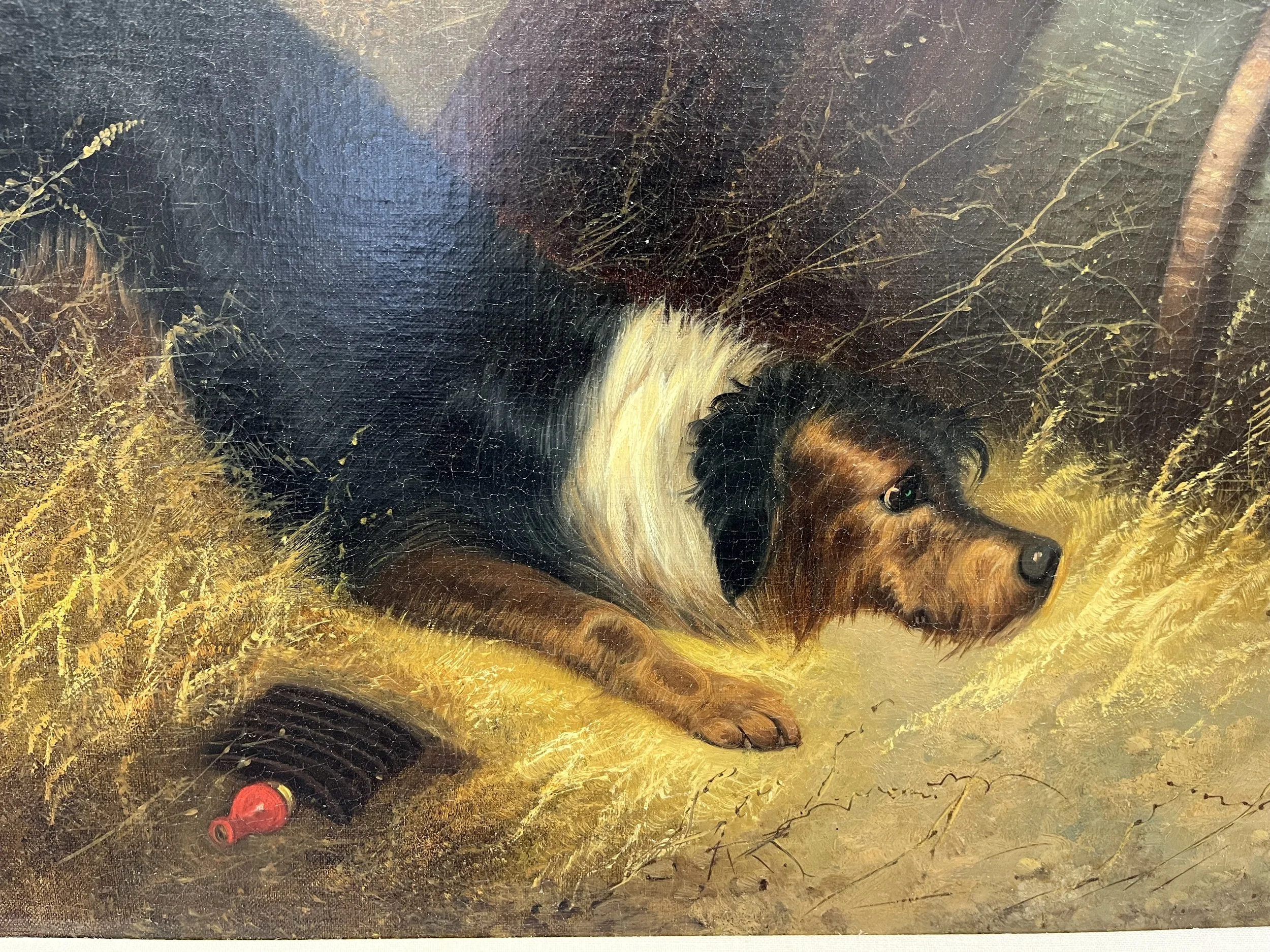 Image 2 of 4
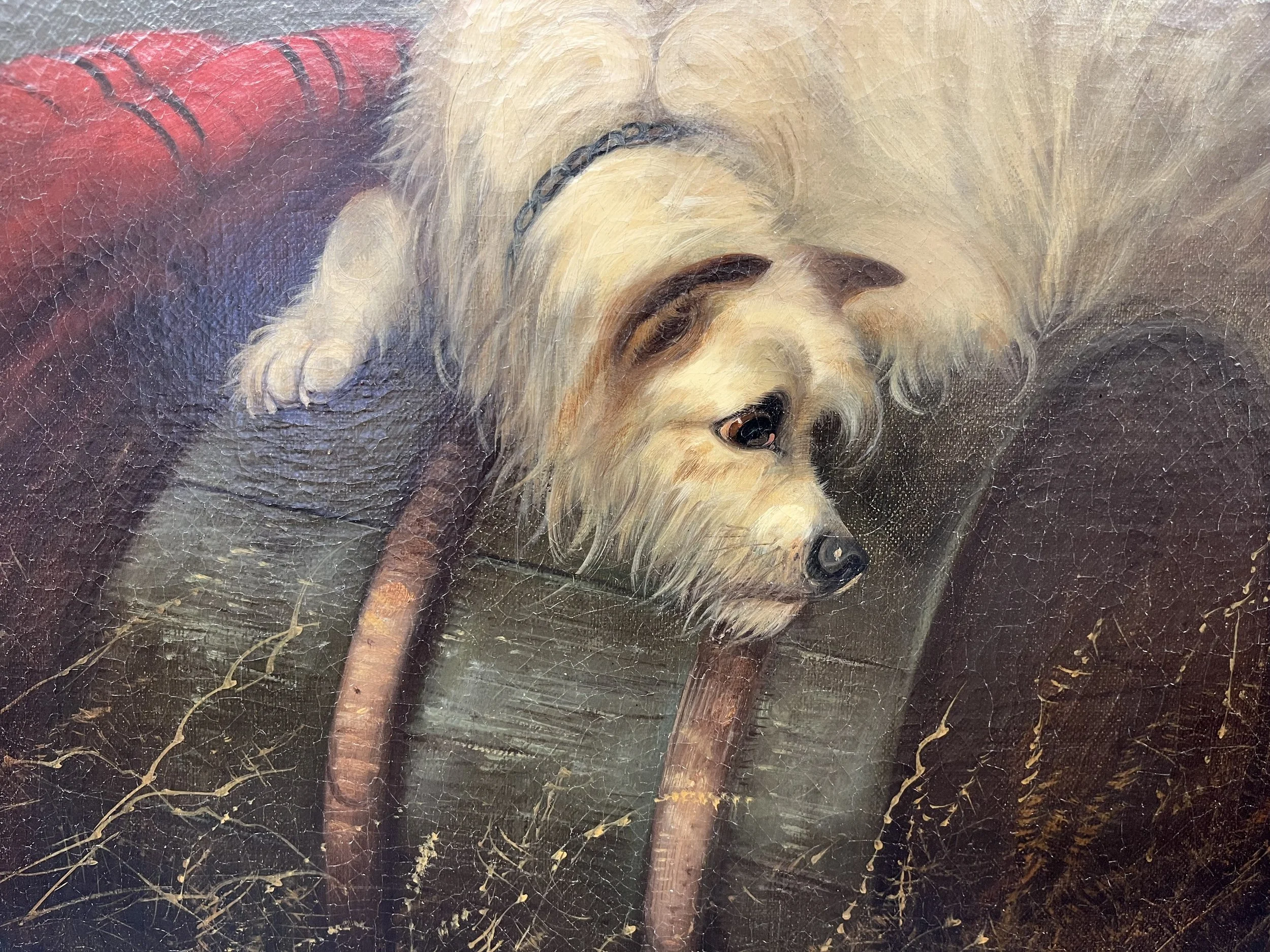 Image 3 of 4
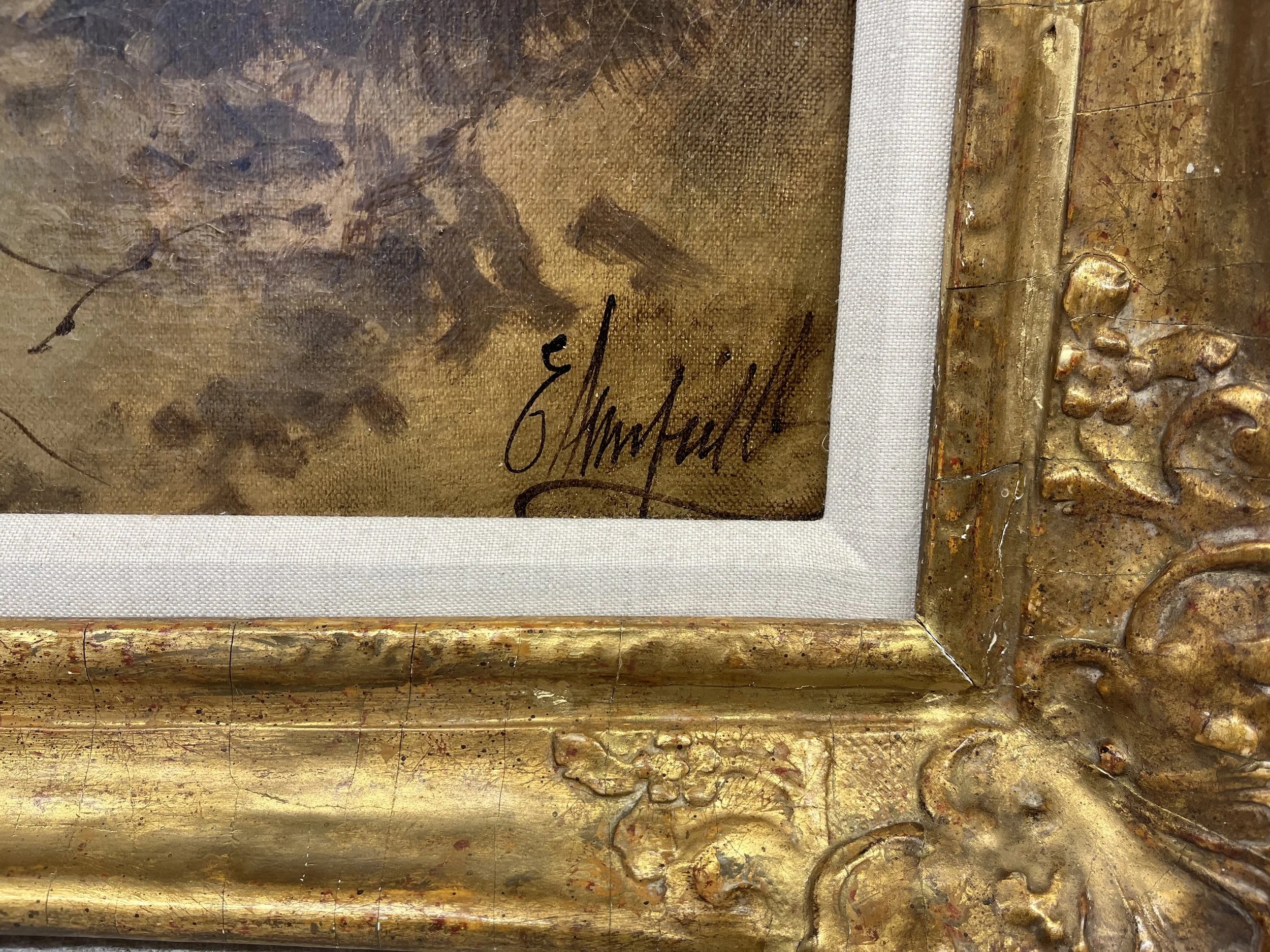 Image 4 of 4
A captivating painting depicts two dogs, a terrier and a border collie, in a rustic barn setting. One dog lies comfortably on the ground, while the other perches atop a weathered wooden barrel. The artwork captures the lively and attentive nature of the dogs, as well as the warm and earthy tones of the surrounding straw, timbers, and soft shadows. Subtle brushwork suggests the texture of coarse fur and aged wood, while muted highlights create a gentle sense of sunlit atmosphere.
Edward Armfield (1817–1896) stands as a quietly significant figure in 19th-century British art. As a master observer and painter of the sporting dog world, his work rewards close attention. While he never attained the immediate renown of some contemporaries, Armfield’s meticulous depictions of terriers—from the spirited Dandie Dinmont to the elegant Fox Terrier—provide an intimate and revealing glimpse into Victorian leisure, country sports, and aristocratic pursuits. His paintings transcend simple animal portraiture to serve as cultural documents, reflecting a specific social milieu and capturing both each breed’s characteristic temperament and the refined sensibilities of their owners.
Born in London, Armfield’s artistic journey began under the tutelage of his father, George Armfield, a respected animal painter. This familial apprenticeship provided Edward with a solid grounding in composition, anatomy, and technique. However, he soon developed his own distinct voice: work defined by remarkable attention to detail, subtle control of light and shadow, and an observant eye for the quirks and individual personalities of his canine subjects. Far from relying on flattened or idealized forms, Armfield’s terriers convey a palpable sense of vitality, mischief, and intelligence, making each portrait feel lived-in and characterful rather than merely decorative.
Oil on canvas.
Artist: Edward George Armfield, British 1817-1896
Signed: E. Armfield, lower right corner
Size: 28” H x 35” W, framed
C. 1845-60, England
A captivating painting depicts two dogs, a terrier and a border collie, in a rustic barn setting. One dog lies comfortably on the ground, while the other perches atop a weathered wooden barrel. The artwork captures the lively and attentive nature of the dogs, as well as the warm and earthy tones of the surrounding straw, timbers, and soft shadows. Subtle brushwork suggests the texture of coarse fur and aged wood, while muted highlights create a gentle sense of sunlit atmosphere.
Edward Armfield (1817–1896) stands as a quietly significant figure in 19th-century British art. As a master observer and painter of the sporting dog world, his work rewards close attention. While he never attained the immediate renown of some contemporaries, Armfield’s meticulous depictions of terriers—from the spirited Dandie Dinmont to the elegant Fox Terrier—provide an intimate and revealing glimpse into Victorian leisure, country sports, and aristocratic pursuits. His paintings transcend simple animal portraiture to serve as cultural documents, reflecting a specific social milieu and capturing both each breed’s characteristic temperament and the refined sensibilities of their owners.
Born in London, Armfield’s artistic journey began under the tutelage of his father, George Armfield, a respected animal painter. This familial apprenticeship provided Edward with a solid grounding in composition, anatomy, and technique. However, he soon developed his own distinct voice: work defined by remarkable attention to detail, subtle control of light and shadow, and an observant eye for the quirks and individual personalities of his canine subjects. Far from relying on flattened or idealized forms, Armfield’s terriers convey a palpable sense of vitality, mischief, and intelligence, making each portrait feel lived-in and characterful rather than merely decorative.
Oil on canvas.
Artist: Edward George Armfield, British 1817-1896
Signed: E. Armfield, lower right corner
Size: 28” H x 35” W, framed
C. 1845-60, England