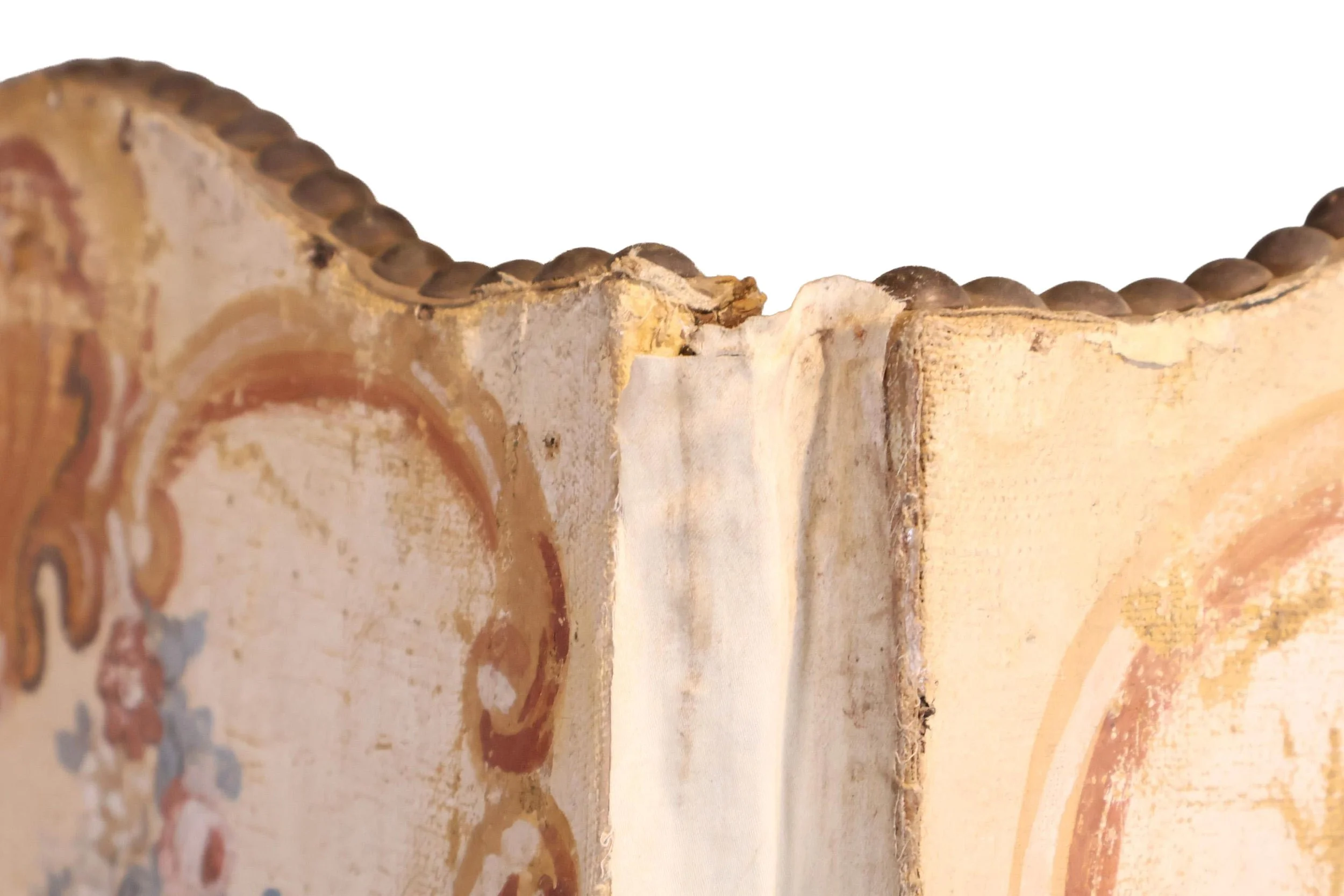
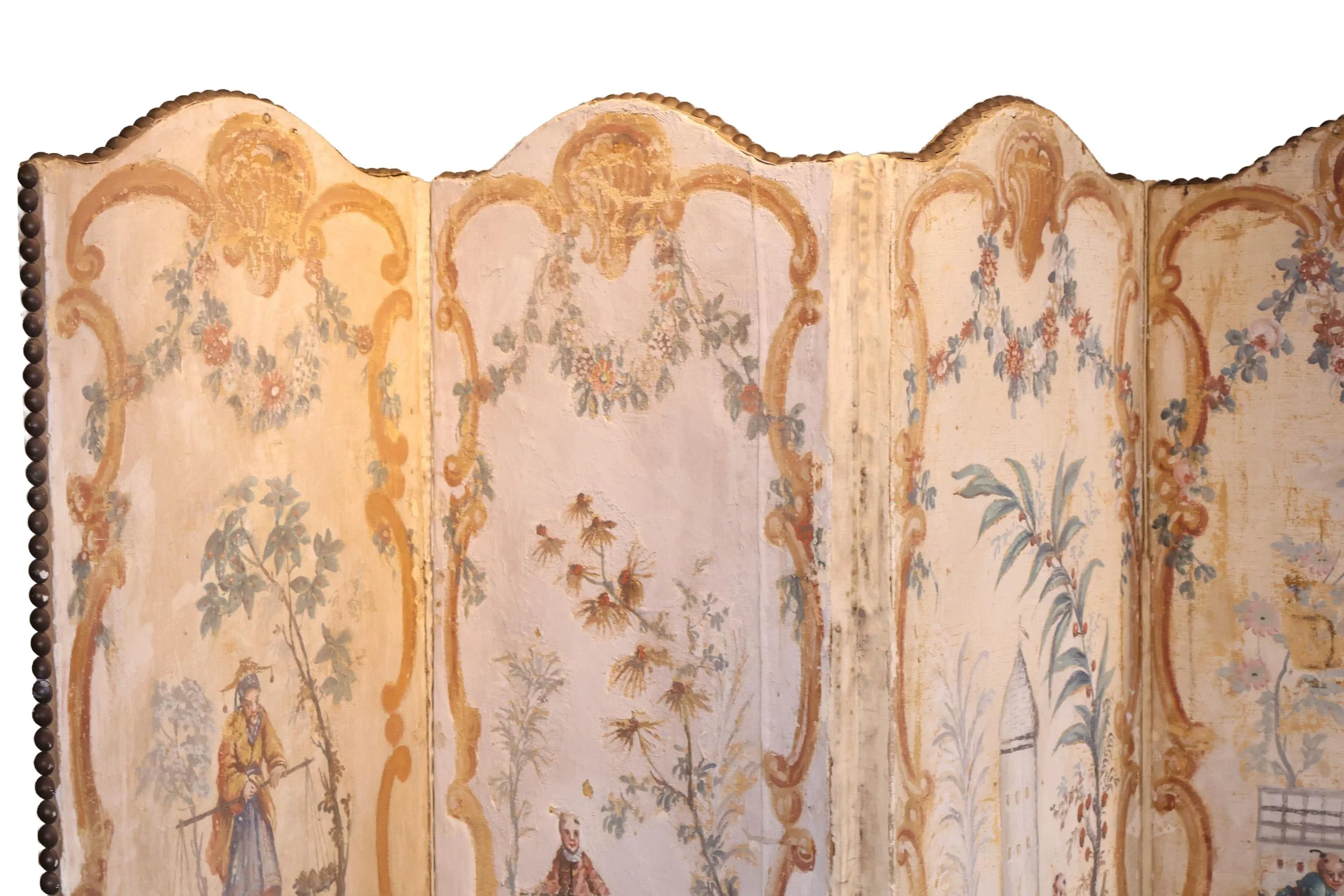
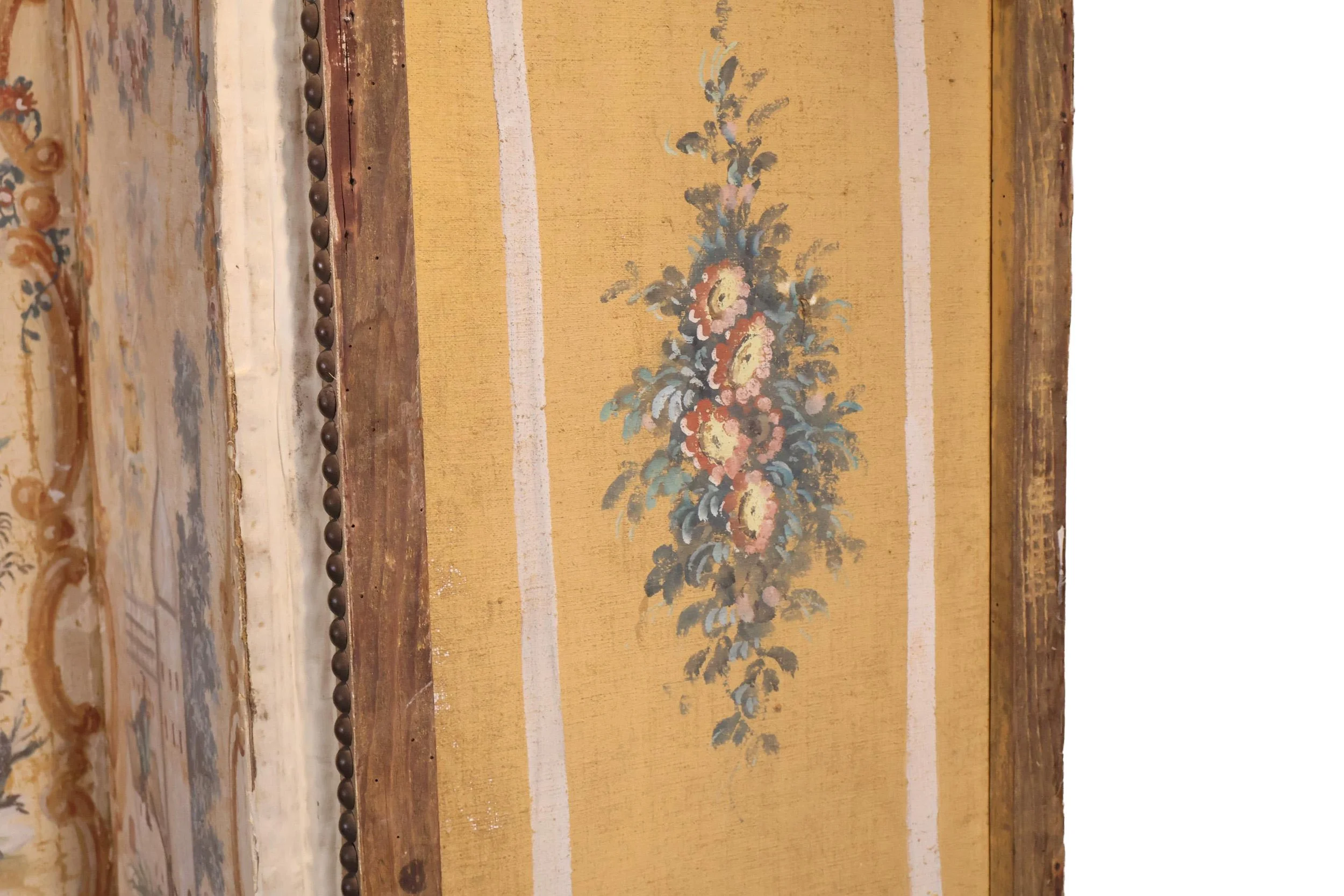
A remarkable 19th-century Dutch Chinese export eight-panel black and gold lacquerware screen, commonly referred to as a Coromandel screen, was crafted from wooden panels coated with multiple layers of black lacquer. These layers were subsequently adorned with intricately detailed scenes and finished with gilded borders.
The screen showcases extensive gilt (gold) decoration set against the deep black lacquer background, creating a striking contrast and a richly textured surface. The primary scene across the central panels appears to depict figures within a landscaped or courtly setting, complete with pavilions, winding paths, and stylized trees—a historically popular motif on Chinese export screens that conveys narrative and refined taste. Encircling the main pictorial panels are decorative borders filled with repeating motifs such as flowering branches, songbirds, and elegant “scholars’ objects,” all rendered with meticulous brushwork and delicate gilding.
The term “Coromandel” refers to the Coromandel Coast of India, a significant transshipment point where these screens were routed to Europe by the English and Dutch East India Companies during the 17th and 18th centuries. Lacquerware itself has an ancient lineage in China, produced using the natural tree sap known as urushi, with techniques and multiple lacquer layers developed over millennia. Screens of this type were highly coveted luxury items, prized both within Chinese domestic settings and as fashionable export goods in European collections.
Size: 84” H X 144” L
C. 1820, Netherlands
A remarkable 19th-century Dutch Chinese export eight-panel black and gold lacquerware screen, commonly referred to as a Coromandel screen, was crafted from wooden panels coated with multiple layers of black lacquer. These layers were subsequently adorned with intricately detailed scenes and finished with gilded borders.
The screen showcases extensive gilt (gold) decoration set against the deep black lacquer background, creating a striking contrast and a richly textured surface. The primary scene across the central panels appears to depict figures within a landscaped or courtly setting, complete with pavilions, winding paths, and stylized trees—a historically popular motif on Chinese export screens that conveys narrative and refined taste. Encircling the main pictorial panels are decorative borders filled with repeating motifs such as flowering branches, songbirds, and elegant “scholars’ objects,” all rendered with meticulous brushwork and delicate gilding.
The term “Coromandel” refers to the Coromandel Coast of India, a significant transshipment point where these screens were routed to Europe by the English and Dutch East India Companies during the 17th and 18th centuries. Lacquerware itself has an ancient lineage in China, produced using the natural tree sap known as urushi, with techniques and multiple lacquer layers developed over millennia. Screens of this type were highly coveted luxury items, prized both within Chinese domestic settings and as fashionable export goods in European collections.
Size: 84” H X 144” L
C. 1820, Netherlands

 Image 1 of 6
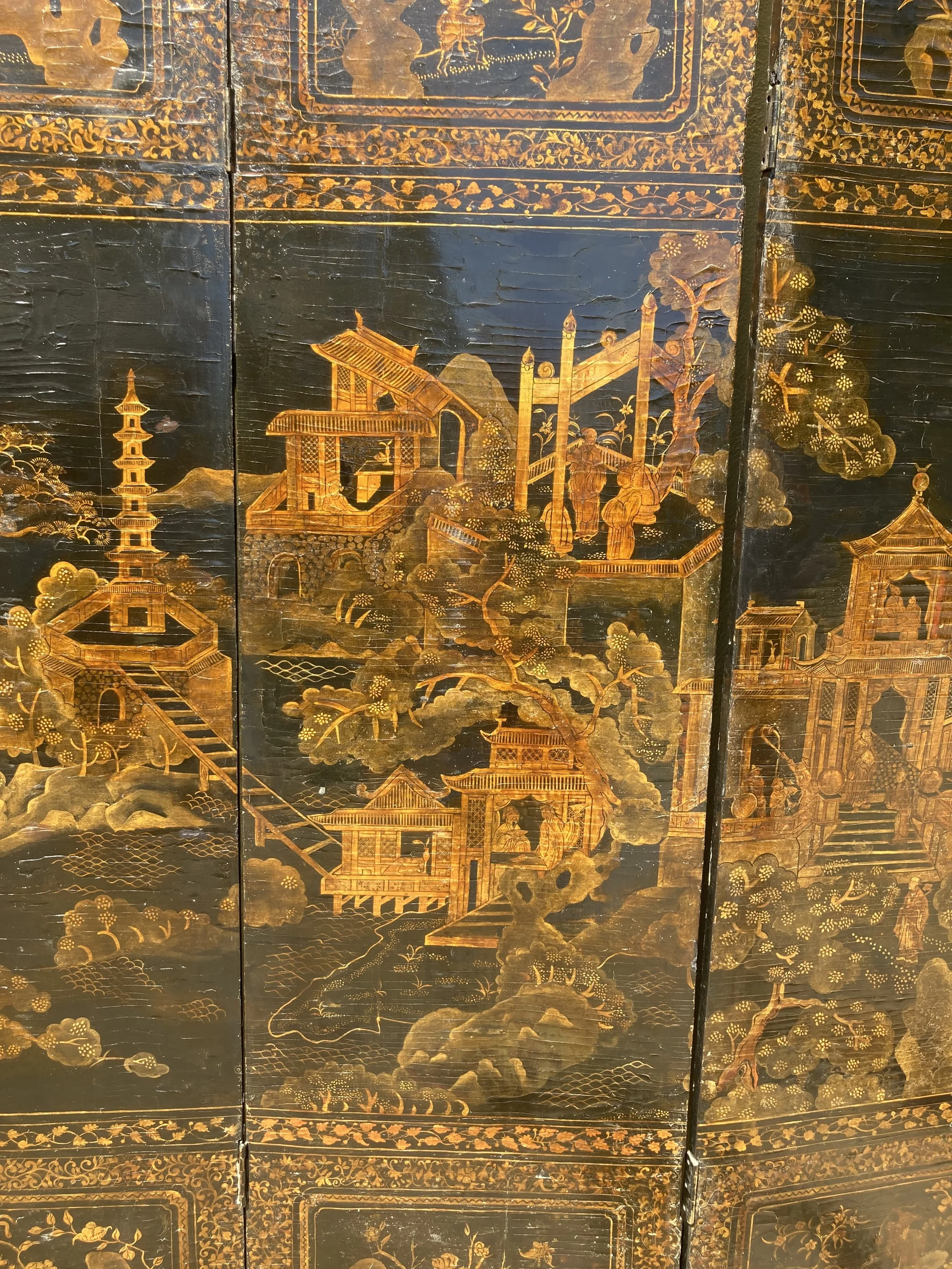 Image 2 of 6
 Image 3 of 6
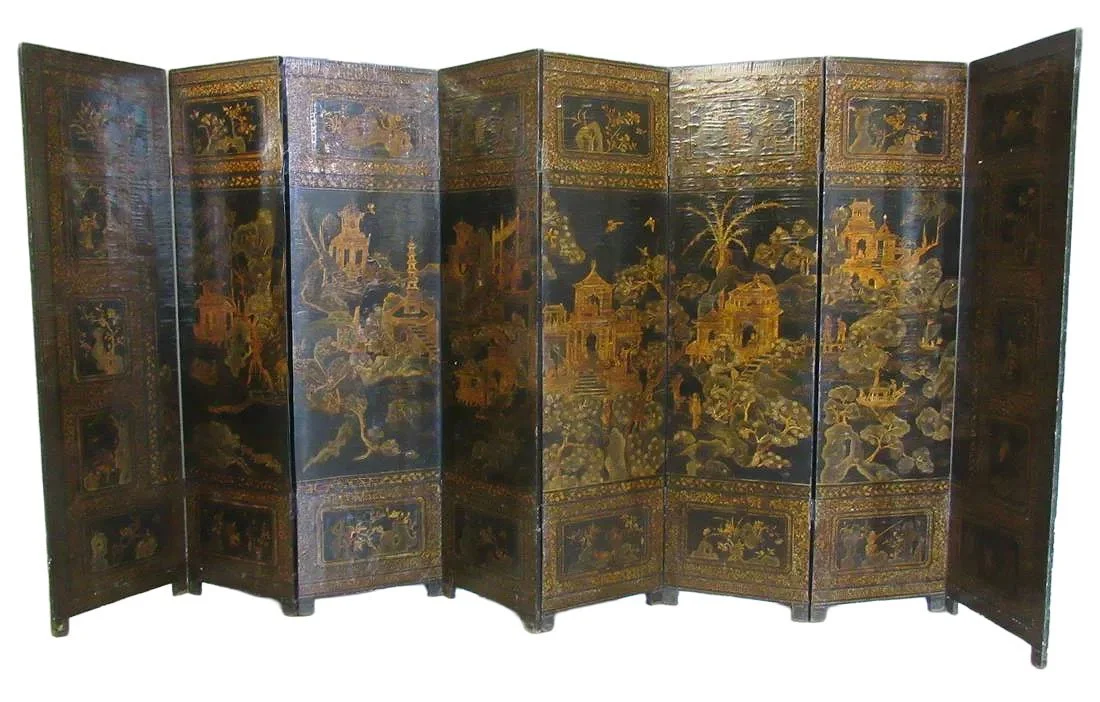 Image 4 of 6
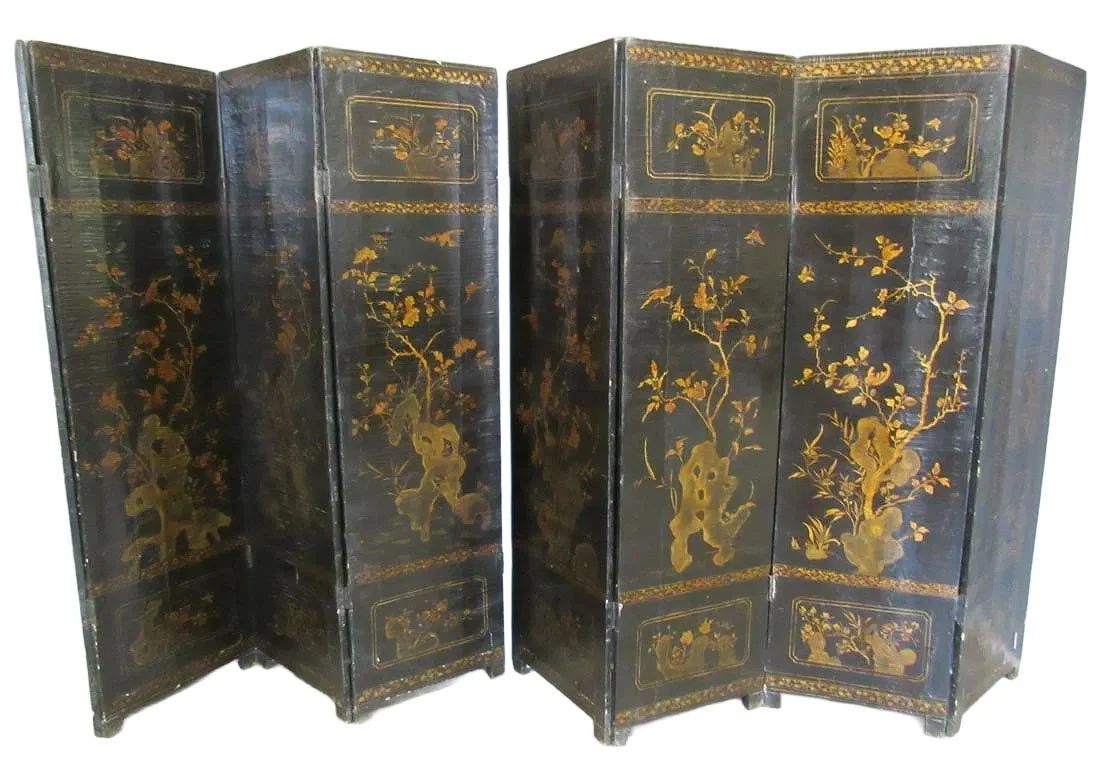 Image 5 of 6
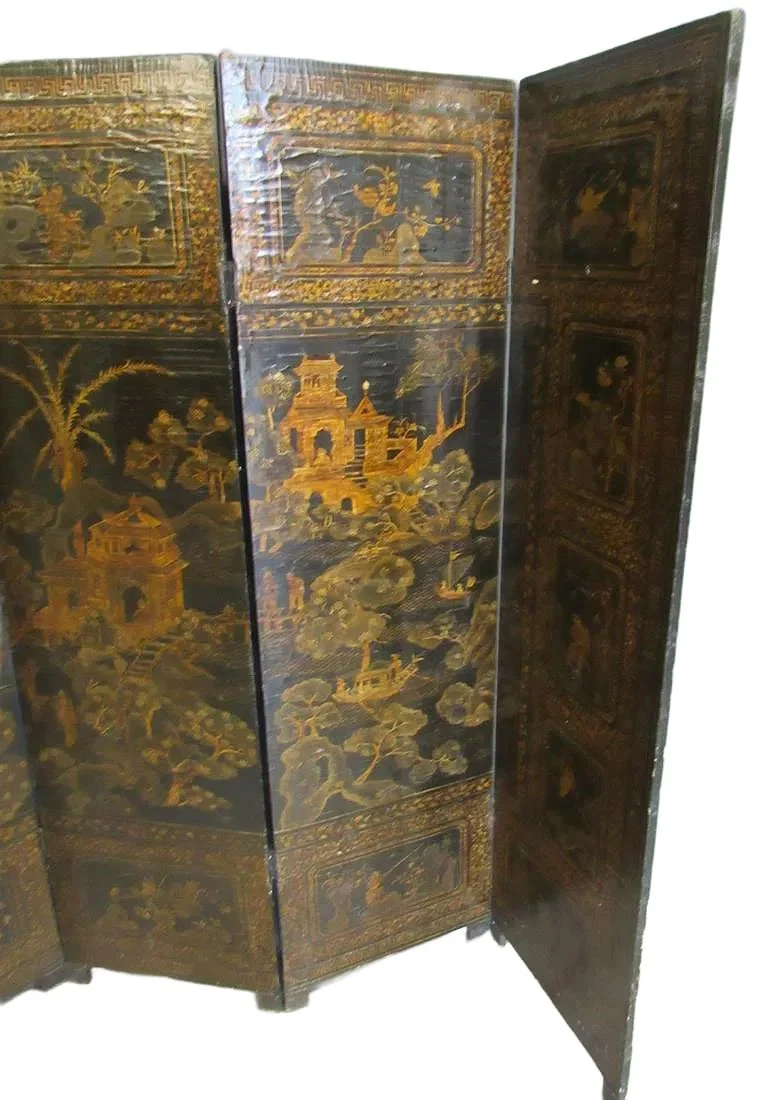 Image 6 of 6