
 Image 1 of 5
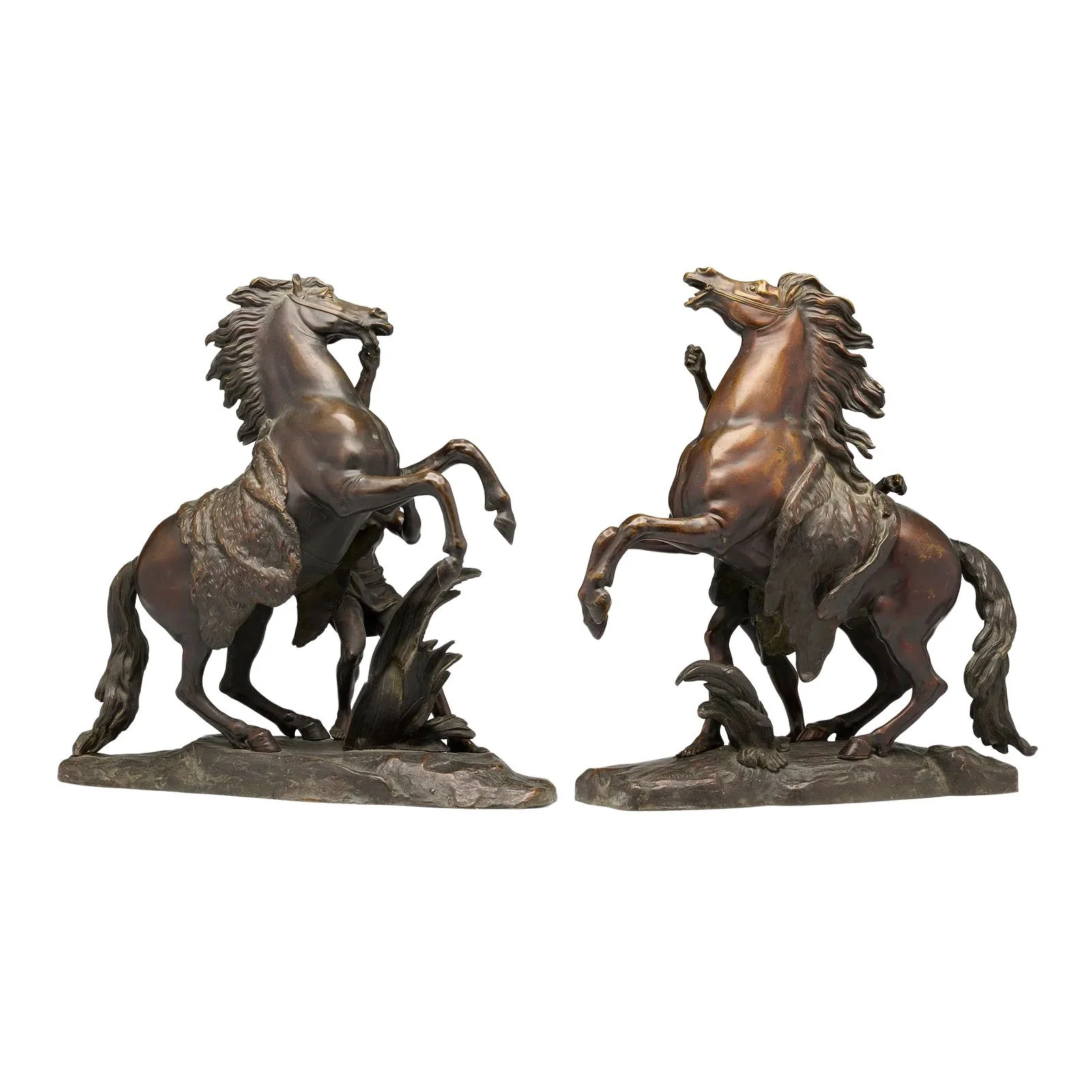 Image 2 of 5
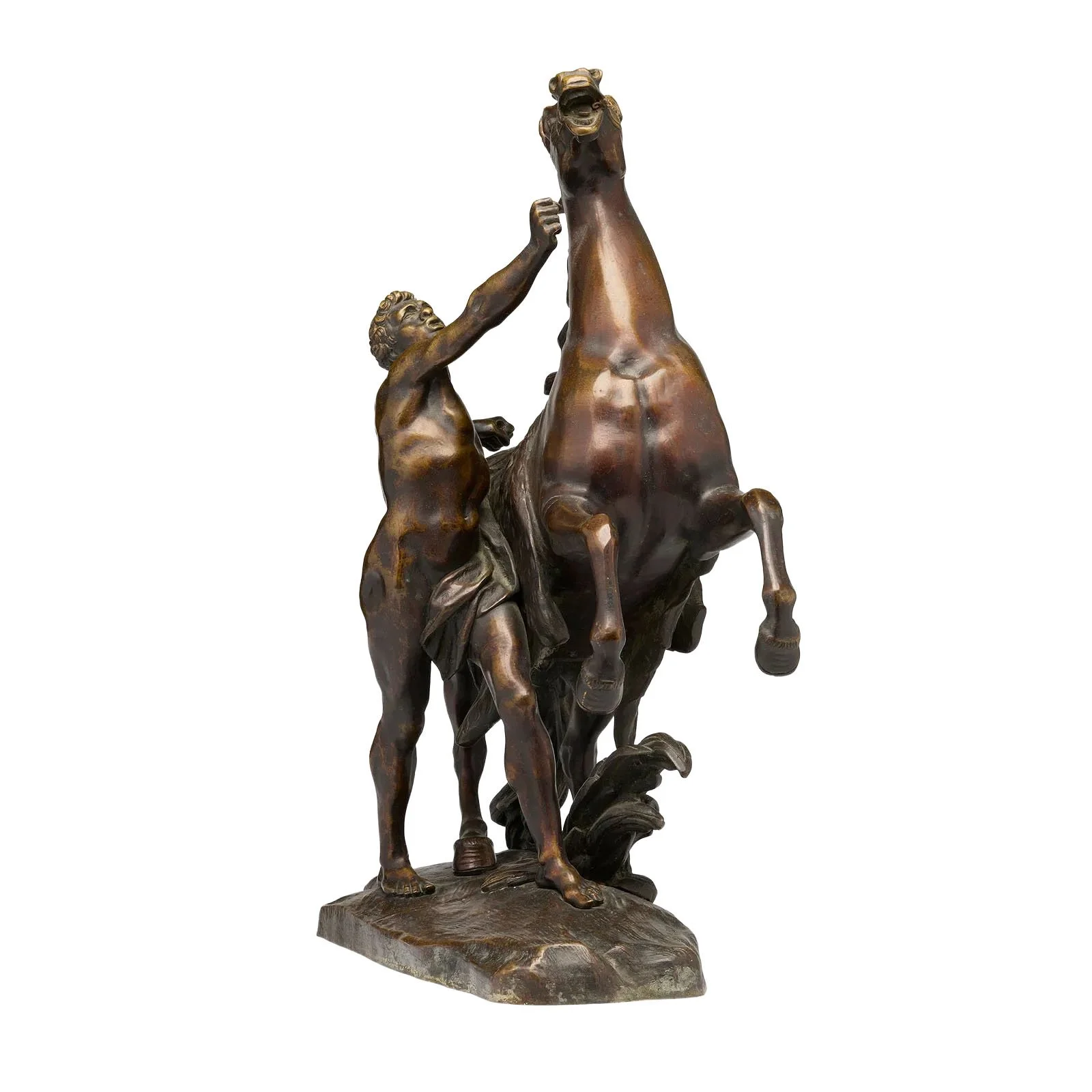 Image 3 of 5
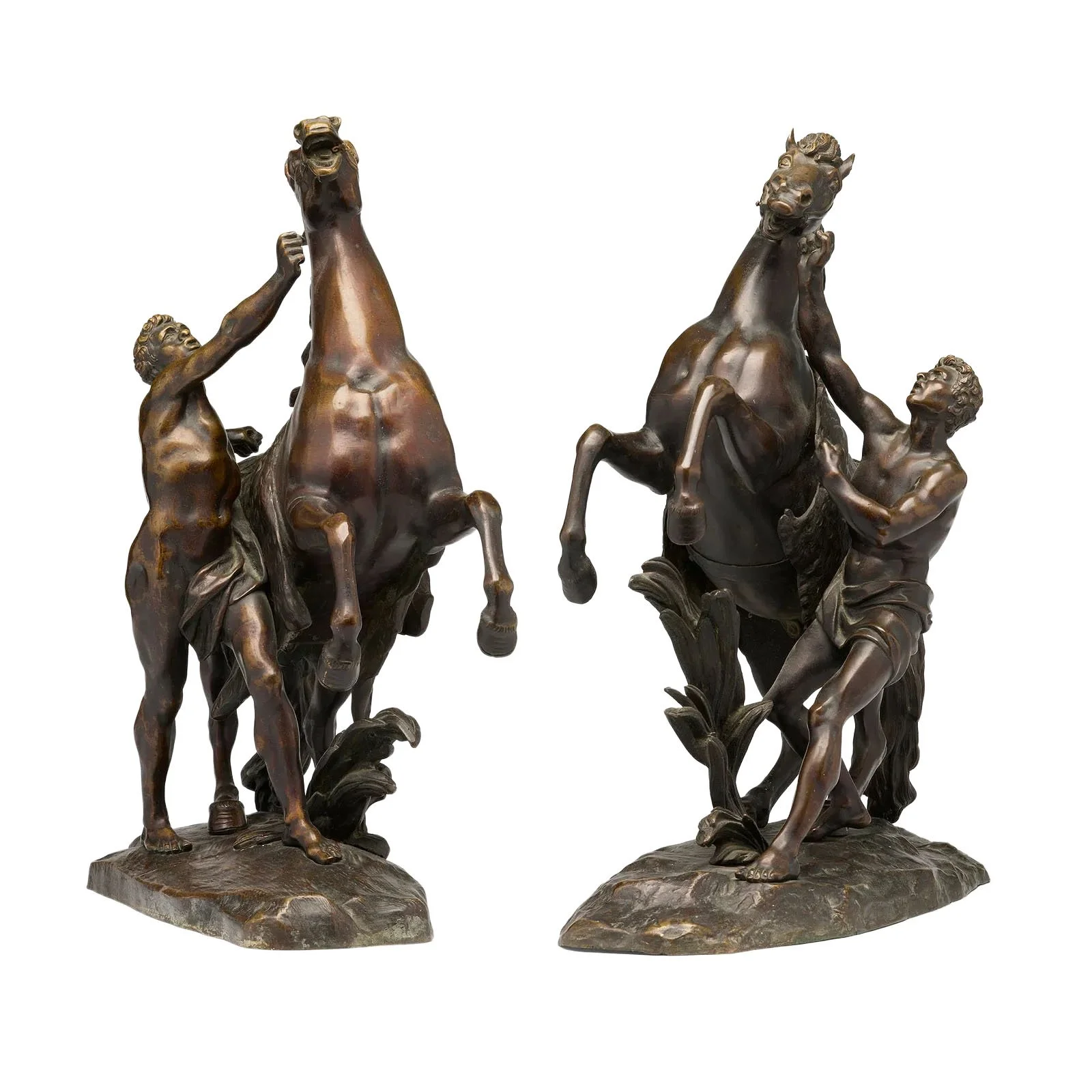 Image 4 of 5
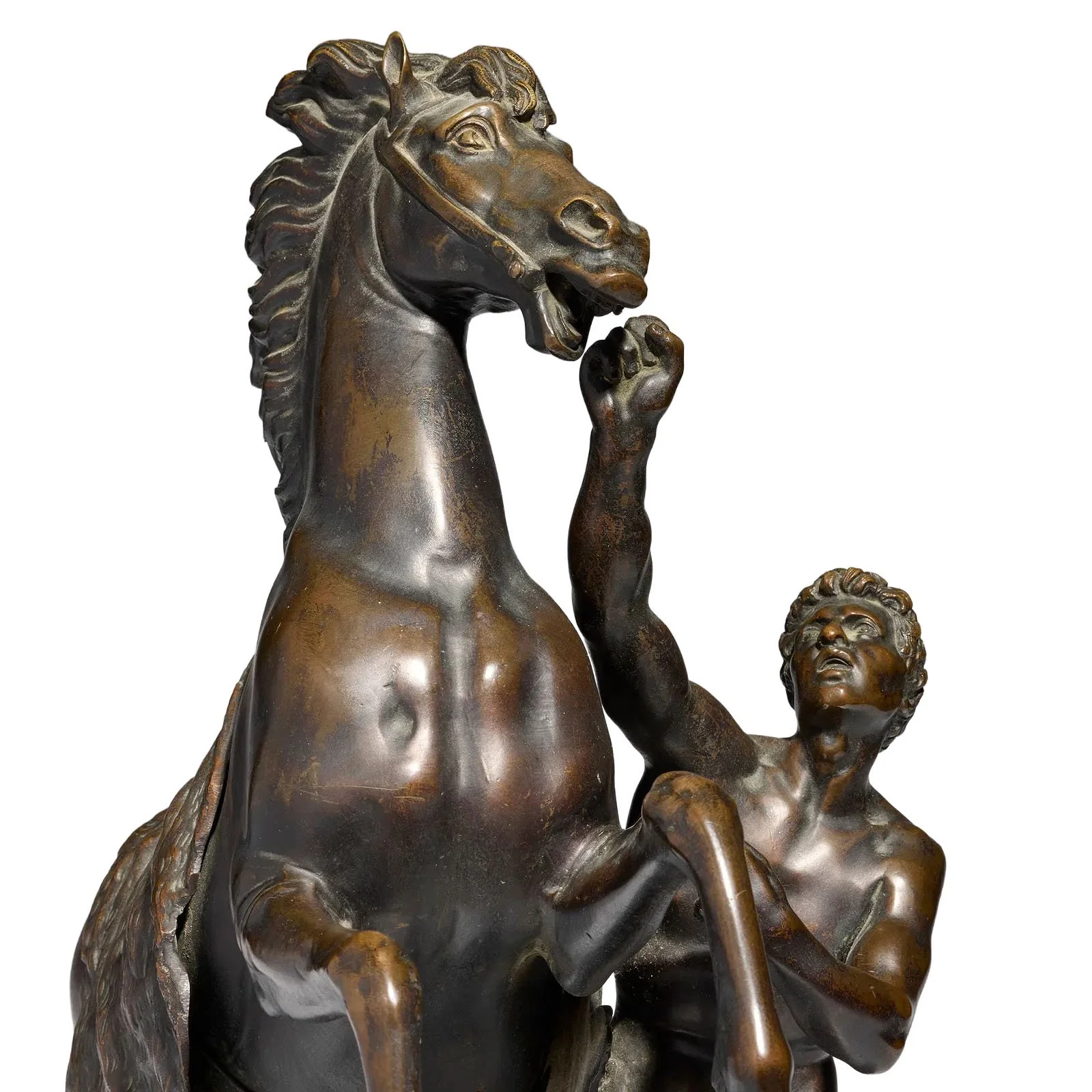 Image 5 of 5
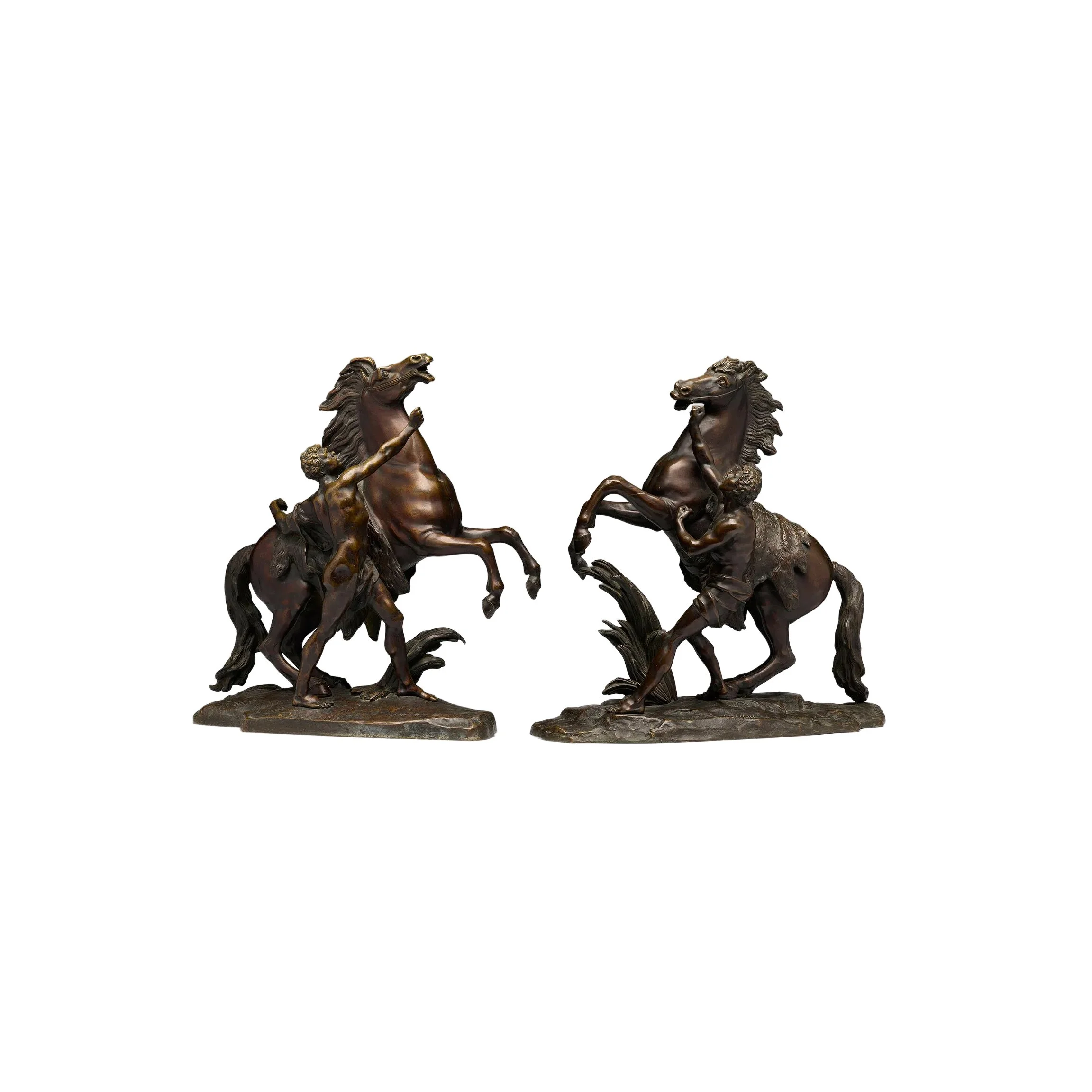
A remarkable 19th century patinated bronze reproduction of the renowned “Marly Horses” (Chevaux de Marly), originally sculpted by Guillaume Coustou the Elder, stands as a testament to the grandeur of French art. The original monumental sculptures, crafted in Carrara marble between 1743 and 1745, depict a powerful, rearing wild horse being restrained by a semi-clad, muscular groom. This dynamic scene serves as an allegory for the triumph of human intellect and strength over untamed nature. Commissioned by Louis XV in 1739, the horses were installed in 1745 at the Abreuvoir (“Horse Trough”) at Marly. They were considered masterpieces of the grace and expressiveness of the French Late Baroque or Rococo style.
Following the French Revolution, the horses were relocated from Marly to the beginning of the Champs-Élysées on the Place de la Concorde. The originals weresubsequently brought indoors for protection at the Louvre Museum in 1984.
Guillaume Coustou, a prominent French sculptor of the Baroque and Louis XIV style, served as a royal sculptor for both Louis XIV and Louis XV. In 1735, he ascended to the position of Director of the Royal Academy of Painting and Sculpture.
Several of Coustou’s sculptures were commissioned for the Tuileries Gardens, including a bronze Diane à la biche (“Diana and a Deer”) and Hippoméne (1714). The latter was originally situated in the goldfish pond at Marly and was later relocated to the Tuileries until 1940, when it was brought into the Louvre. The marble Bust of Samuel Bernard, created by Guillaume Coustou, is currently housed at the Metropolitan Museum of Art.
Sizes:
21.25” H x 20” W x 8” D
21” H x 22” W x 9.5” D
C. 1880, France
A remarkable 19th century patinated bronze reproduction of the renowned “Marly Horses” (Chevaux de Marly), originally sculpted by Guillaume Coustou the Elder, stands as a testament to the grandeur of French art. The original monumental sculptures, crafted in Carrara marble between 1743 and 1745, depict a powerful, rearing wild horse being restrained by a semi-clad, muscular groom. This dynamic scene serves as an allegory for the triumph of human intellect and strength over untamed nature. Commissioned by Louis XV in 1739, the horses were installed in 1745 at the Abreuvoir (“Horse Trough”) at Marly. They were considered masterpieces of the grace and expressiveness of the French Late Baroque or Rococo style.
Following the French Revolution, the horses were relocated from Marly to the beginning of the Champs-Élysées on the Place de la Concorde. The originals weresubsequently brought indoors for protection at the Louvre Museum in 1984.
Guillaume Coustou, a prominent French sculptor of the Baroque and Louis XIV style, served as a royal sculptor for both Louis XIV and Louis XV. In 1735, he ascended to the position of Director of the Royal Academy of Painting and Sculpture.
Several of Coustou’s sculptures were commissioned for the Tuileries Gardens, including a bronze Diane à la biche (“Diana and a Deer”) and Hippoméne (1714). The latter was originally situated in the goldfish pond at Marly and was later relocated to the Tuileries until 1940, when it was brought into the Louvre. The marble Bust of Samuel Bernard, created by Guillaume Coustou, is currently housed at the Metropolitan Museum of Art.
Sizes:
21.25” H x 20” W x 8” D
21” H x 22” W x 9.5” D
C. 1880, France