 Image 1 of 2
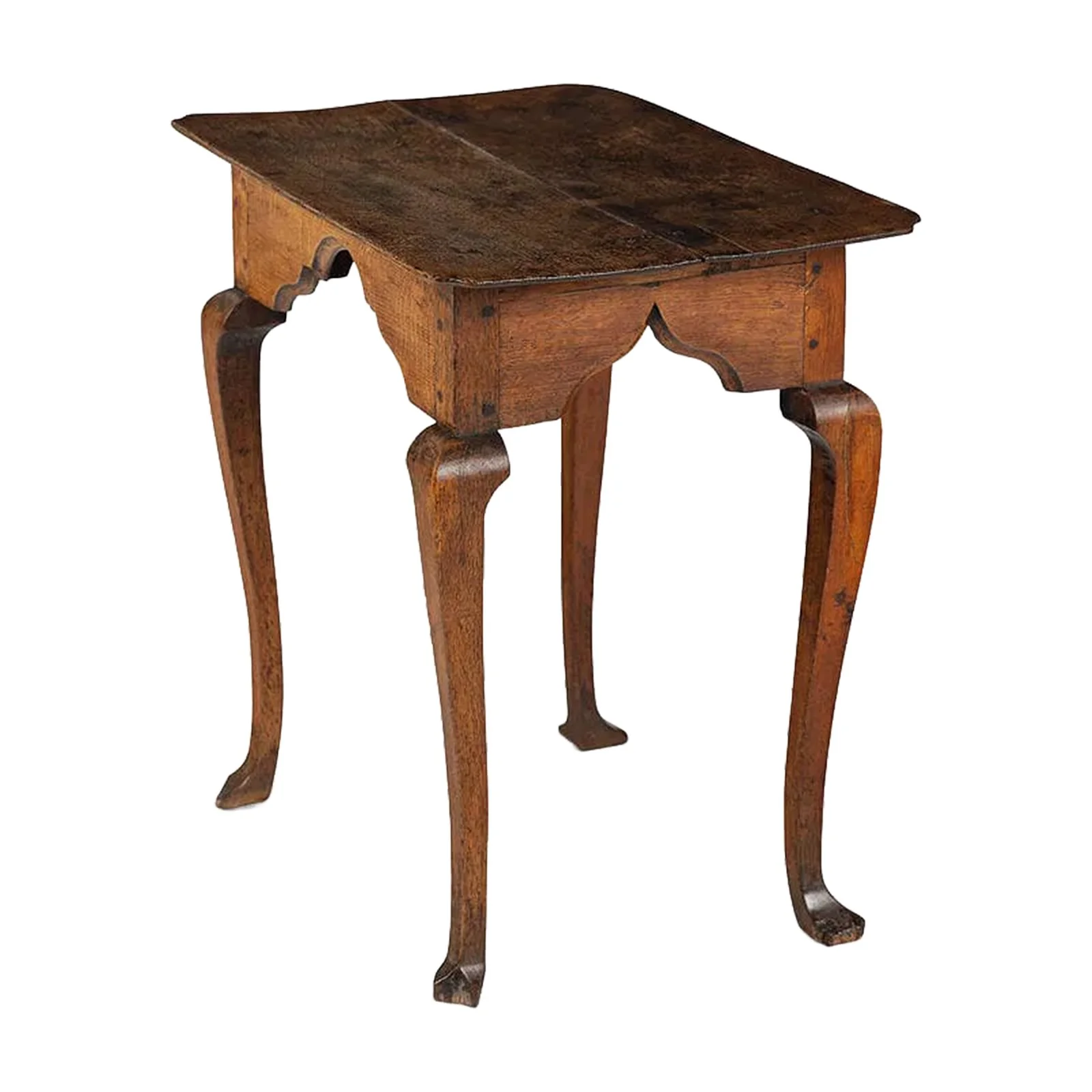 Image 2 of 2
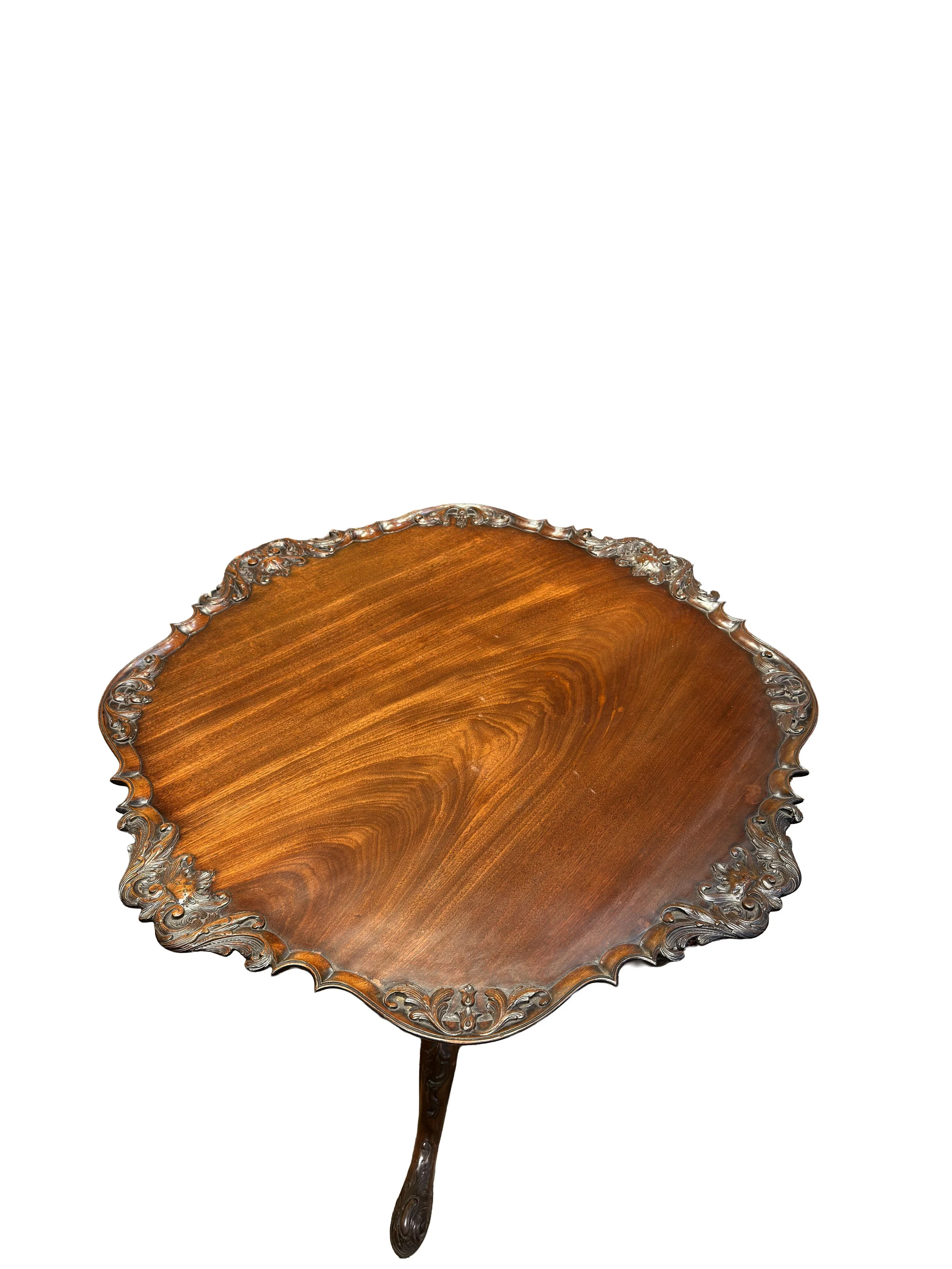
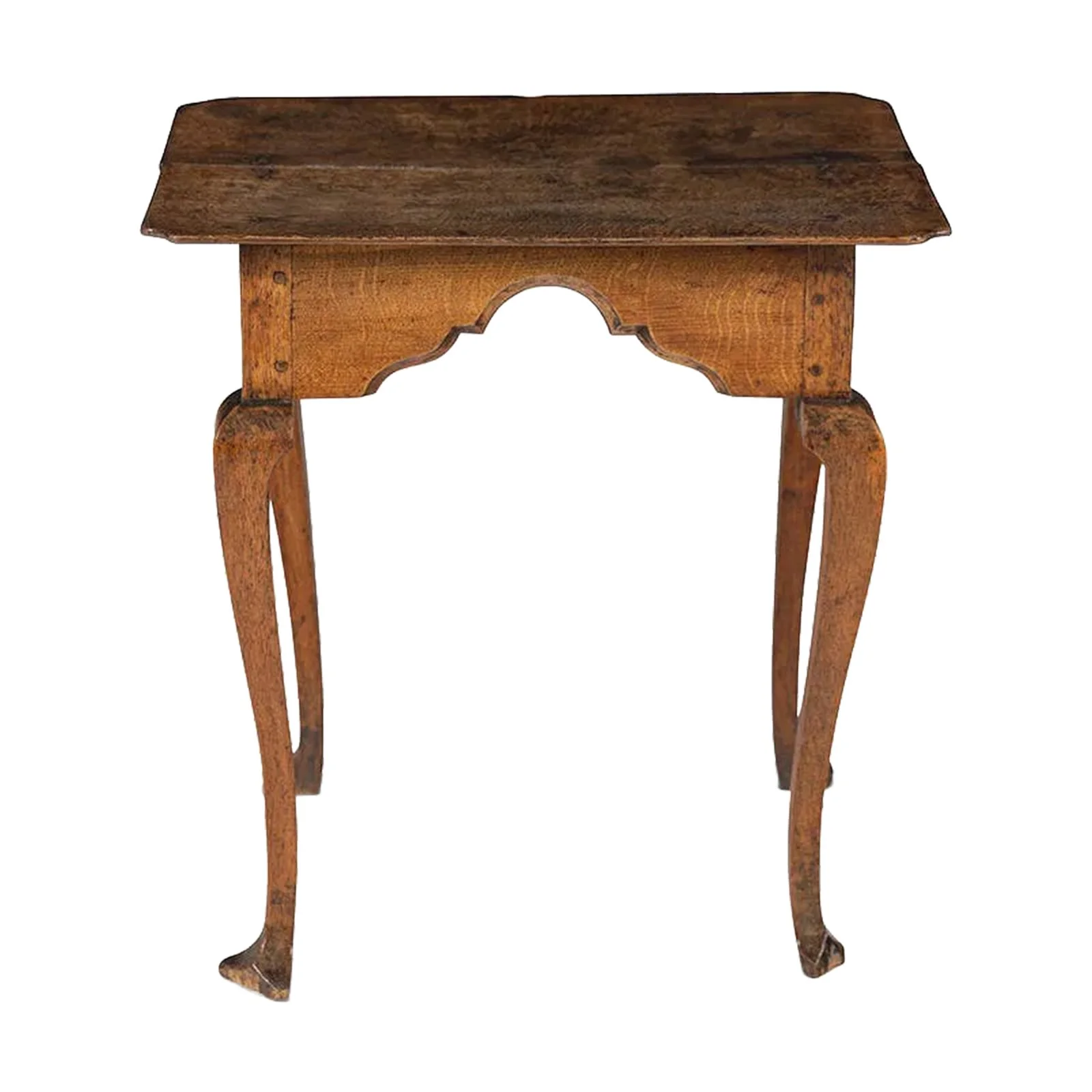
This exceptional Queen Anne tea table represents a pinnacle of 18th-century rural New England craftsmanship, likely originating from a premier workshop in Rhode Island or New Hampshire, circa 1750-1780. Handcrafted from highly figured, choice oak, the piece displays a brilliant, wave-like horizontal grain pattern that has aged over centuries into a deeply saturated honey-amber patina.
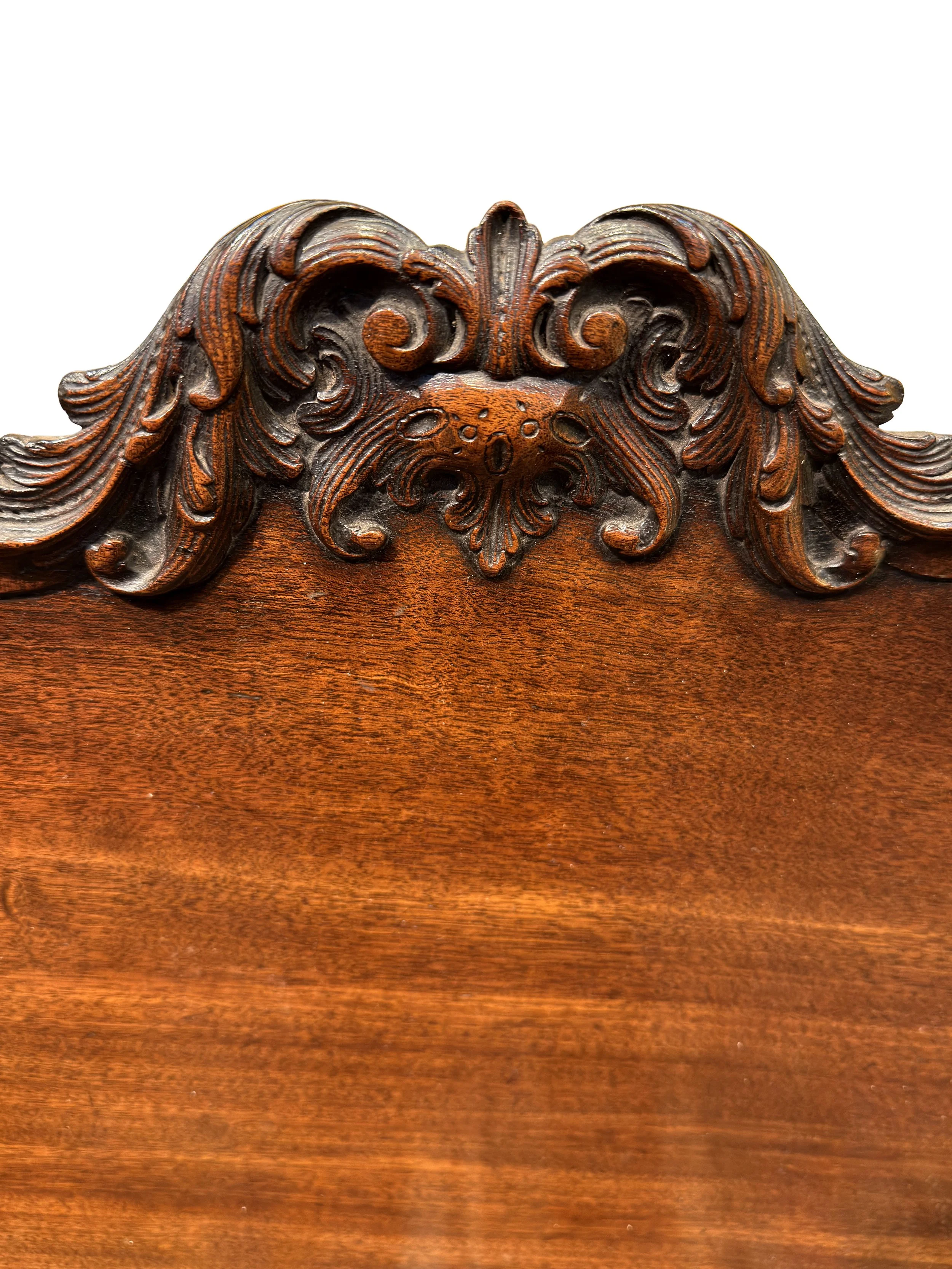
This table boasts a rare, diminutive scale that is fiercely coveted by advanced Americana collectors. The compact footprint allows the table to retain incredibly crisp, elegant proportions without sacrificing the dramatic presence of its historic form. The two-plank tabletop features a distinctive porringer-top design with extended, notched corners that beautifully echo the handles of colonial American metalware. Over generations of environmental shift, natural wood shrinkage has gently separated the two-plank seam, confirming its pristine, period-correct authenticity.
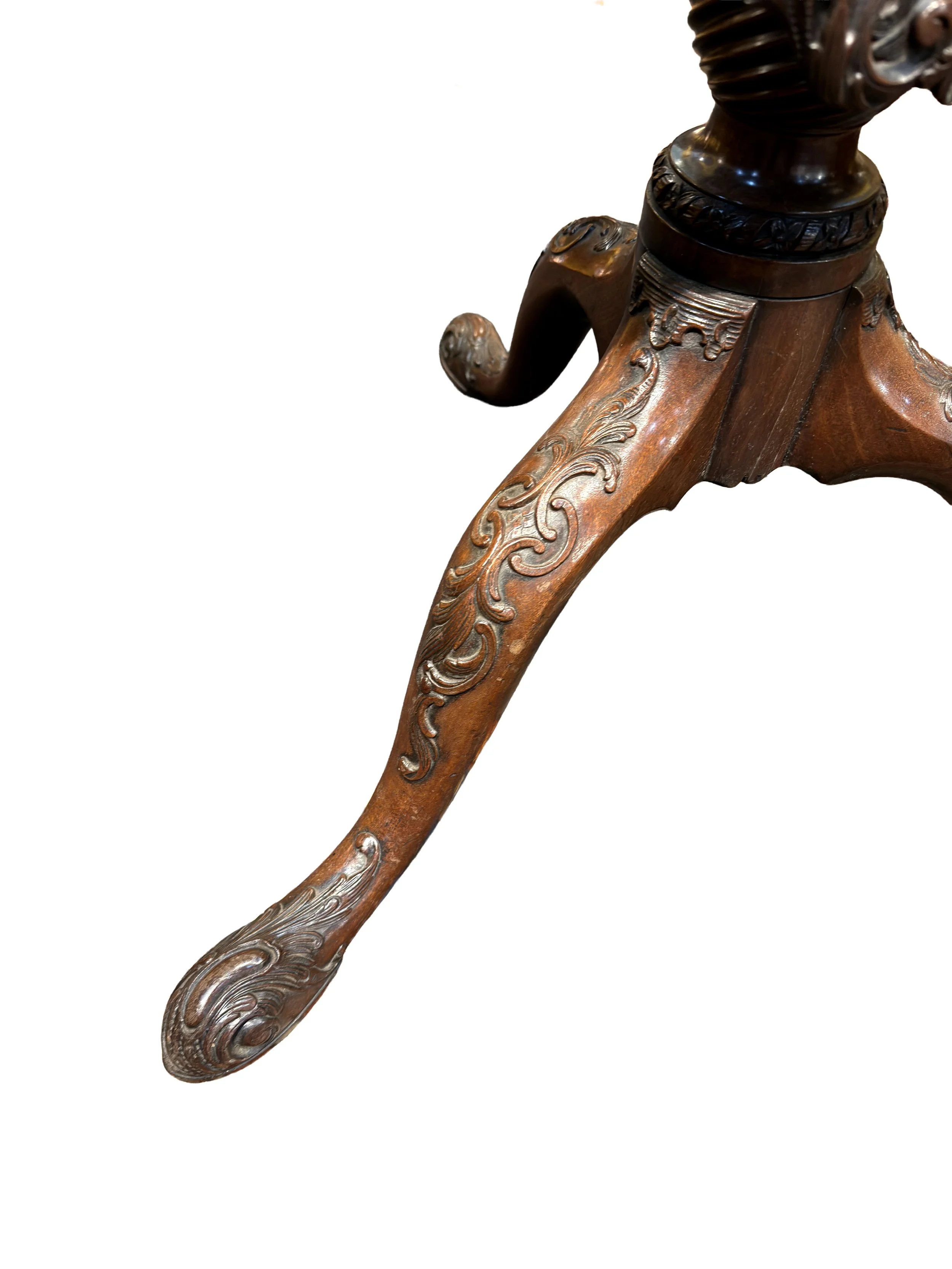
Below, a deeply scalloped apron showcases a hand-carved central arch balanced by whimsical cyma curves. The table rides on slender, highly expressive cabriole legs that effortlessly taper into delicate, sculpted pad feet. Structural integrity remains superb, showcasing traditional mortise-and-tenon joinery secured by original, prominent square wooden pins driven straight through the skirt frame. The hand-planed irregularities visible across the legs provide definitive proof of a master colonial bench-made origin. Boasting a stellar market lineage with a documented history including handling by distinguished Americana specialist John Walton, Inc., this rare survivor boasts an untouched historical surface. It serves as a striking, museum-caliber statement piece for the discerning collector of early American decorative arts.
Size: 25.75” H x 25” W x 17.5” D
C. 1740-60, New England
This exceptional Queen Anne tea table represents a pinnacle of 18th-century rural New England craftsmanship, likely originating from a premier workshop in Rhode Island or New Hampshire, circa 1750-1780. Handcrafted from highly figured, choice oak, the piece displays a brilliant, wave-like horizontal grain pattern that has aged over centuries into a deeply saturated honey-amber patina.
This table boasts a rare, diminutive scale that is fiercely coveted by advanced Americana collectors. The compact footprint allows the table to retain incredibly crisp, elegant proportions without sacrificing the dramatic presence of its historic form. The two-plank tabletop features a distinctive porringer-top design with extended, notched corners that beautifully echo the handles of colonial American metalware. Over generations of environmental shift, natural wood shrinkage has gently separated the two-plank seam, confirming its pristine, period-correct authenticity.
Below, a deeply scalloped apron showcases a hand-carved central arch balanced by whimsical cyma curves. The table rides on slender, highly expressive cabriole legs that effortlessly taper into delicate, sculpted pad feet. Structural integrity remains superb, showcasing traditional mortise-and-tenon joinery secured by original, prominent square wooden pins driven straight through the skirt frame. The hand-planed irregularities visible across the legs provide definitive proof of a master colonial bench-made origin. Boasting a stellar market lineage with a documented history including handling by distinguished Americana specialist John Walton, Inc., this rare survivor boasts an untouched historical surface. It serves as a striking, museum-caliber statement piece for the discerning collector of early American decorative arts.
Size: 25.75” H x 25” W x 17.5” D
C. 1740-60, New England