 Image 1 of 3
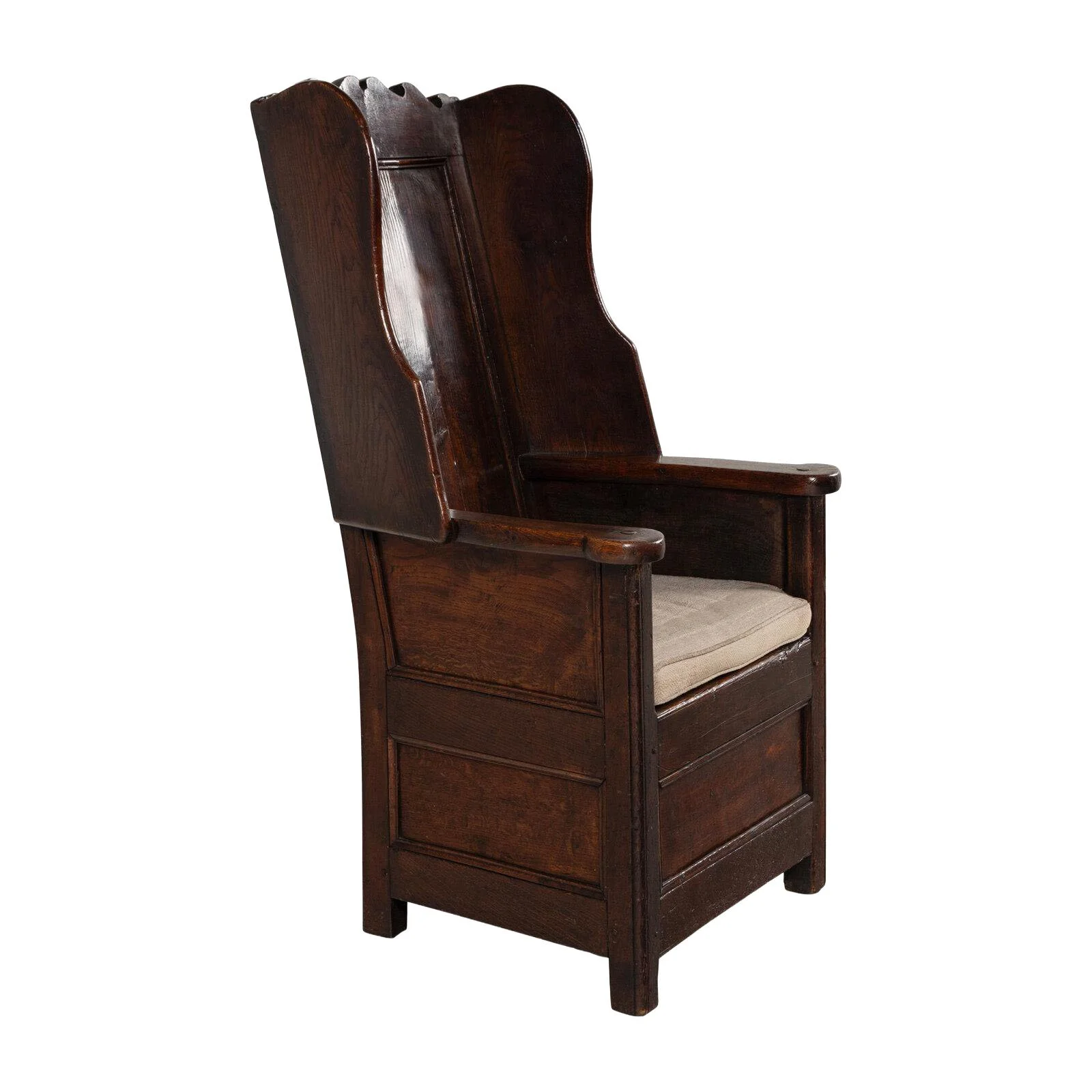 Image 2 of 3
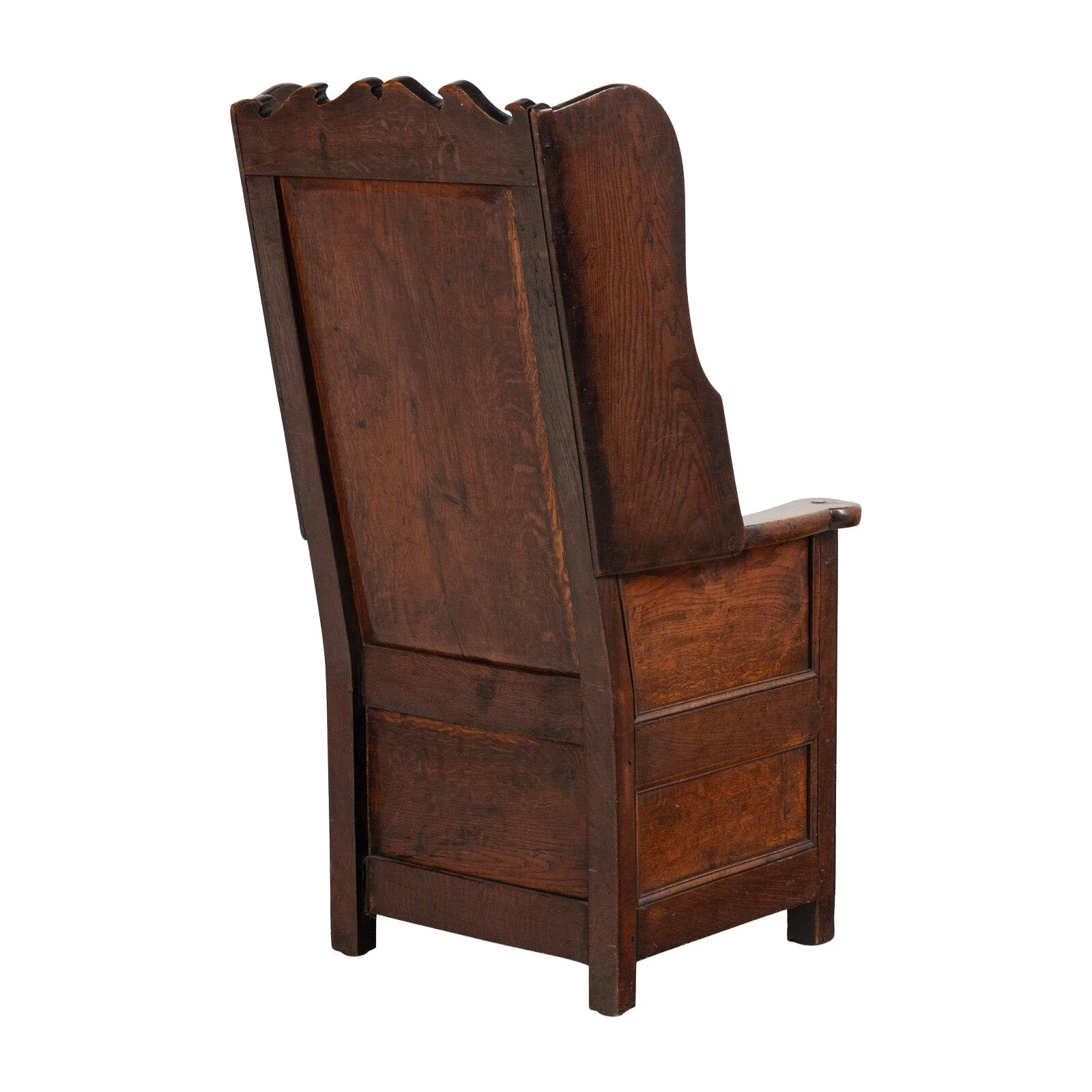 Image 3 of 3
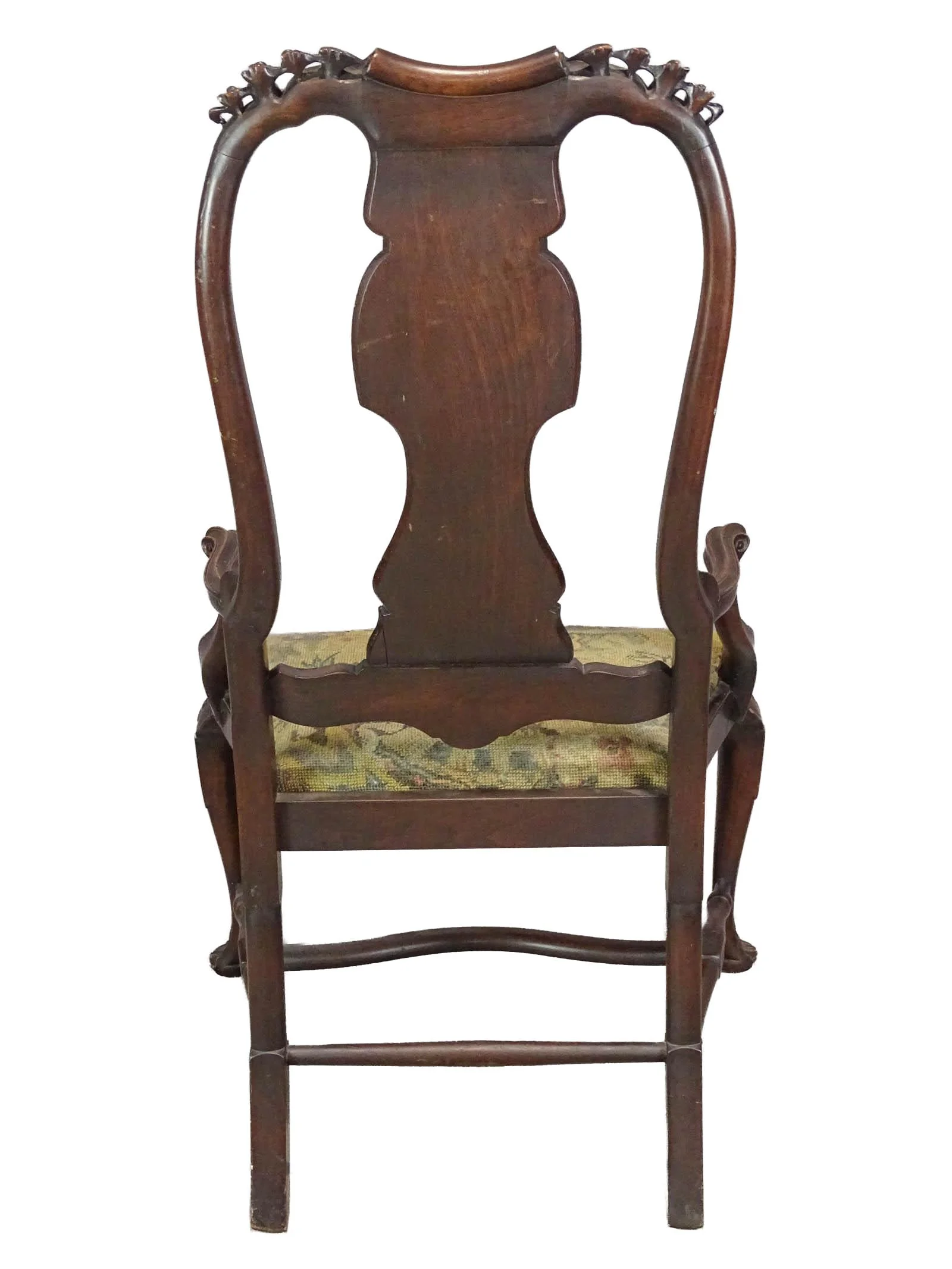
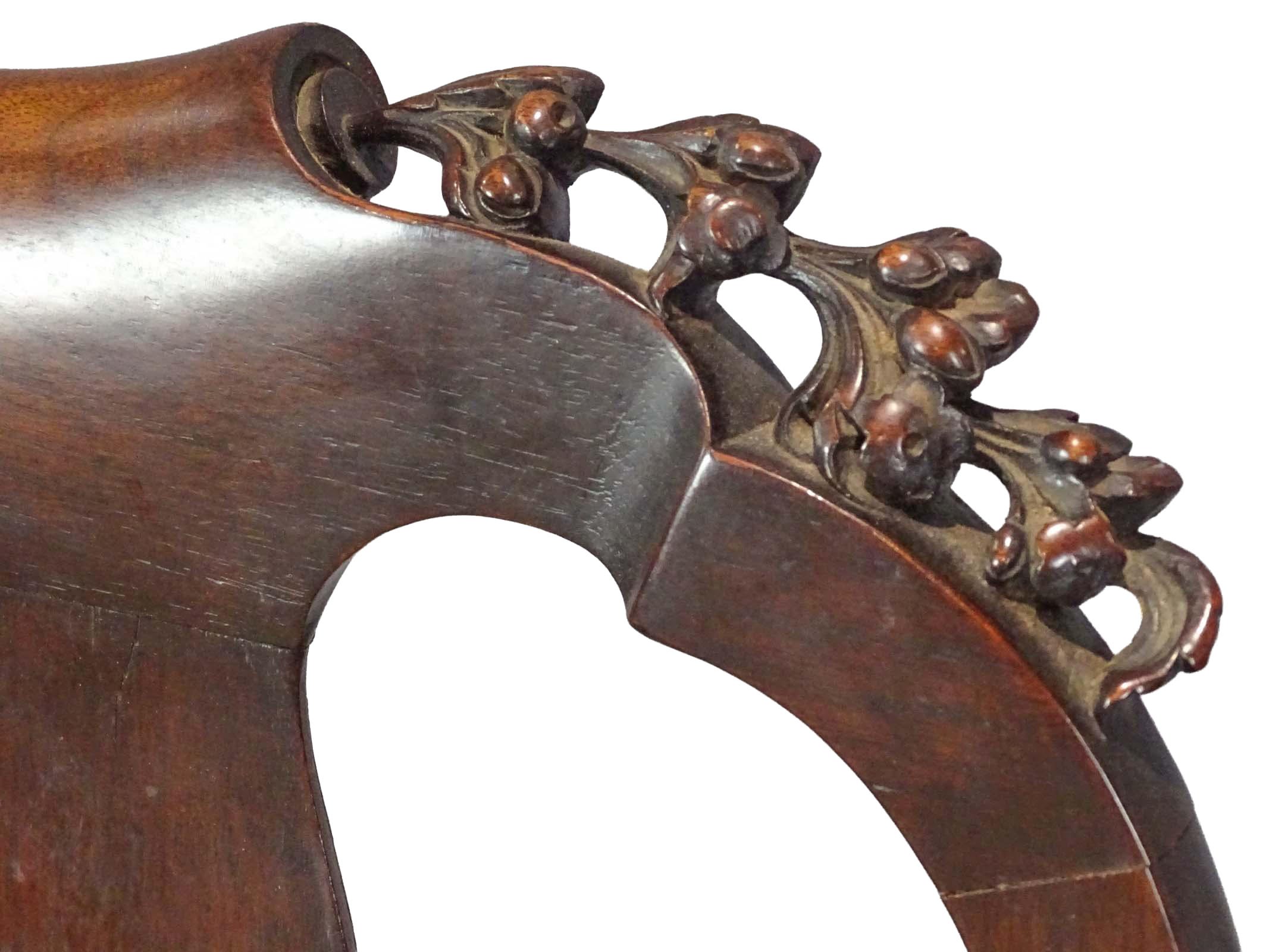
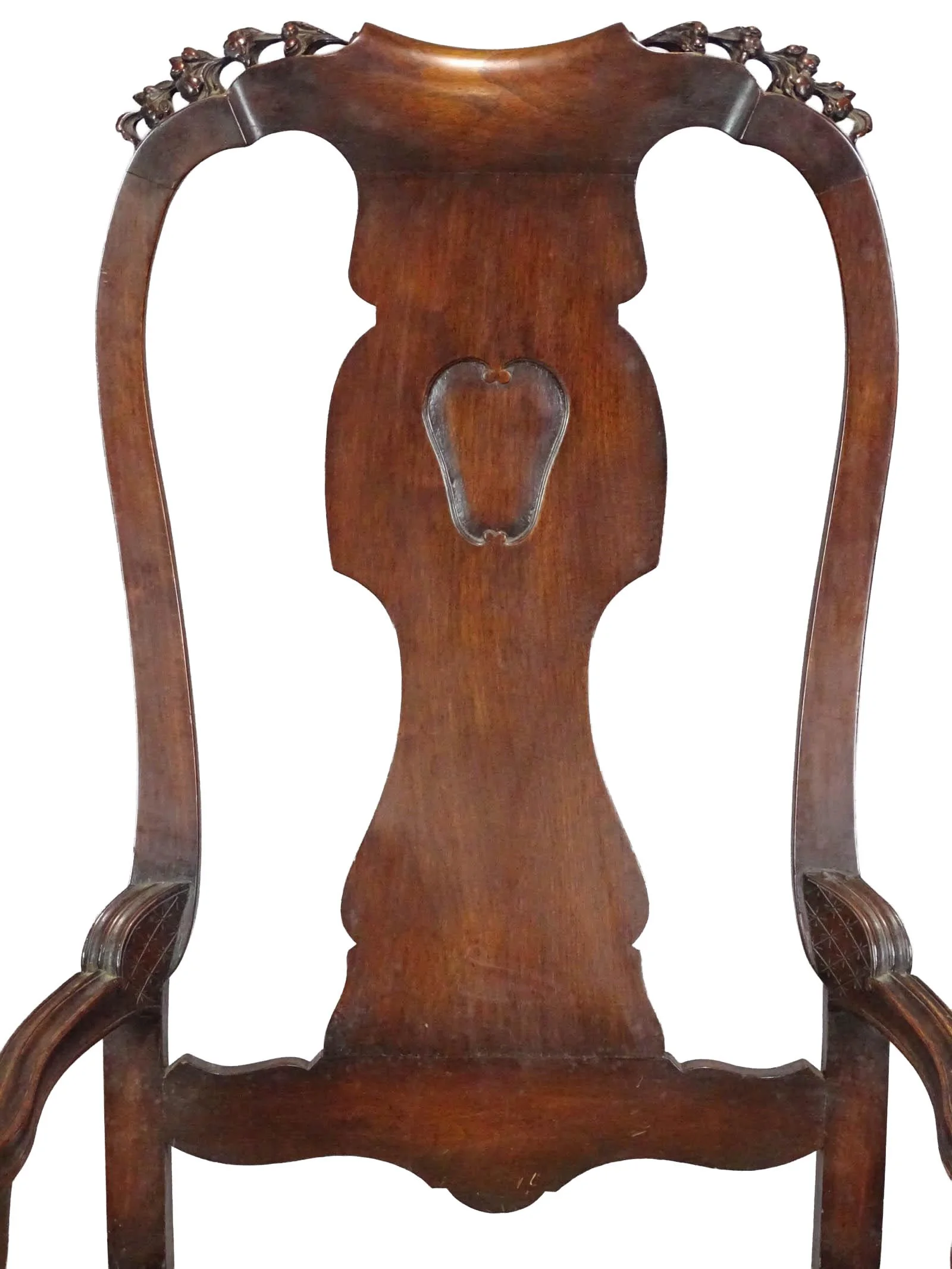
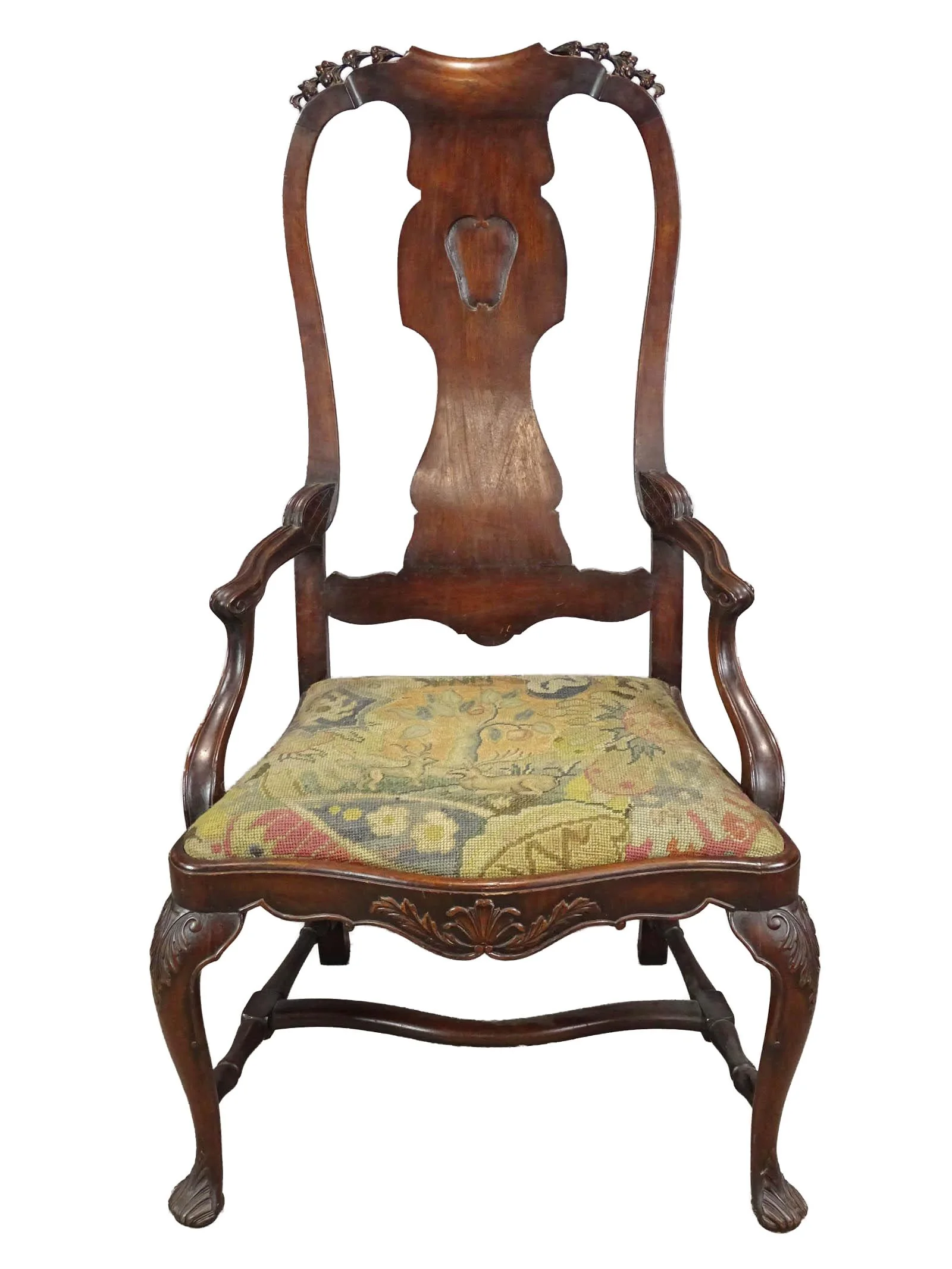
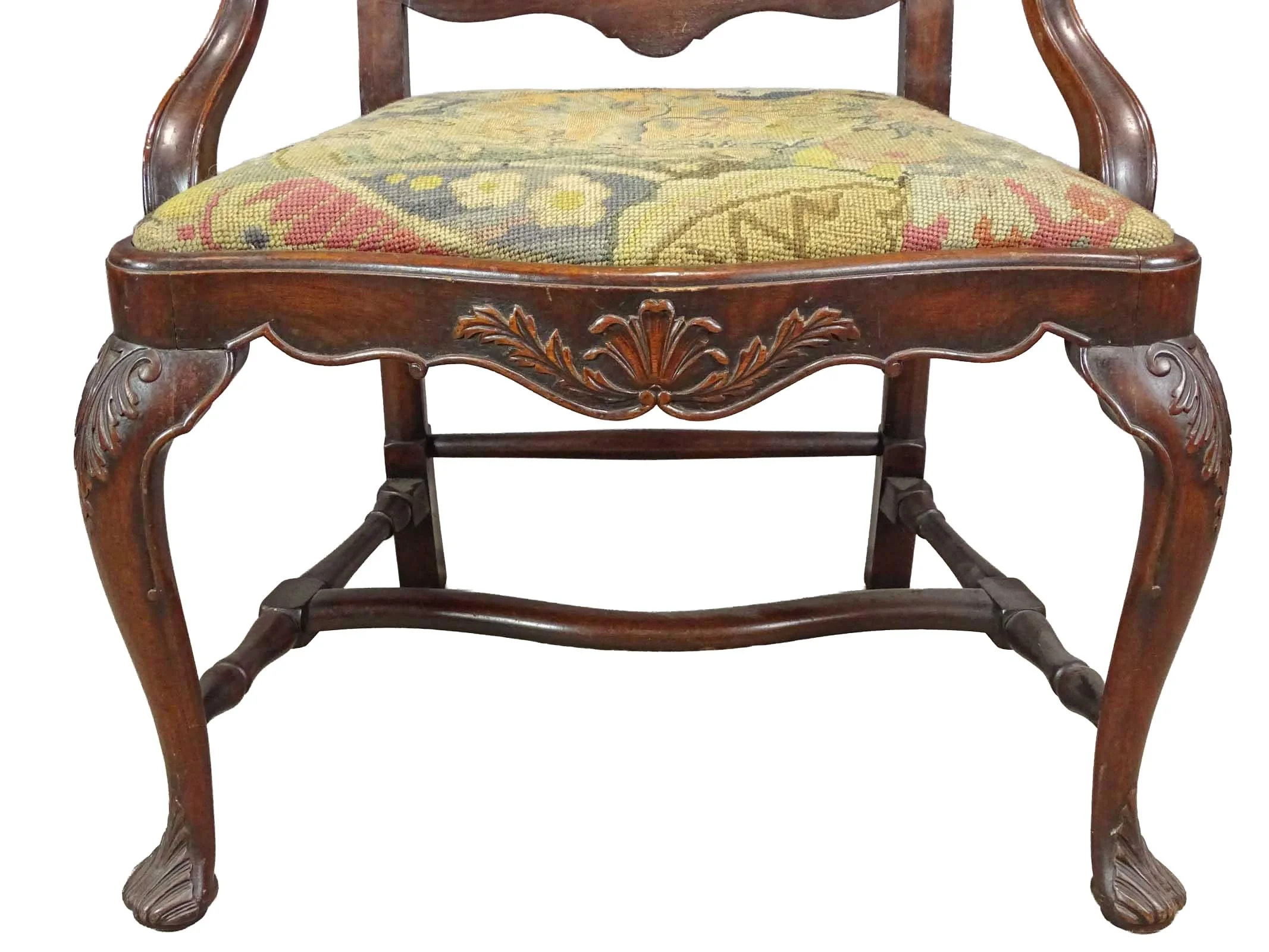
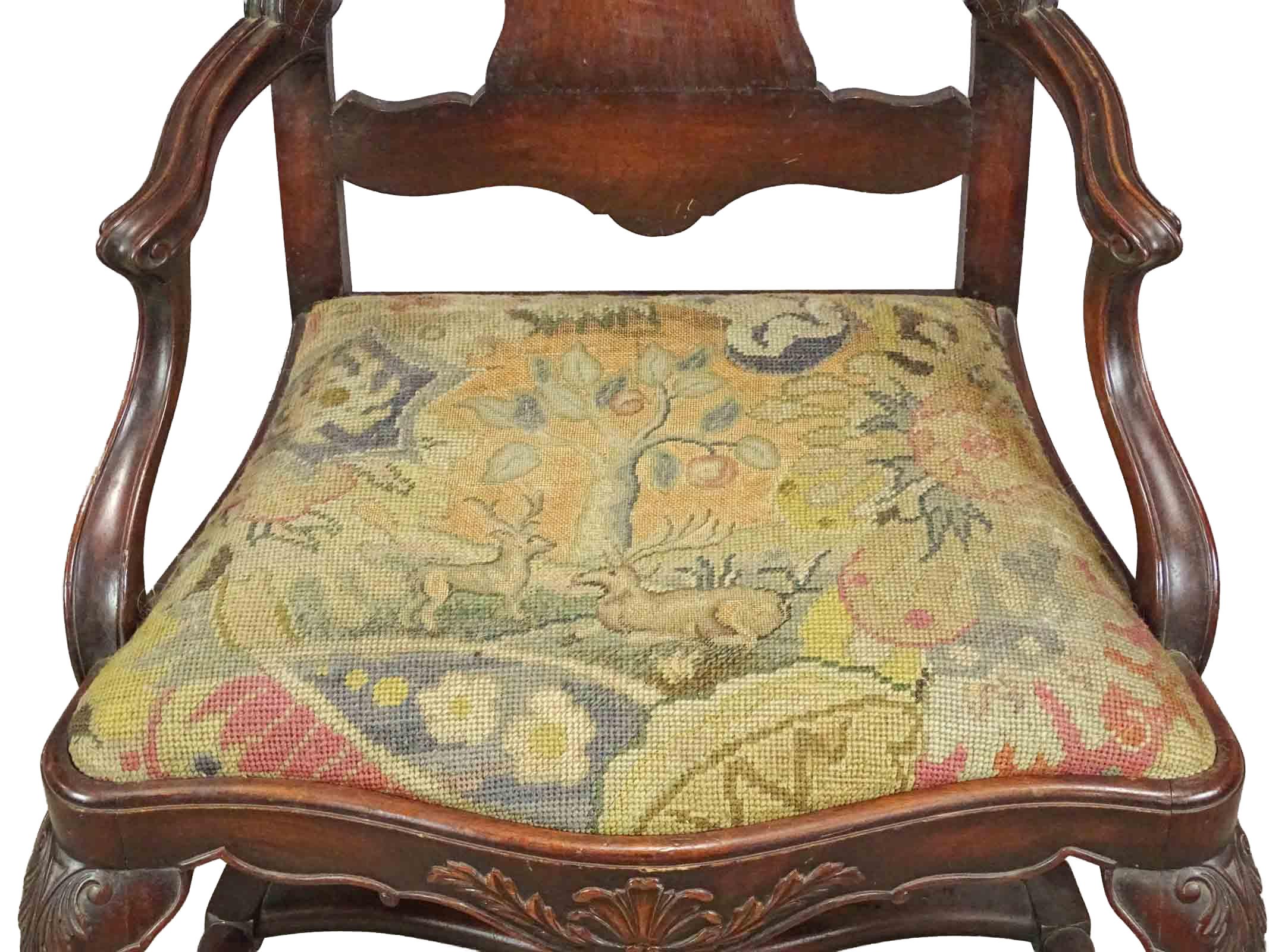
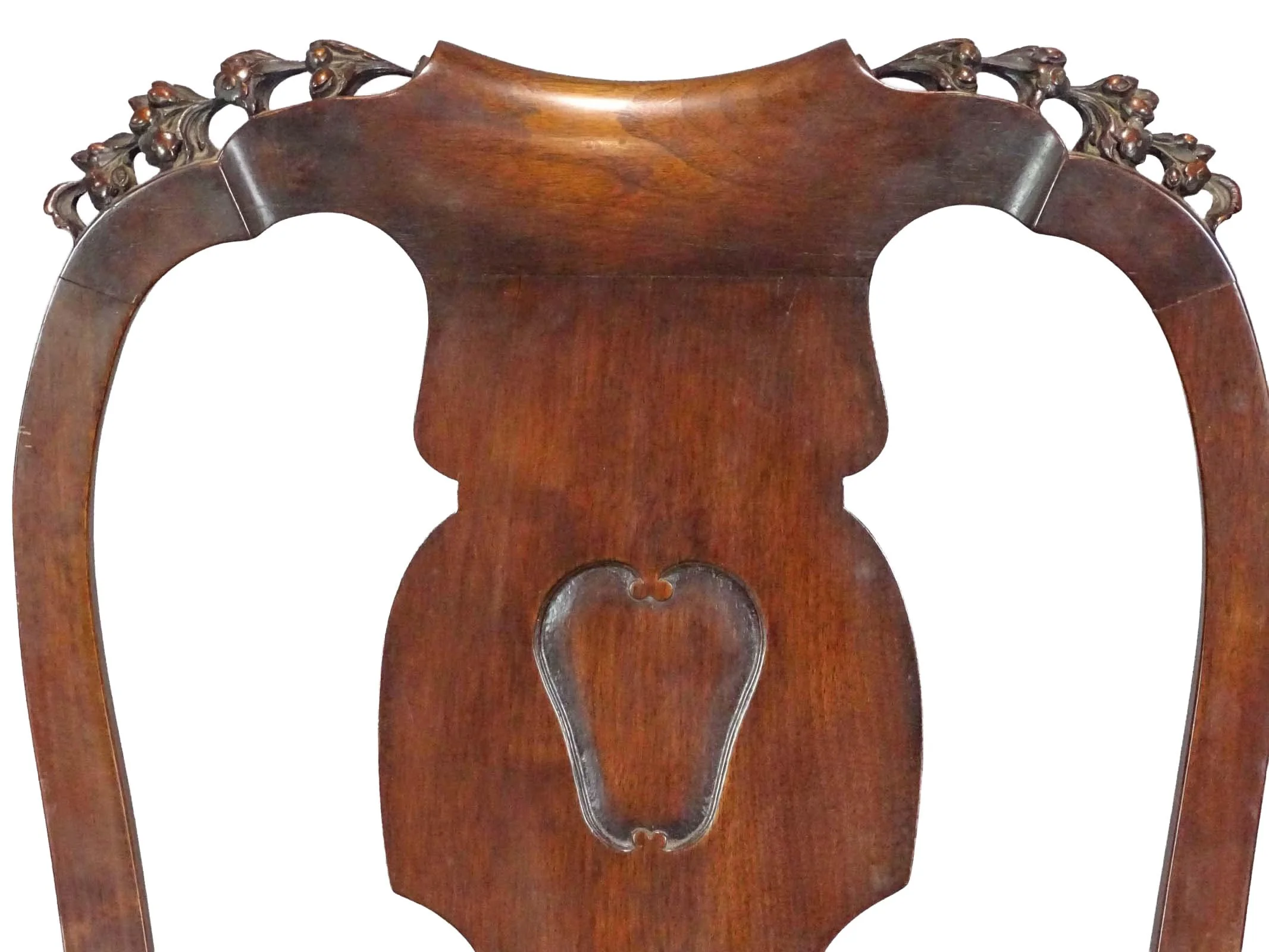
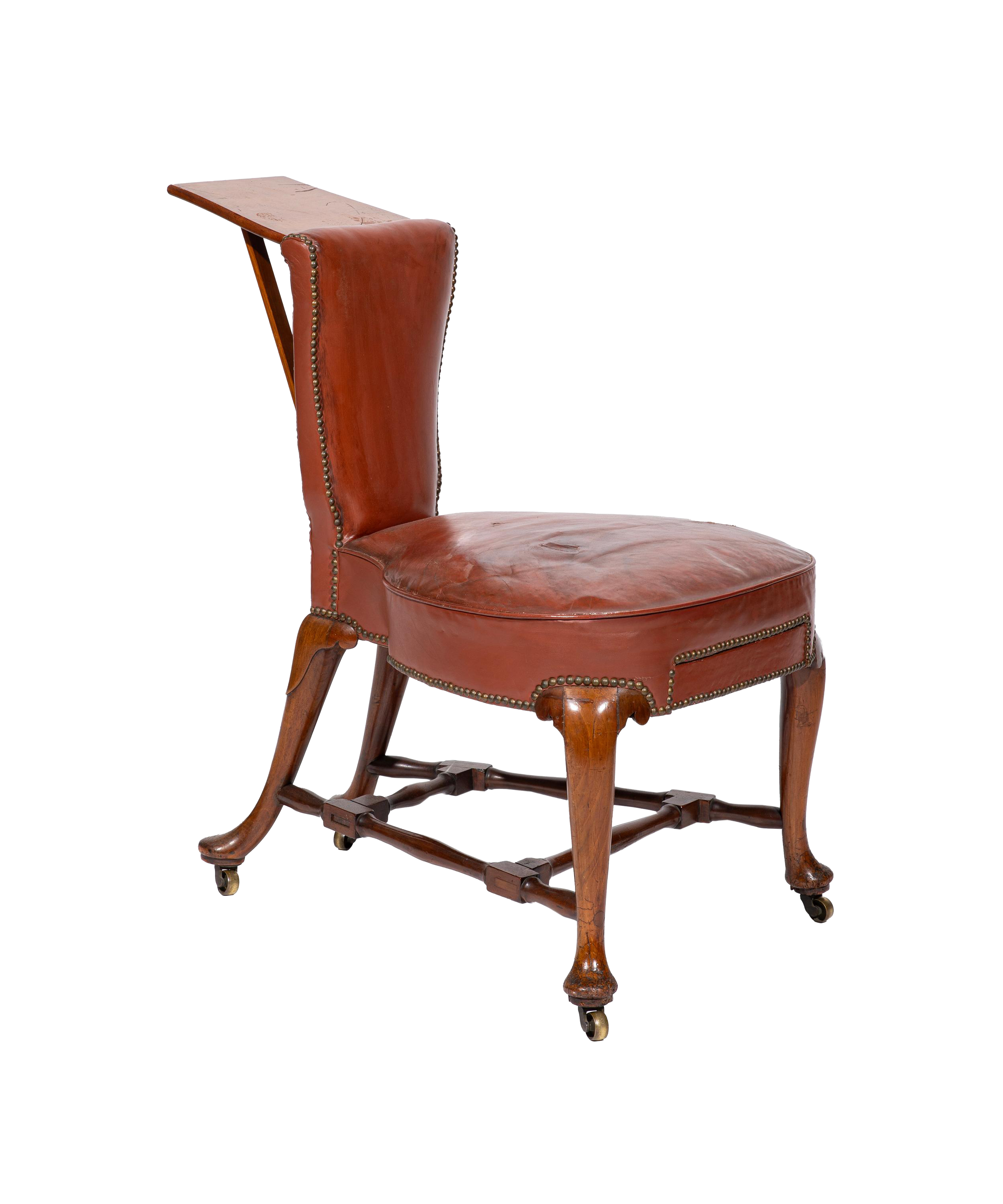
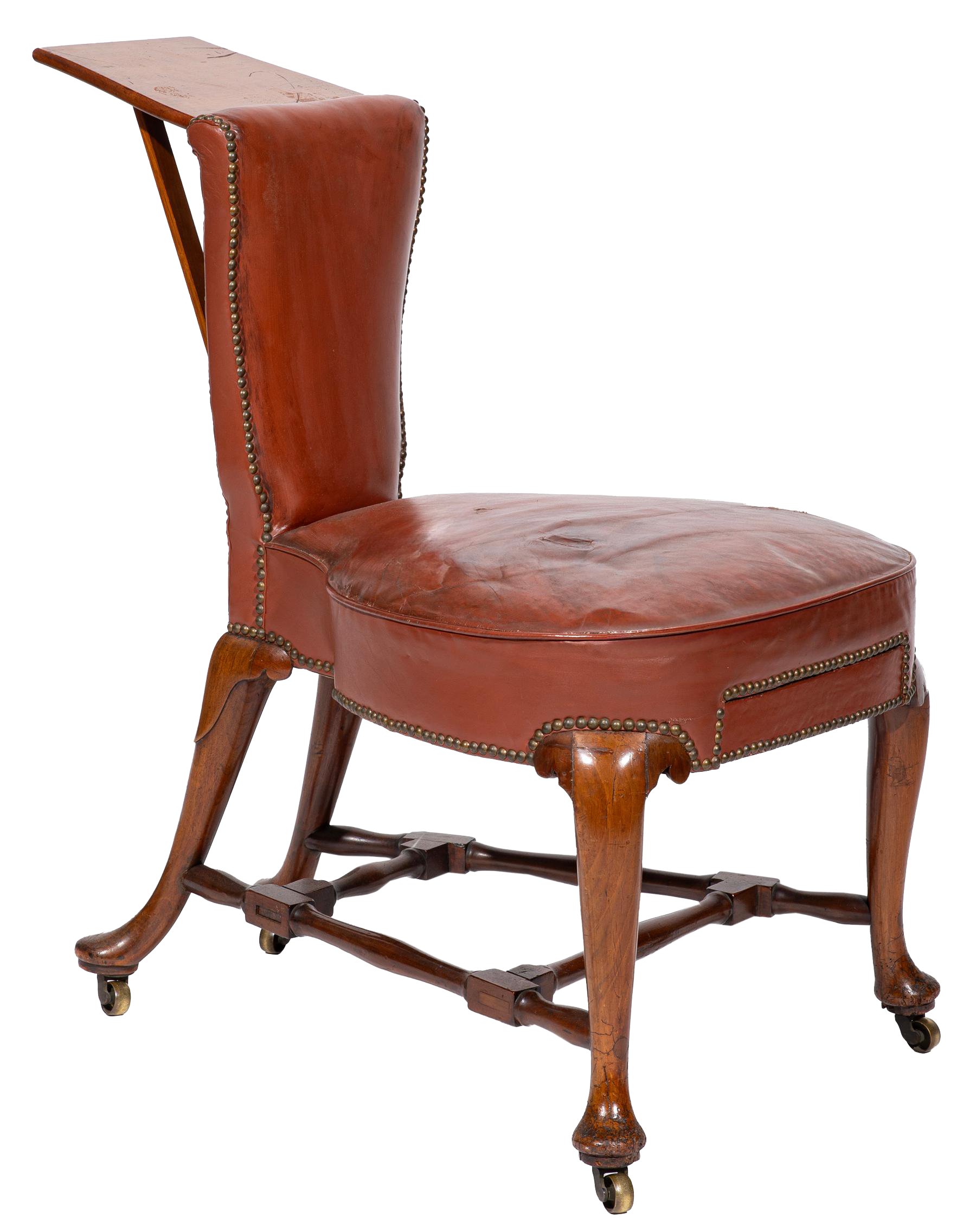
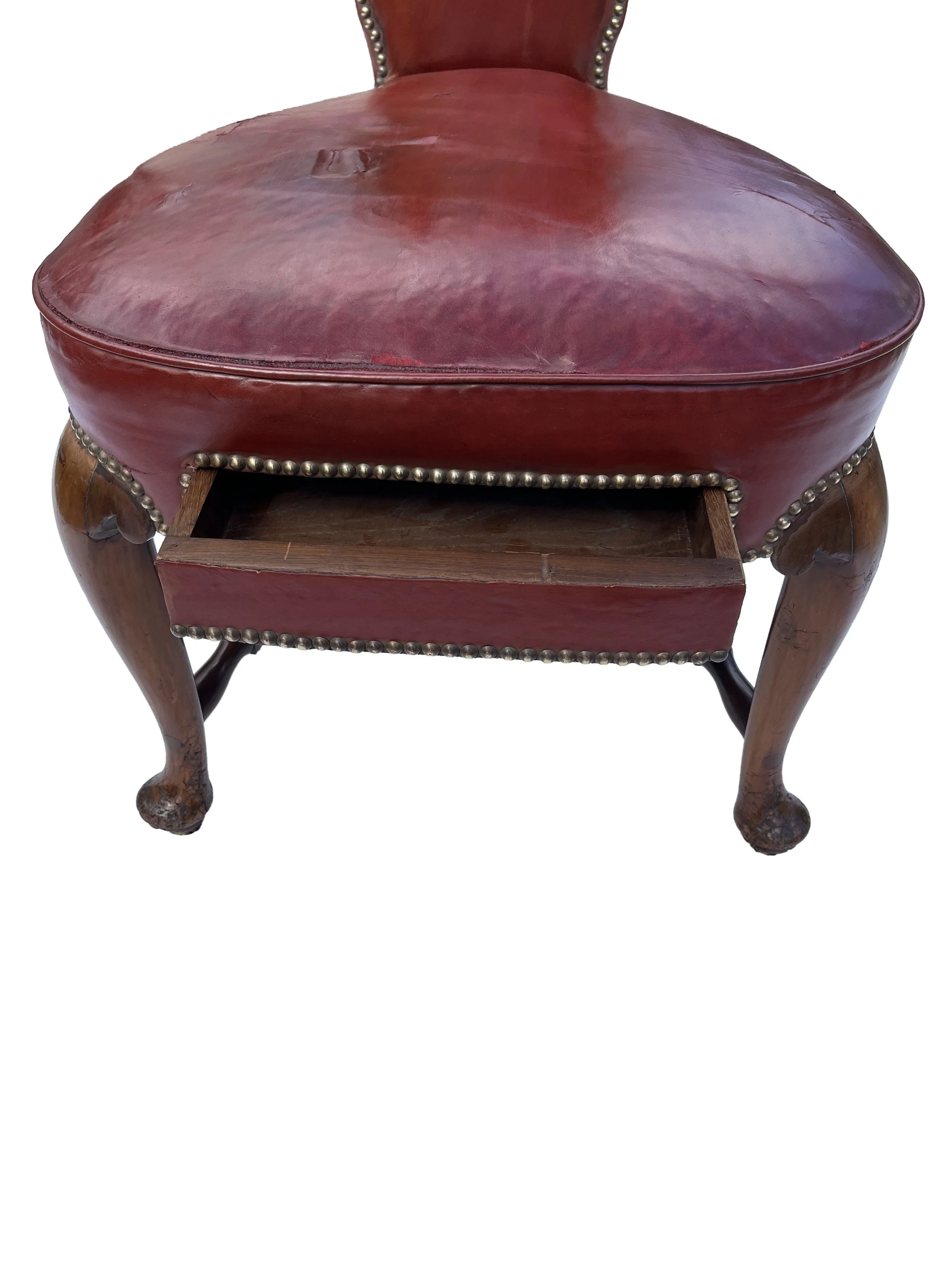
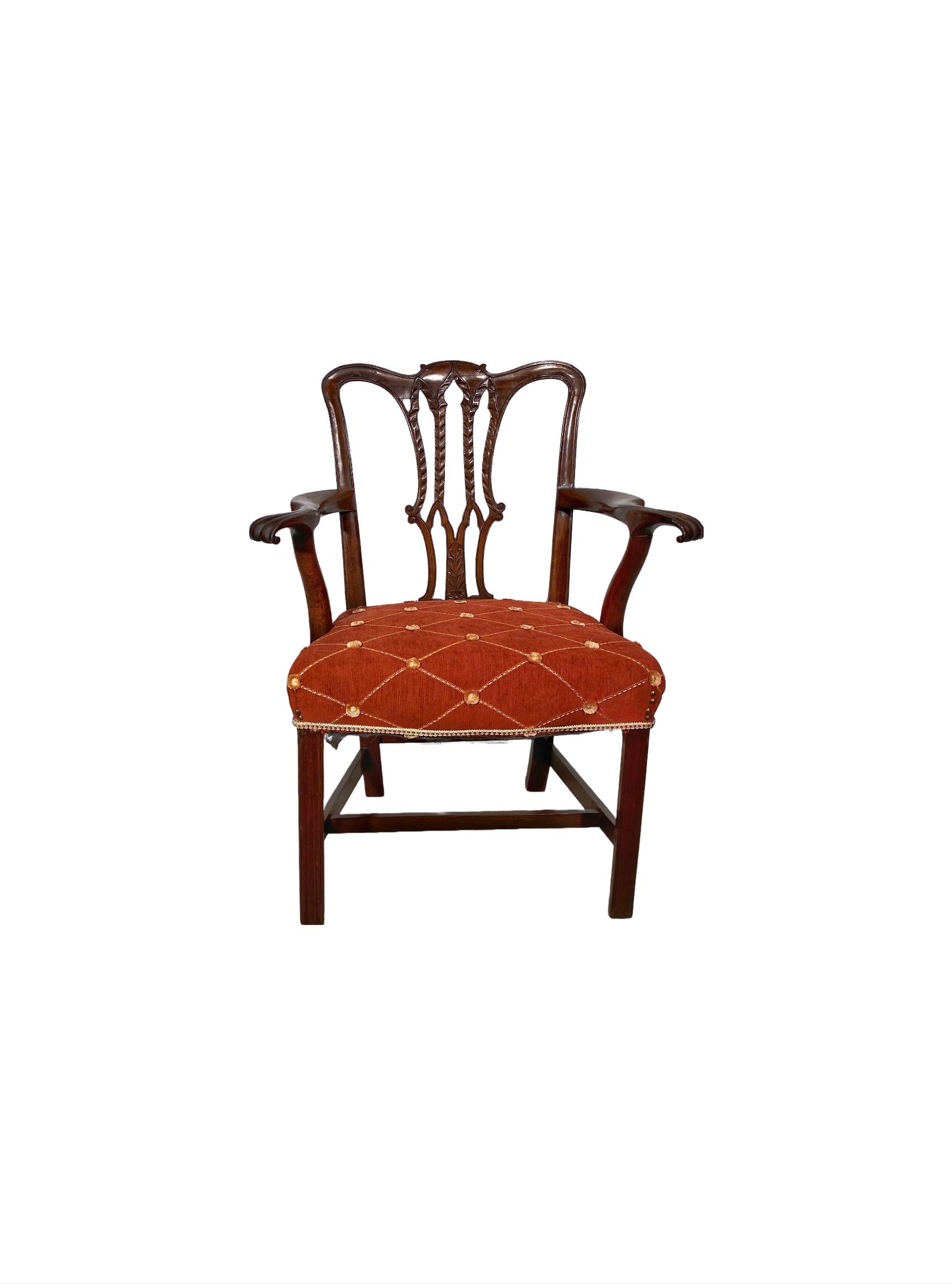
This magnificent 18th-century Welsh lambing chair stands as a supreme testament to British vernacular furniture design and regional craftsmanship. Handcrafted by a skilled village carpenter using dense, slow-grown native Welsh oak, this piece epitomizes the raw, soulful utility of historic country folk art.
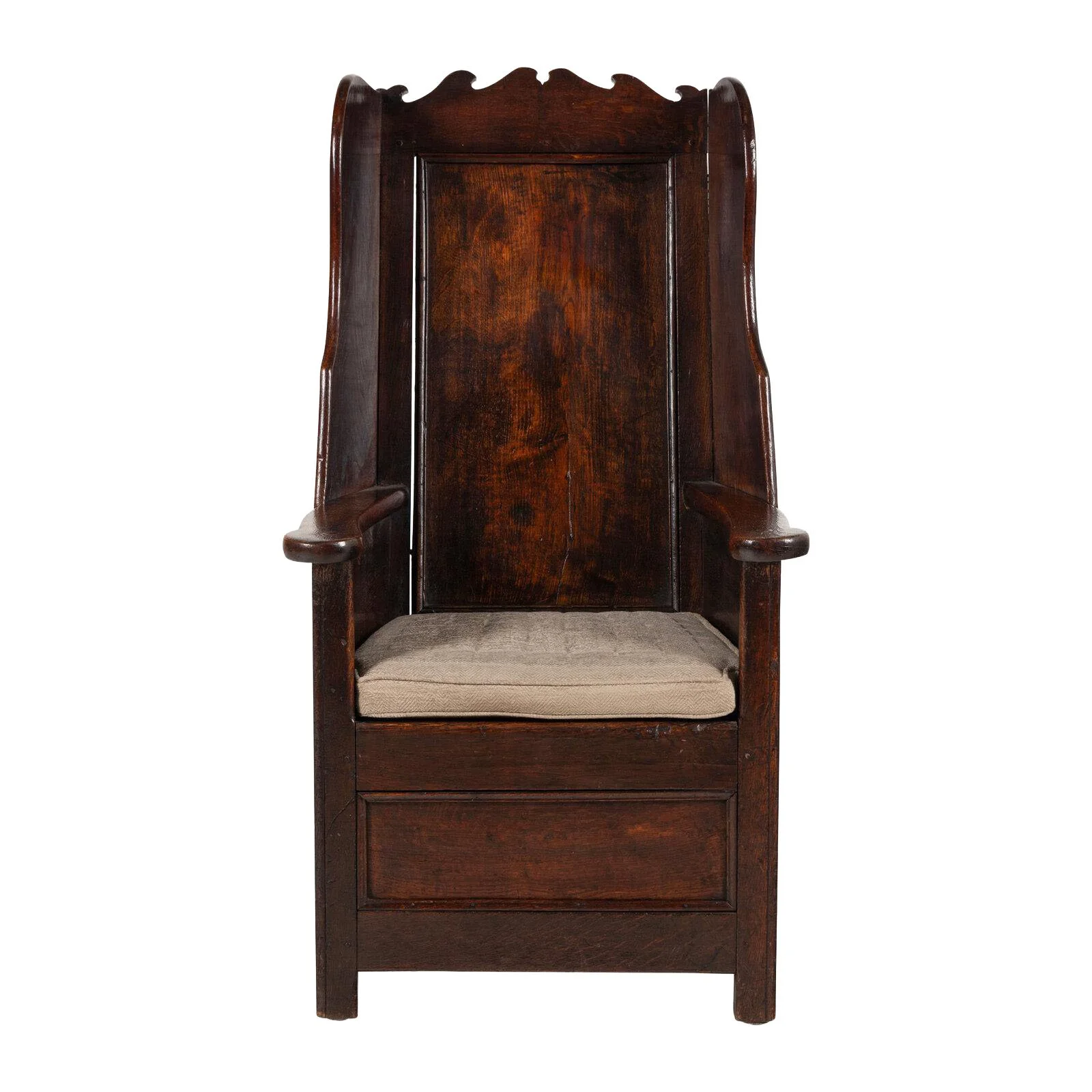
The architecture of the chair is defined by its dramatic, fully enclosed boarded construction. The high, vertical back panel integrates seamlessly with distinctive, draft-excluding side wings, engineered to trap hearth-fire warmth and shield the sitter from bitter countryside drafts. A striking, deeply scalloped ogee-shaped crest rail crowns the silhouette—a definitive, highly desirable regional design marker unique to Welsh country workshops of the mid-to-late 1700s. Flanking the seat are substantial, wide-set armrests culminating in beautifully rounded, robust terminals.
Departing from typical box-compartment models, this rare variation features an authentic, interwoven rope support structure beneath the loose cushion. This historic webbing system provided advanced suspension and comfort for the shepherd during long, sleepless nights by the fire. The low-slung, paneled base terminates in heavy, straight stile legs, perfectly built to stabilize the frame on uneven farmhouse flagstones.
Boasting an extraordinary, untouched historic patina, the oak surface radiates a deep, rich, near-black glaze built up from centuries of wood smoke and handling. It is an exceptional acquisition for the discerning collector of early English and Welsh oak, offering unmatched historical integrity and timeless, sculptural presence.
Size: 48” H x 27” W x 24” D
C. 1760, Wales
This magnificent 18th-century Welsh lambing chair stands as a supreme testament to British vernacular furniture design and regional craftsmanship. Handcrafted by a skilled village carpenter using dense, slow-grown native Welsh oak, this piece epitomizes the raw, soulful utility of historic country folk art.
The architecture of the chair is defined by its dramatic, fully enclosed boarded construction. The high, vertical back panel integrates seamlessly with distinctive, draft-excluding side wings, engineered to trap hearth-fire warmth and shield the sitter from bitter countryside drafts. A striking, deeply scalloped ogee-shaped crest rail crowns the silhouette—a definitive, highly desirable regional design marker unique to Welsh country workshops of the mid-to-late 1700s. Flanking the seat are substantial, wide-set armrests culminating in beautifully rounded, robust terminals.
Departing from typical box-compartment models, this rare variation features an authentic, interwoven rope support structure beneath the loose cushion. This historic webbing system provided advanced suspension and comfort for the shepherd during long, sleepless nights by the fire. The low-slung, paneled base terminates in heavy, straight stile legs, perfectly built to stabilize the frame on uneven farmhouse flagstones.
Boasting an extraordinary, untouched historic patina, the oak surface radiates a deep, rich, near-black glaze built up from centuries of wood smoke and handling. It is an exceptional acquisition for the discerning collector of early English and Welsh oak, offering unmatched historical integrity and timeless, sculptural presence.
Size: 48” H x 27” W x 24” D
C. 1760, Wales