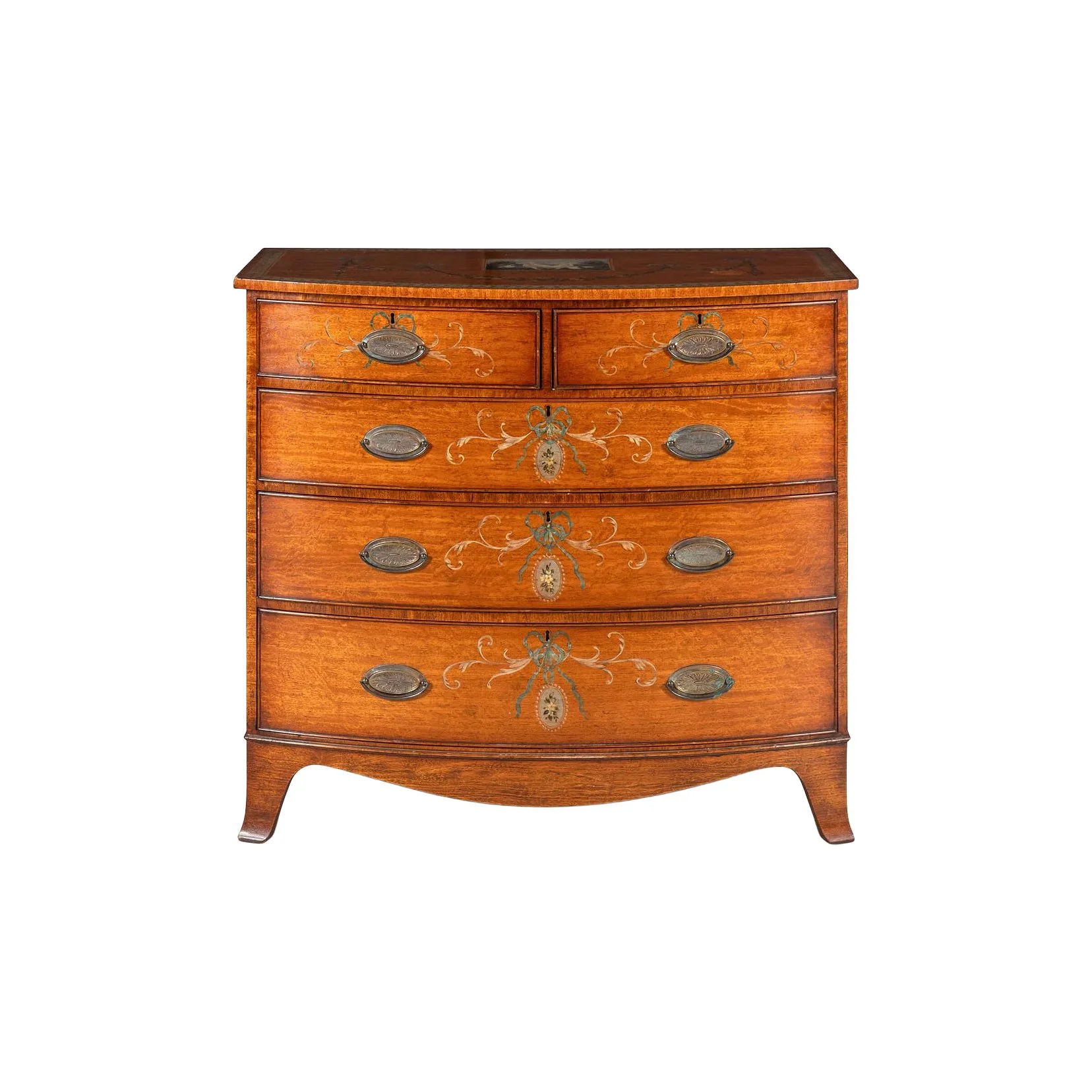
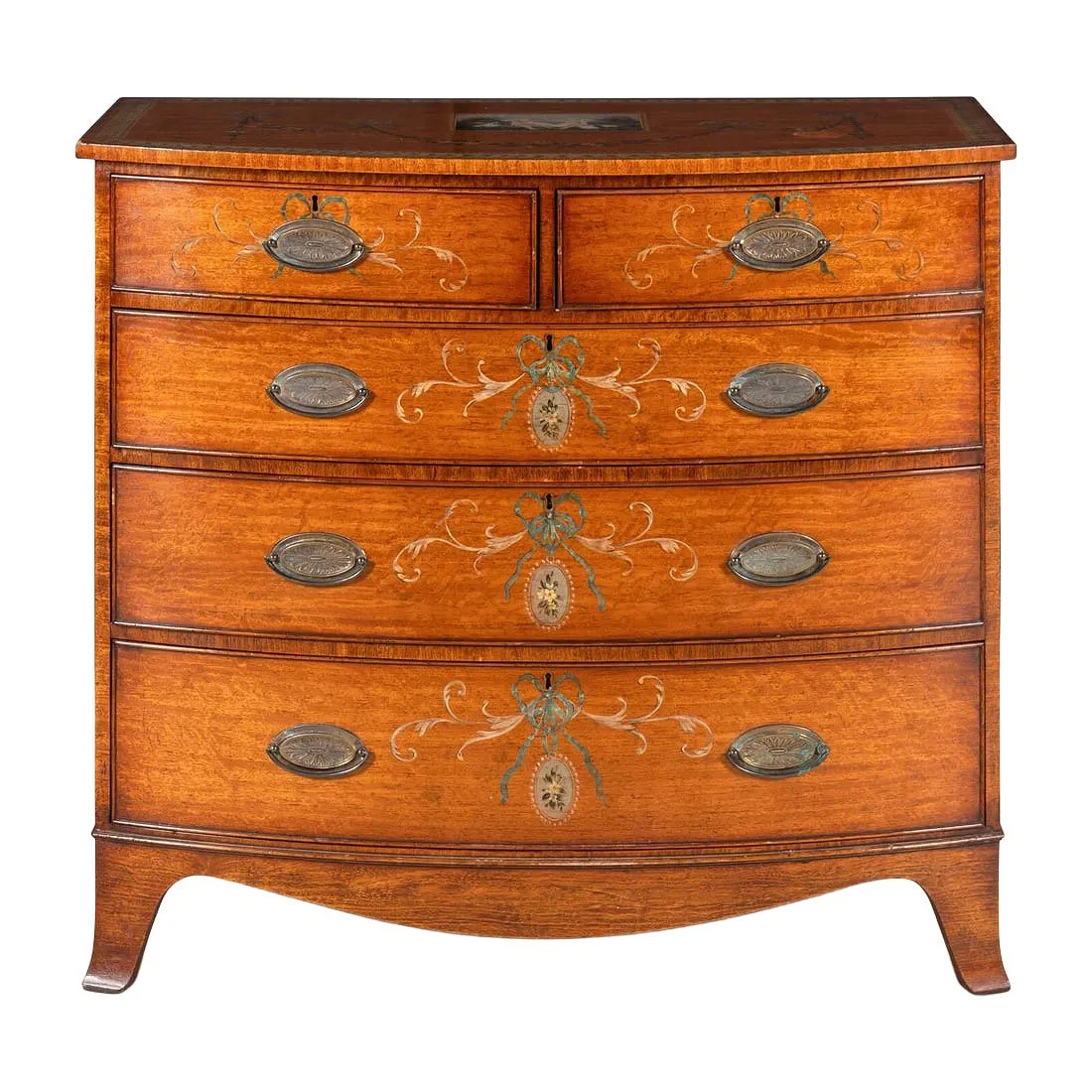
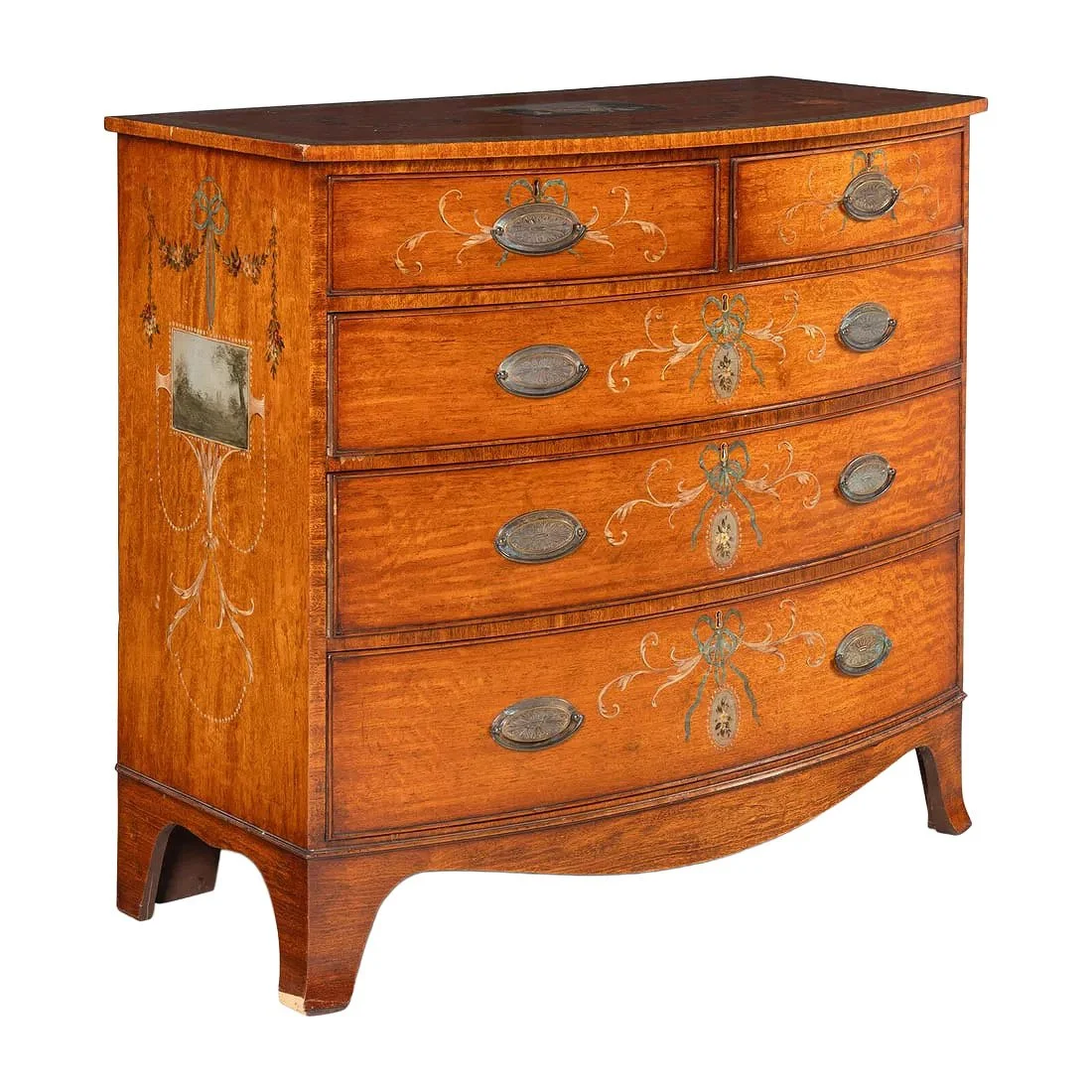
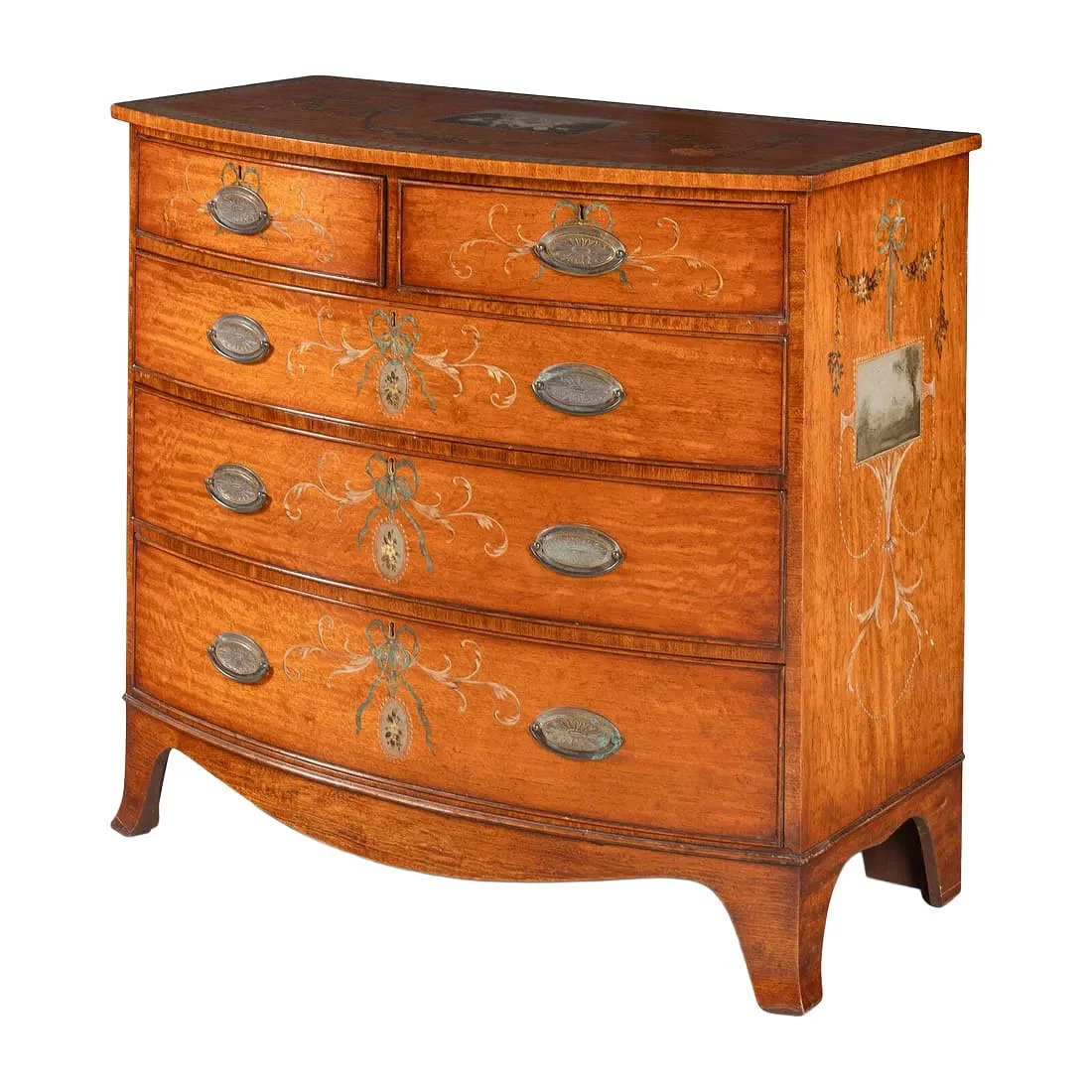
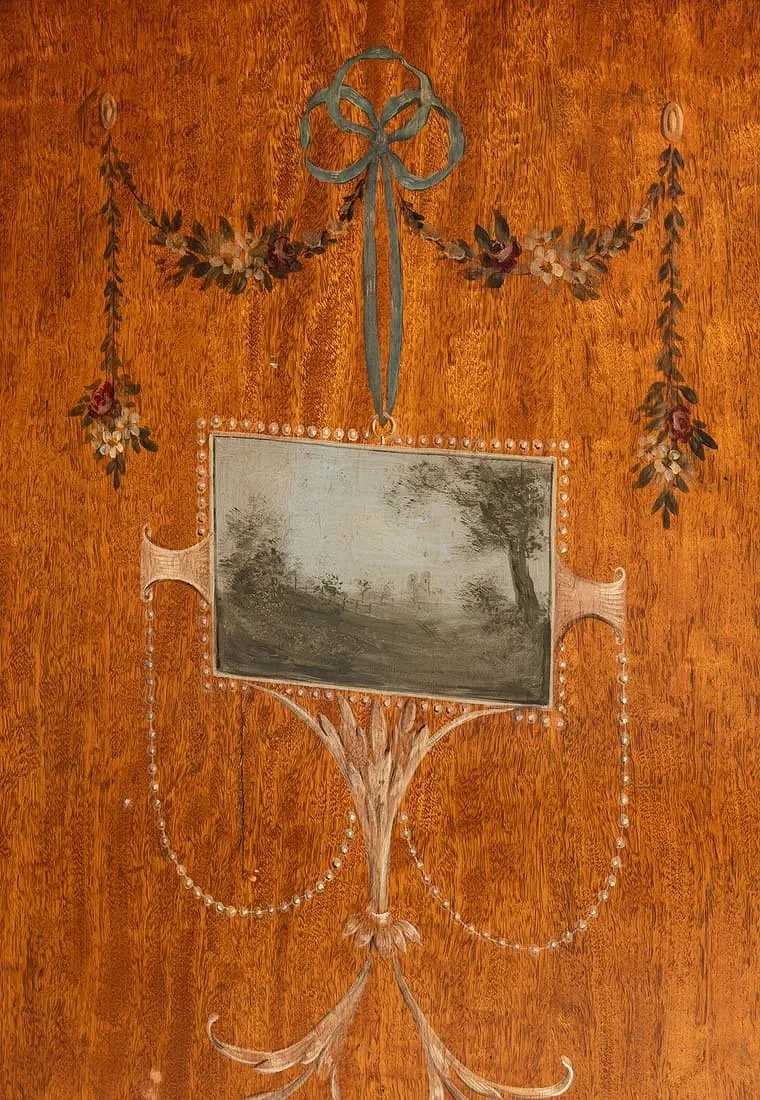
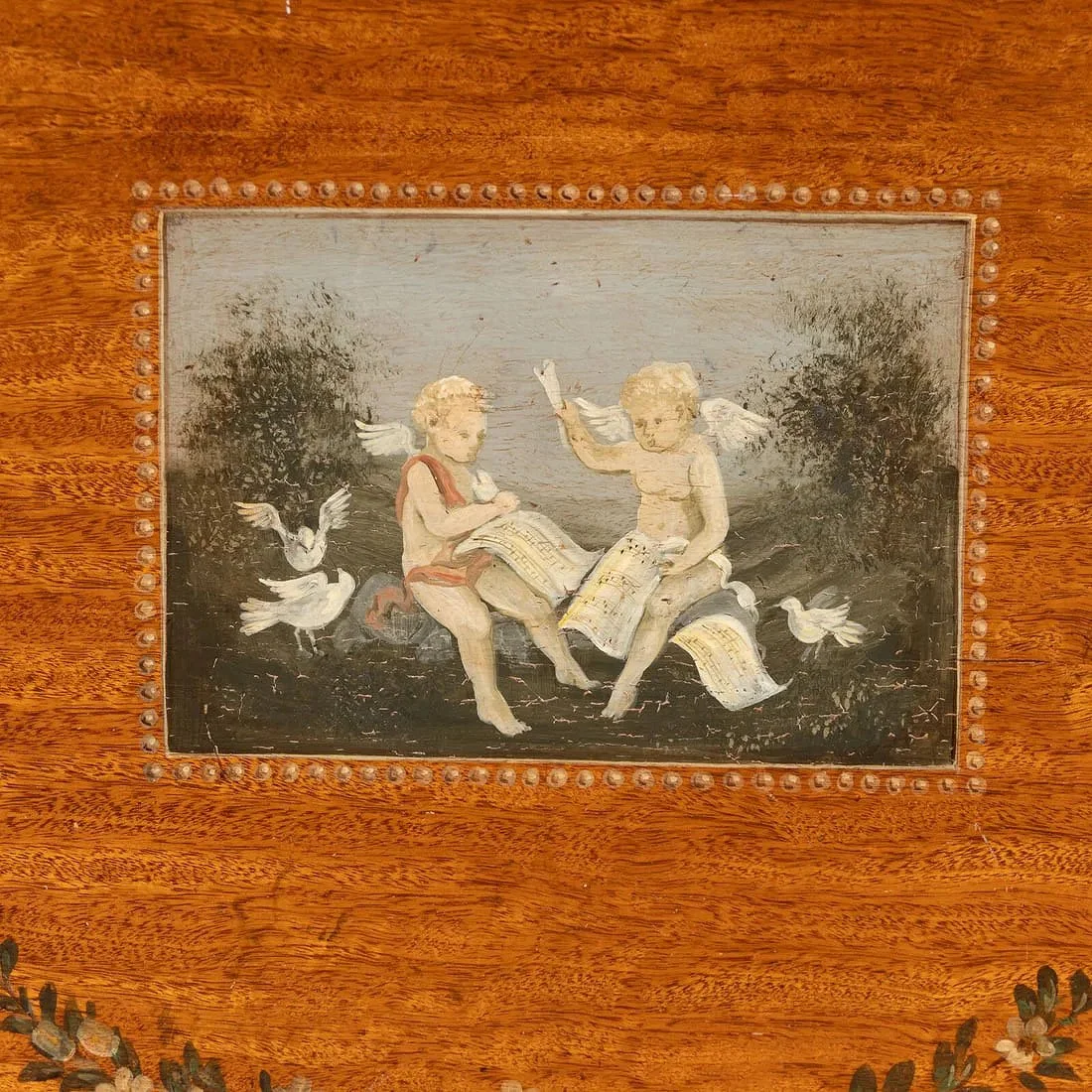
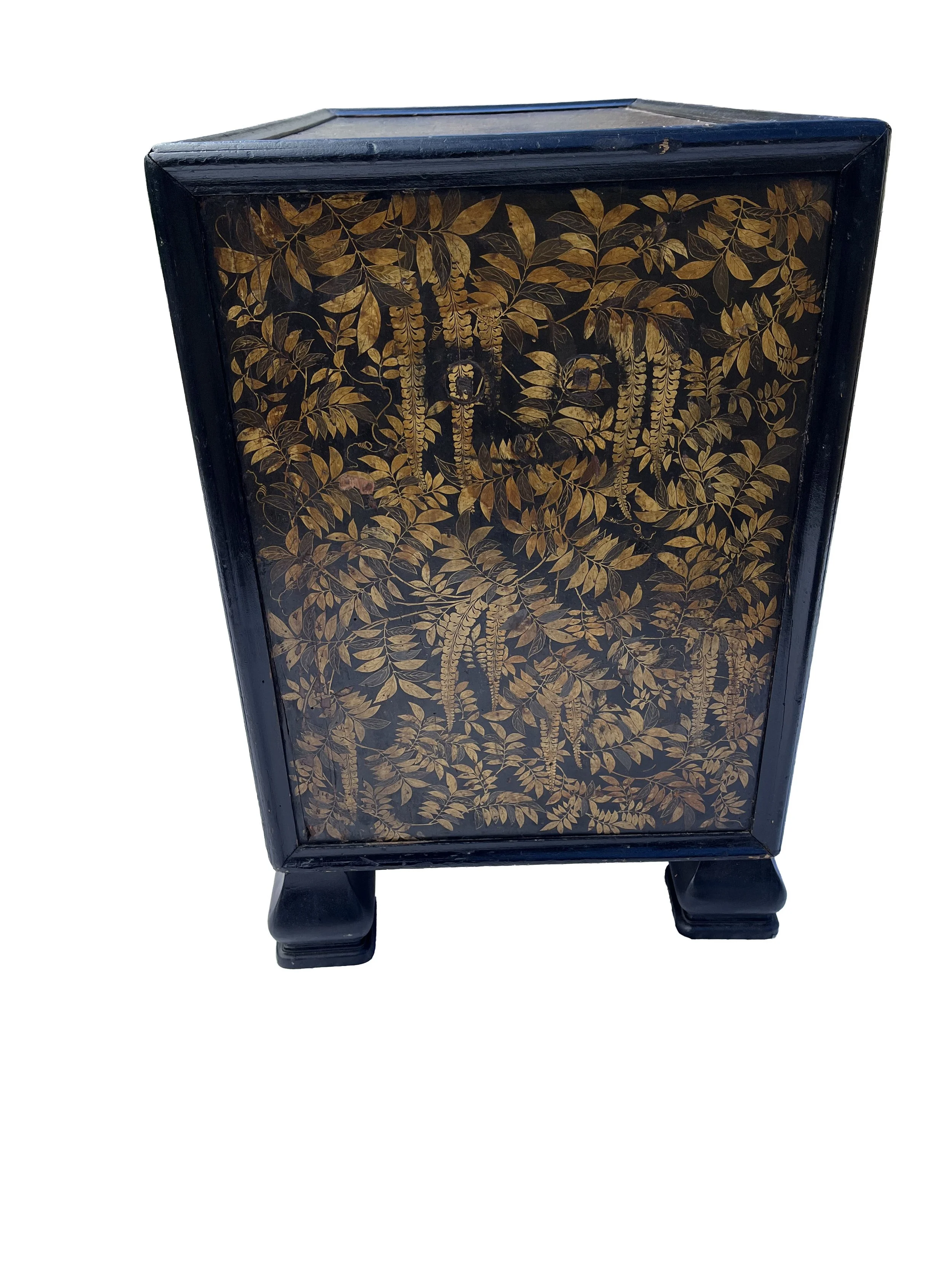
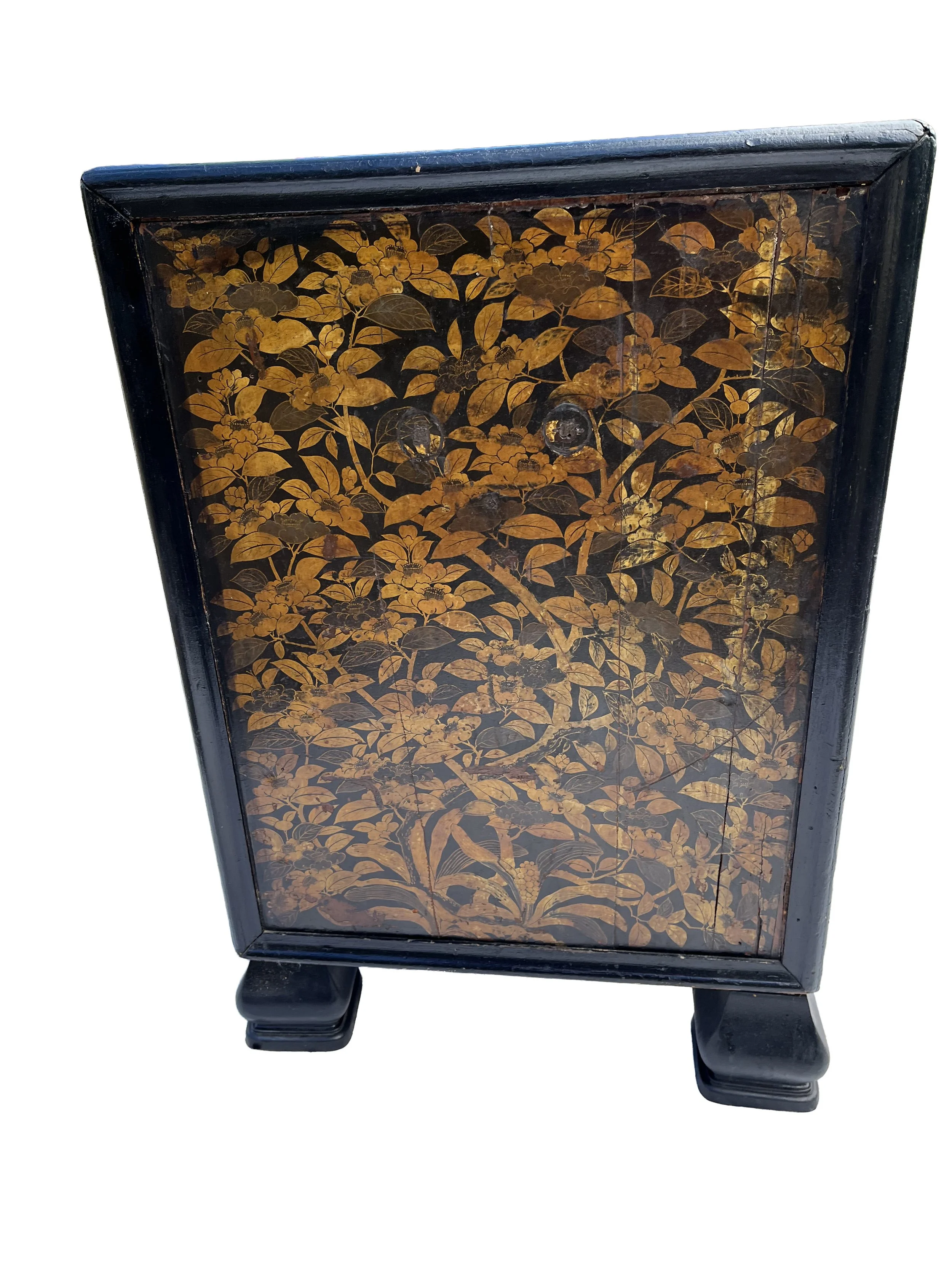
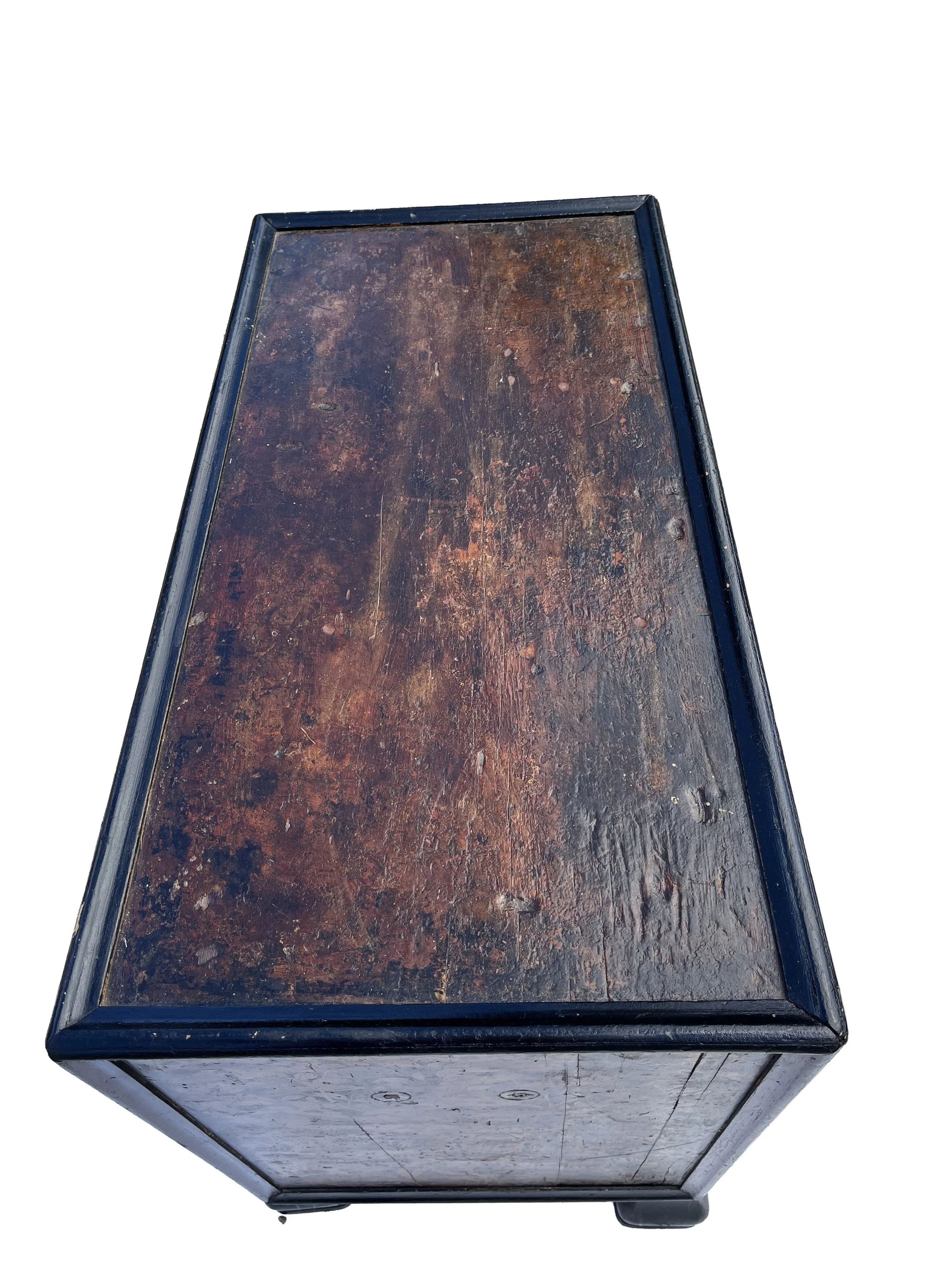
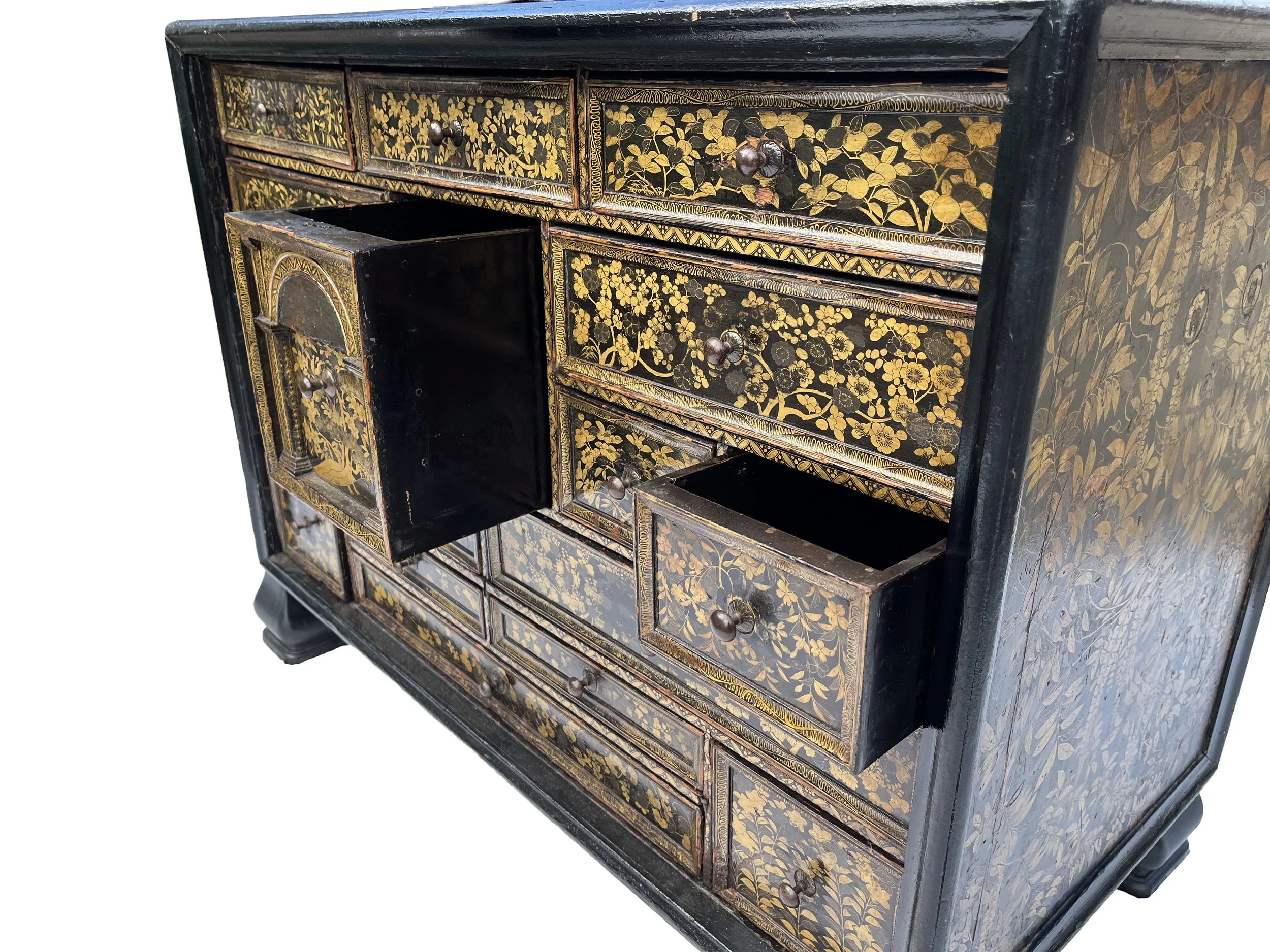
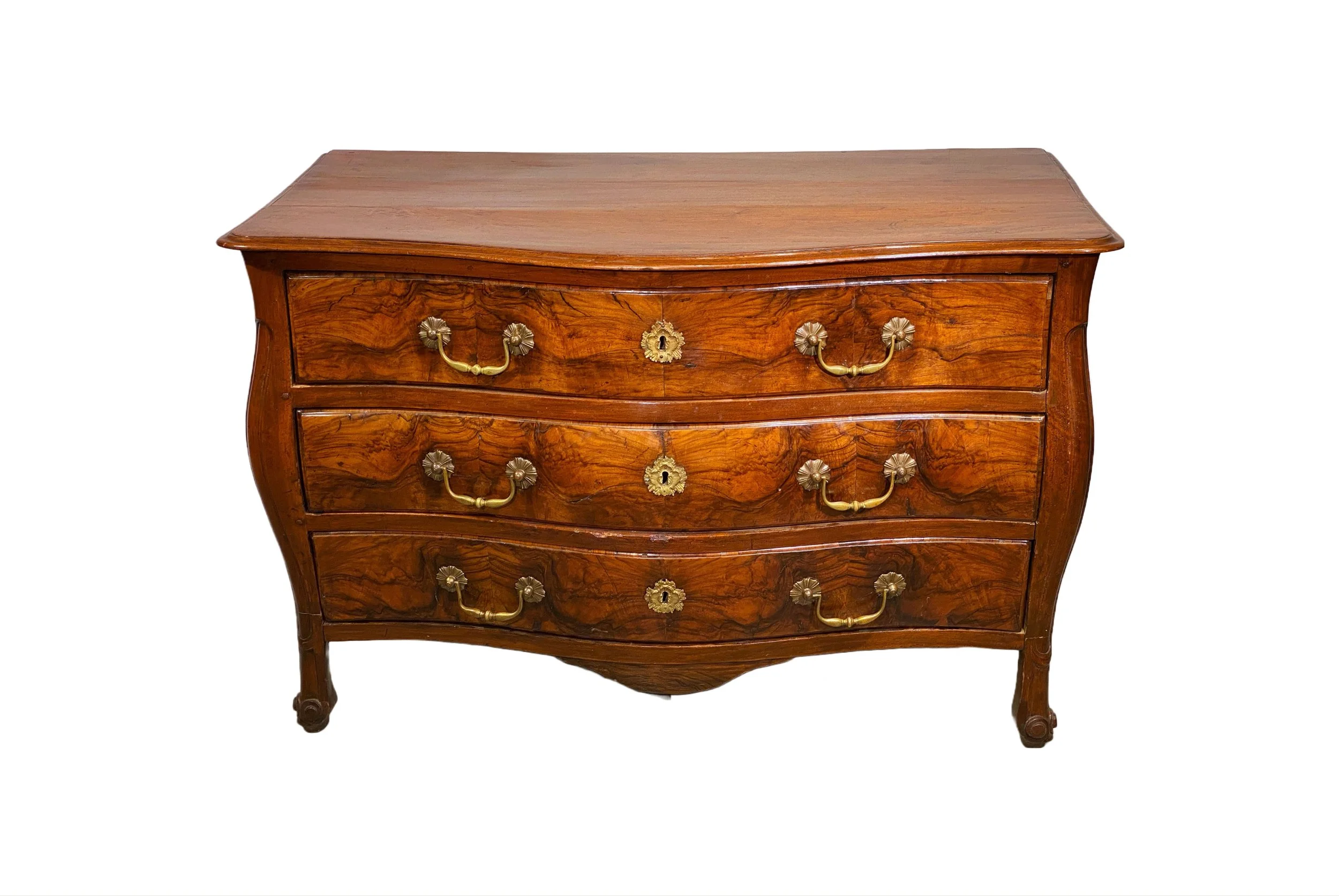
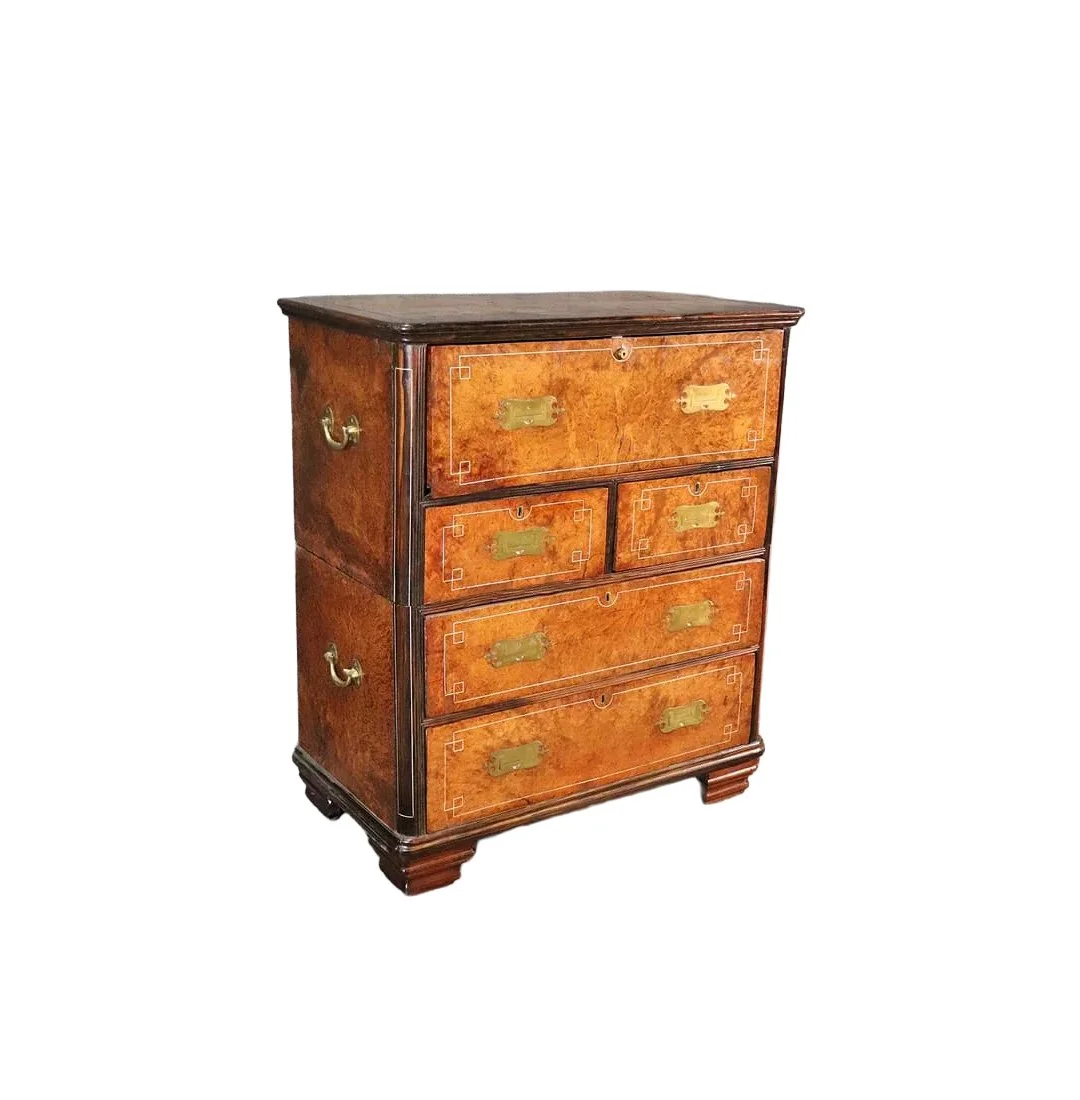
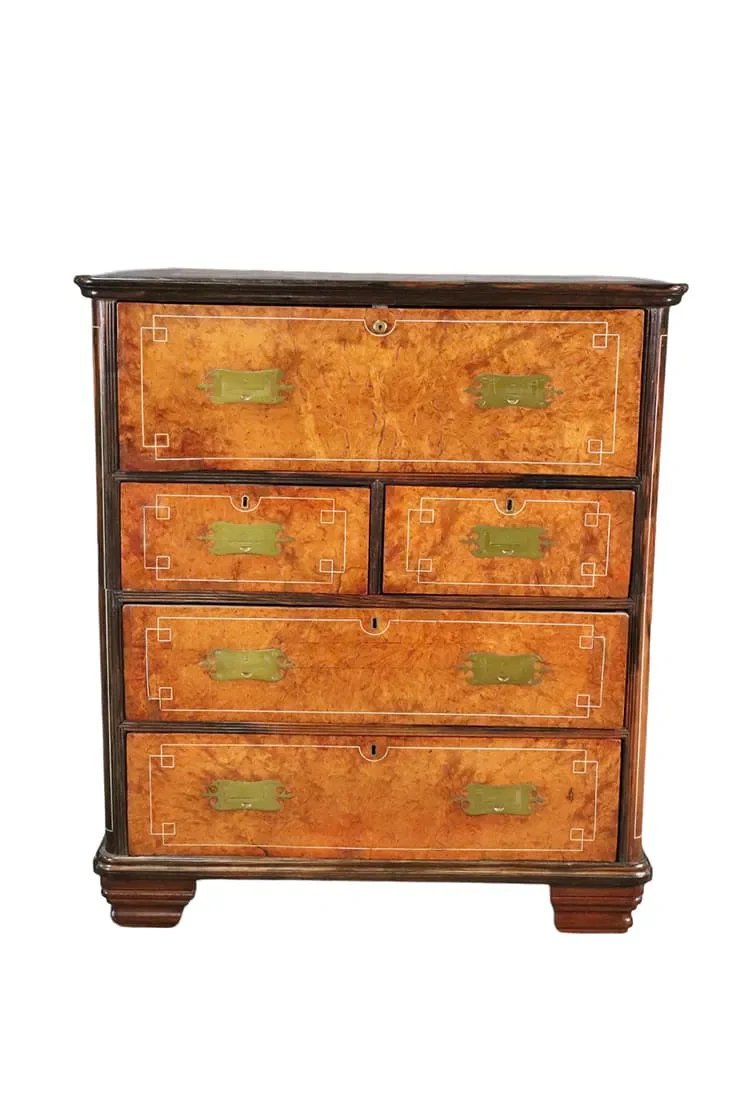
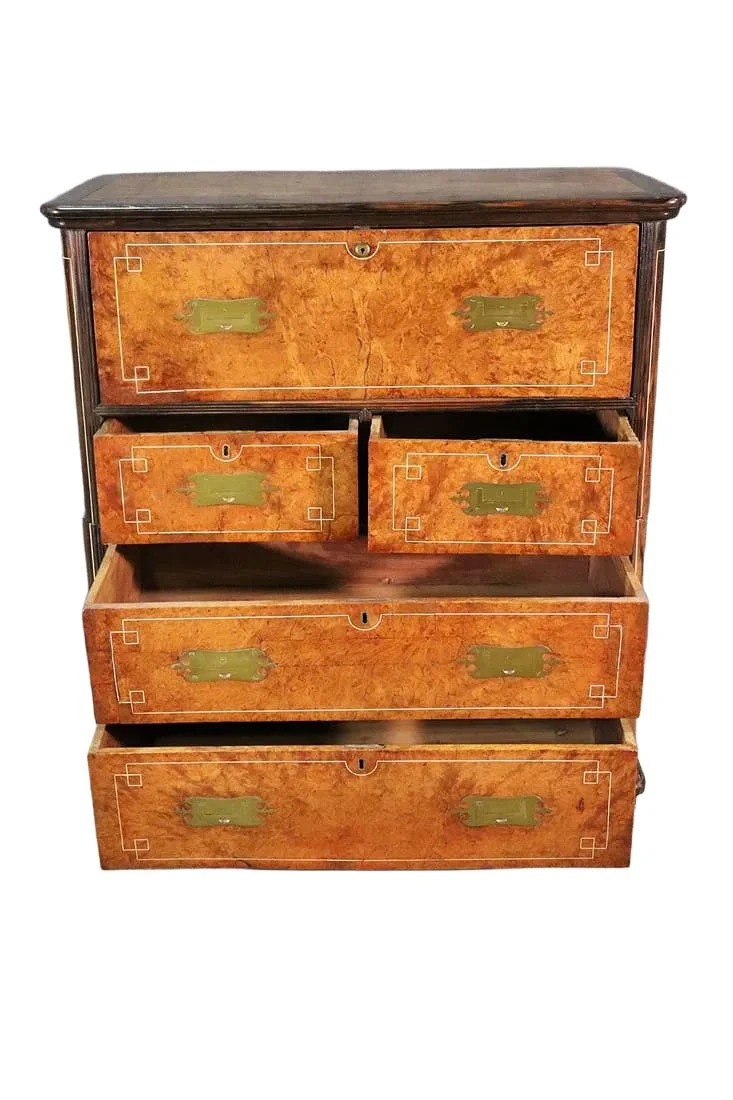
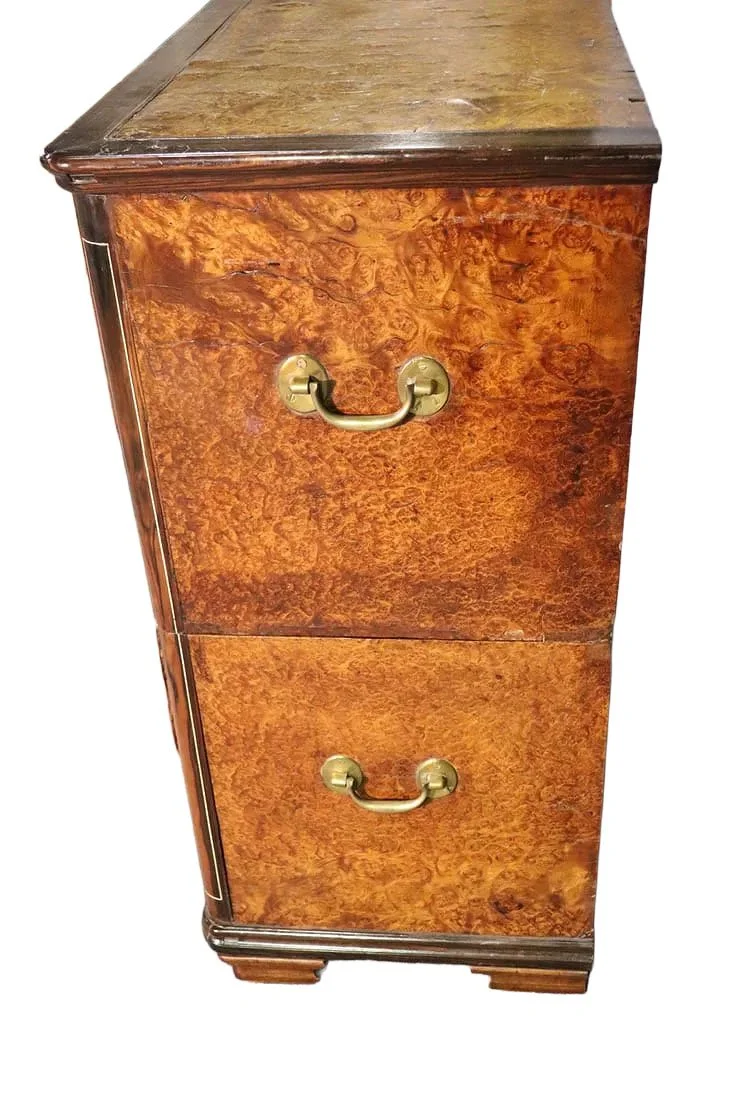
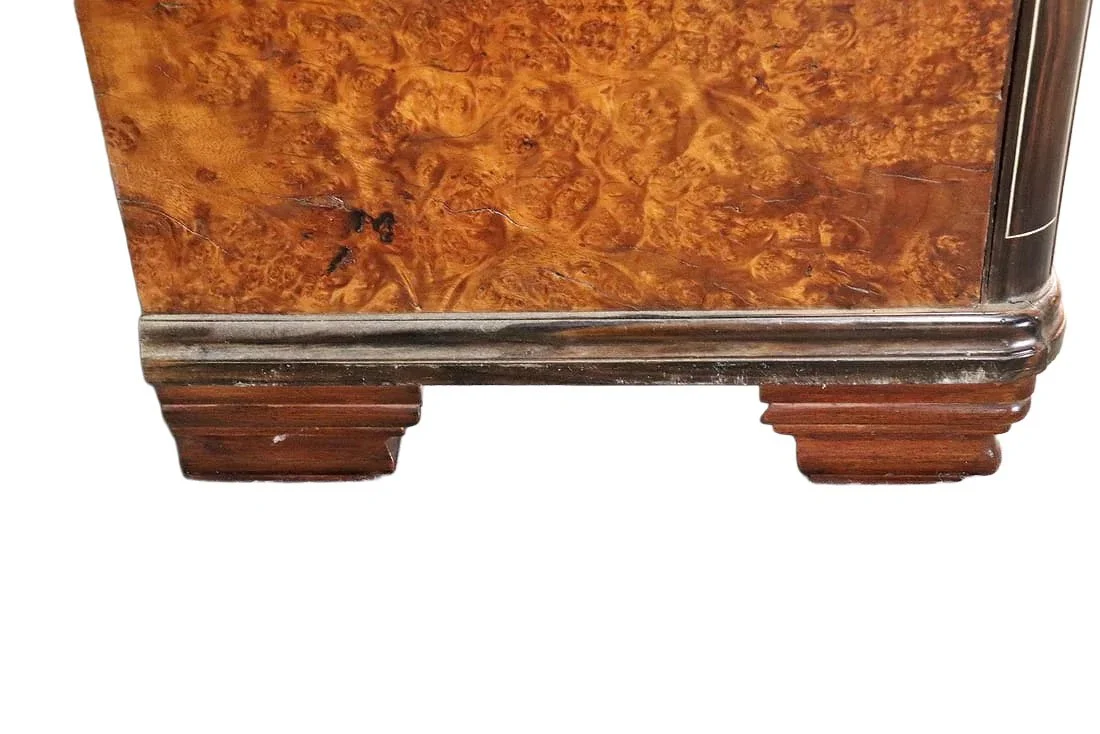
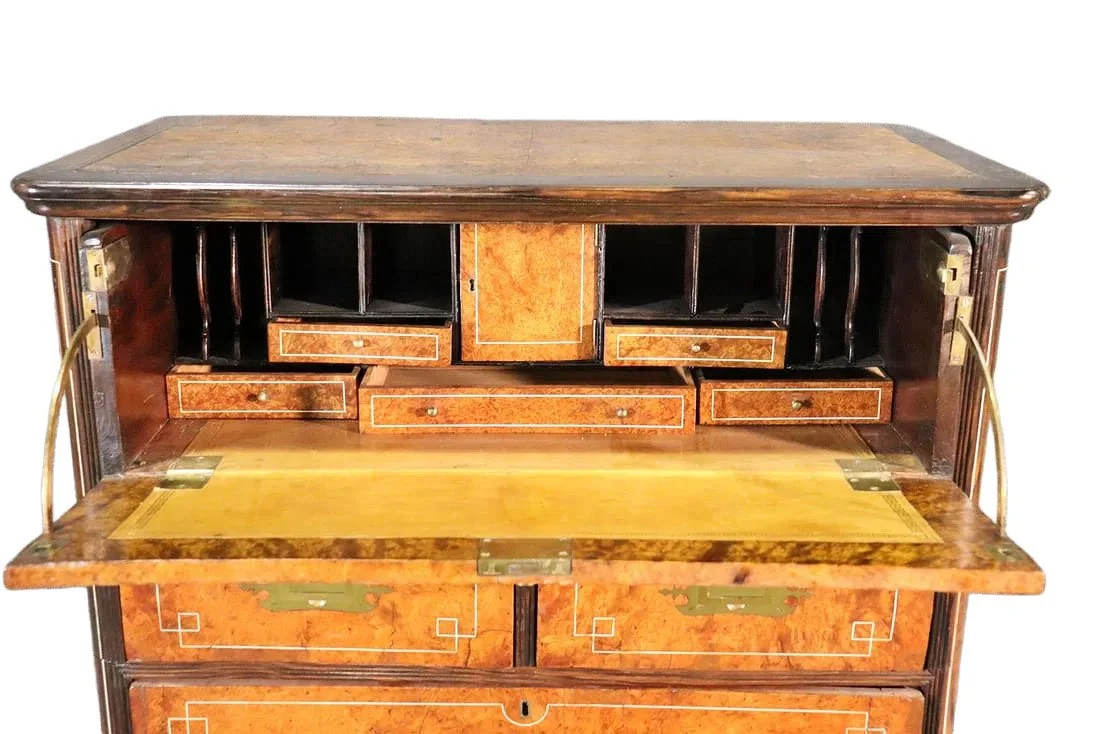
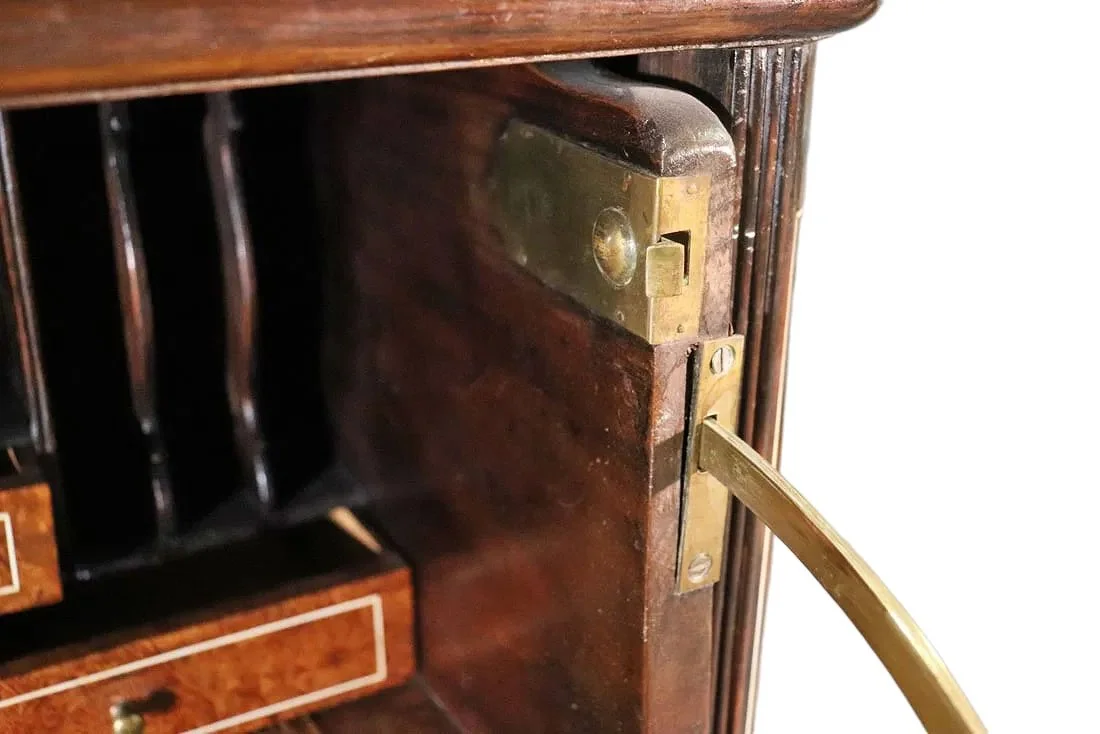
This museum-quality Austrian Empire four-drawer chest is a tour de force of Central European cabinetmaking, seamlessly marrying opulent neoclassical architecture with profound historical significance. Standing at an impressive 39.75 inches high, 50.25 inches wide, and 24.5 inches deep, its palatial scale and commanding architectural proportions make it an ideal focal piece for a grand entryway, gallery, or formal living space. The facade features spectacular, book-matched walnut burl veneers that create a mirrored, symmetrical tapestry of vibrant grain. This lively face is sharply framed by structured mahogany stiles, which are surmounted by exquisitely carved and gilded caryatids that ground the piece with stately elegance.
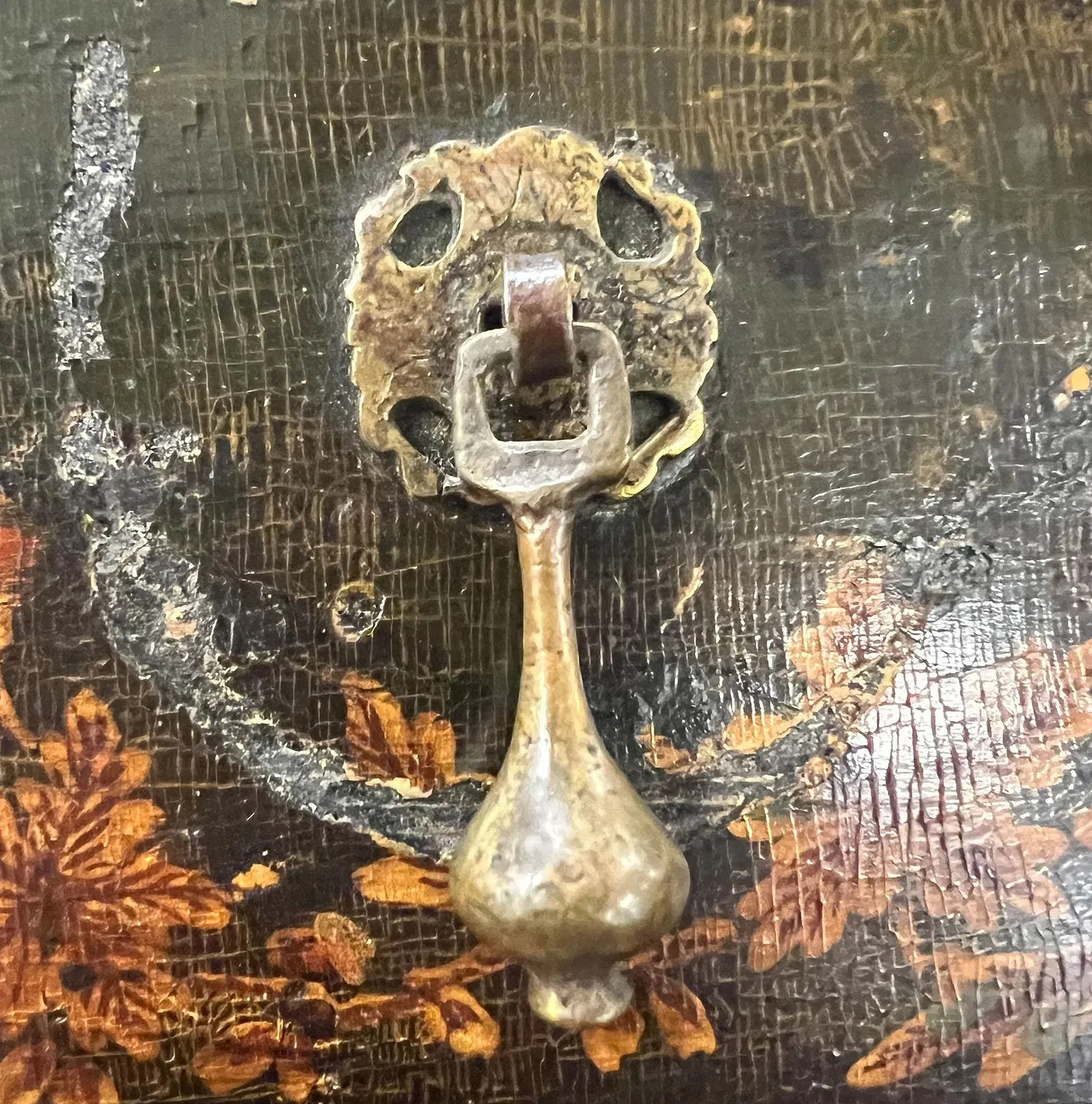
What elevates this commode to an elite category of historical artifact is its rare, highly collectible commemorative hardware. The drawers retain their original, heavy gilded-brass ormolu pulls stamped with the word "VÖLKERDANK" ("The Peoples' Thanks"). This rare insignia commemorates the historic 1813 Battle of the Nations (Battle of Leipzig), where Coalition forces decisively triumphed over Napoleon Bonaparte. Flanking this inscription are finely detailed profile medallions of the victorious Allied monarchs, creating an extraordinary centerpiece for discerning collectors of Napoleonic-era history and imperial decorative arts. The chest is further accented by striking gilded bronze double-headed eagle escutcheons, a definitive emblem of the Habsburg Monarchy.
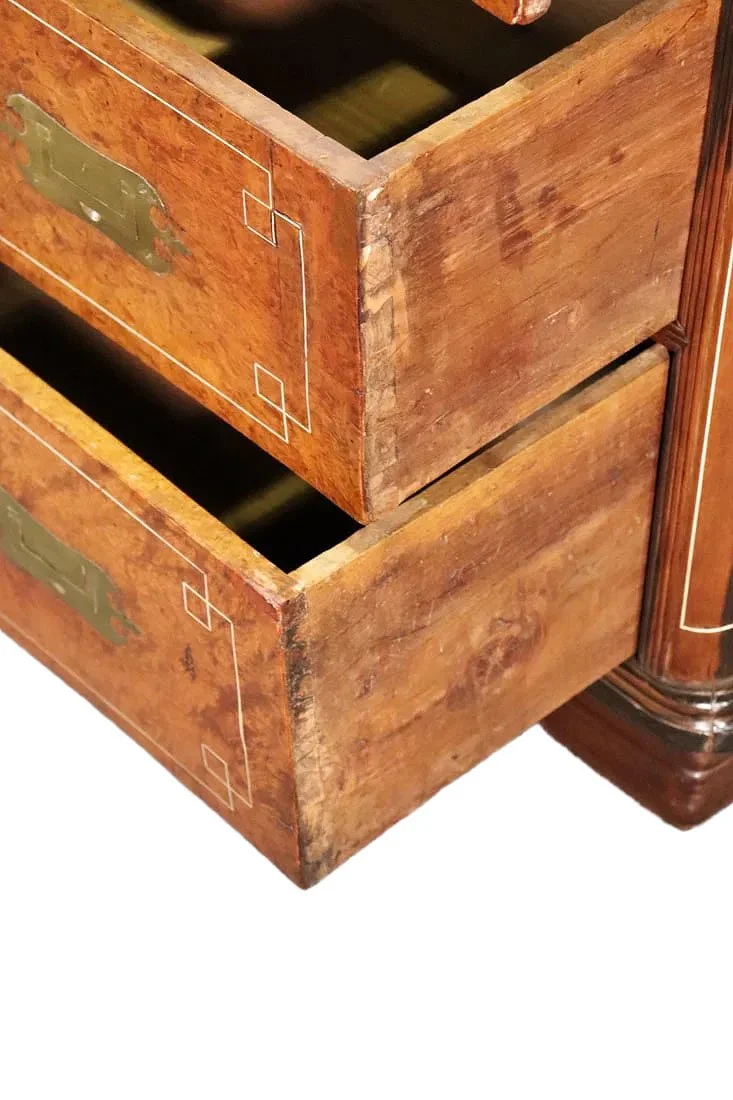
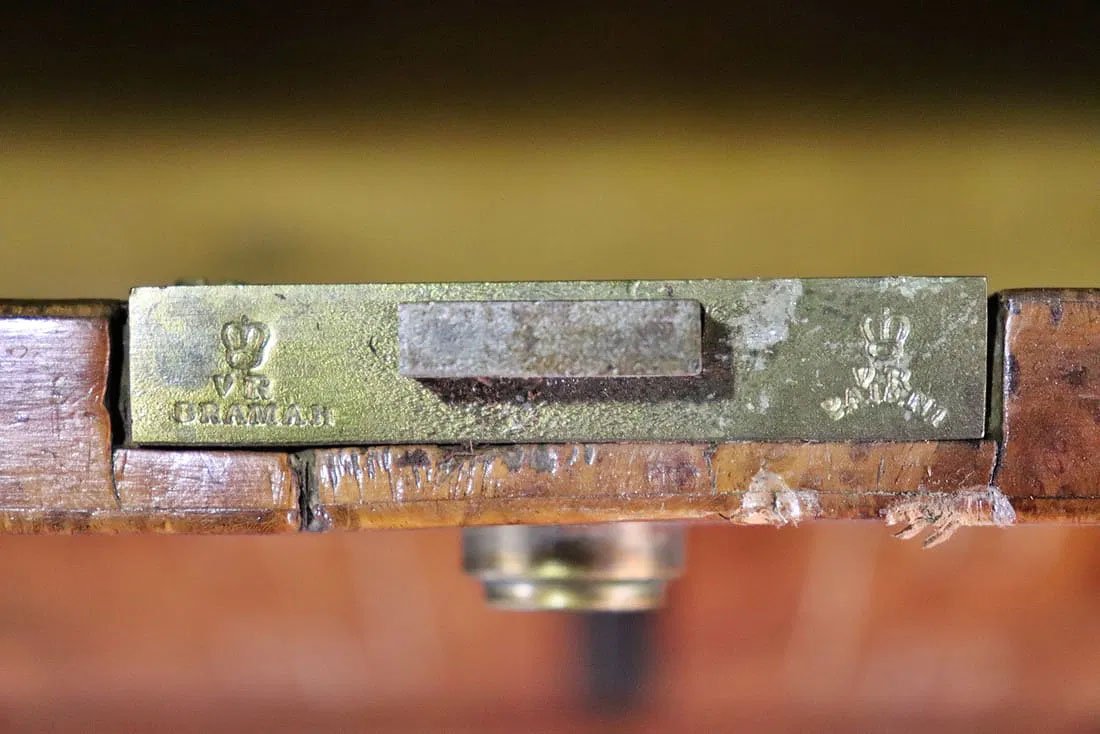
Crucially, the interior structure bears a permanent ink export stamp from the Bundesdenkmalamt (BDA), the Federal Monuments Office of Austria. Reading "Vom Bundesdenkmalamt – Ausfuhr freigegeben," this official state mark serves as an ironclad guarantee of authenticity, providing immaculate provenance that certifies its legal extraction from a prominent Austrian estate. Supported by elegant square tapered legs, this pristine chest offers a rare opportunity to acquire a fully documented, politically significant piece of European history designed during the momentous Congress of Vienna.
Size: 39.75” H x 50.25" W x 24.5" D
C. 1815-20, Austria
This museum-quality Austrian Empire four-drawer chest is a tour de force of Central European cabinetmaking, seamlessly marrying opulent neoclassical architecture with profound historical significance. Standing at an impressive 39.75 inches high, 50.25 inches wide, and 24.5 inches deep, its palatial scale and commanding architectural proportions make it an ideal focal piece for a grand entryway, gallery, or formal living space. The facade features spectacular, book-matched walnut burl veneers that create a mirrored, symmetrical tapestry of vibrant grain. This lively face is sharply framed by structured mahogany stiles, which are surmounted by exquisitely carved and gilded caryatids that ground the piece with stately elegance.
What elevates this commode to an elite category of historical artifact is its rare, highly collectible commemorative hardware. The drawers retain their original, heavy gilded-brass ormolu pulls stamped with the word "VÖLKERDANK" ("The Peoples' Thanks"). This rare insignia commemorates the historic 1813 Battle of the Nations (Battle of Leipzig), where Coalition forces decisively triumphed over Napoleon Bonaparte. Flanking this inscription are finely detailed profile medallions of the victorious Allied monarchs, creating an extraordinary centerpiece for discerning collectors of Napoleonic-era history and imperial decorative arts. The chest is further accented by striking gilded bronze double-headed eagle escutcheons, a definitive emblem of the Habsburg Monarchy.
Crucially, the interior structure bears a permanent ink export stamp from the Bundesdenkmalamt (BDA), the Federal Monuments Office of Austria. Reading "Vom Bundesdenkmalamt – Ausfuhr freigegeben," this official state mark serves as an ironclad guarantee of authenticity, providing immaculate provenance that certifies its legal extraction from a prominent Austrian estate. Supported by elegant square tapered legs, this pristine chest offers a rare opportunity to acquire a fully documented, politically significant piece of European history designed during the momentous Congress of Vienna.
Size: 39.75” H x 50.25" W x 24.5" D
C. 1815-20, Austria

 Image 1 of 9
 Image 2 of 9
 Image 3 of 9
 Image 4 of 9
 Image 5 of 9
 Image 6 of 9
 Image 7 of 9
 Image 8 of 9
 Image 9 of 9