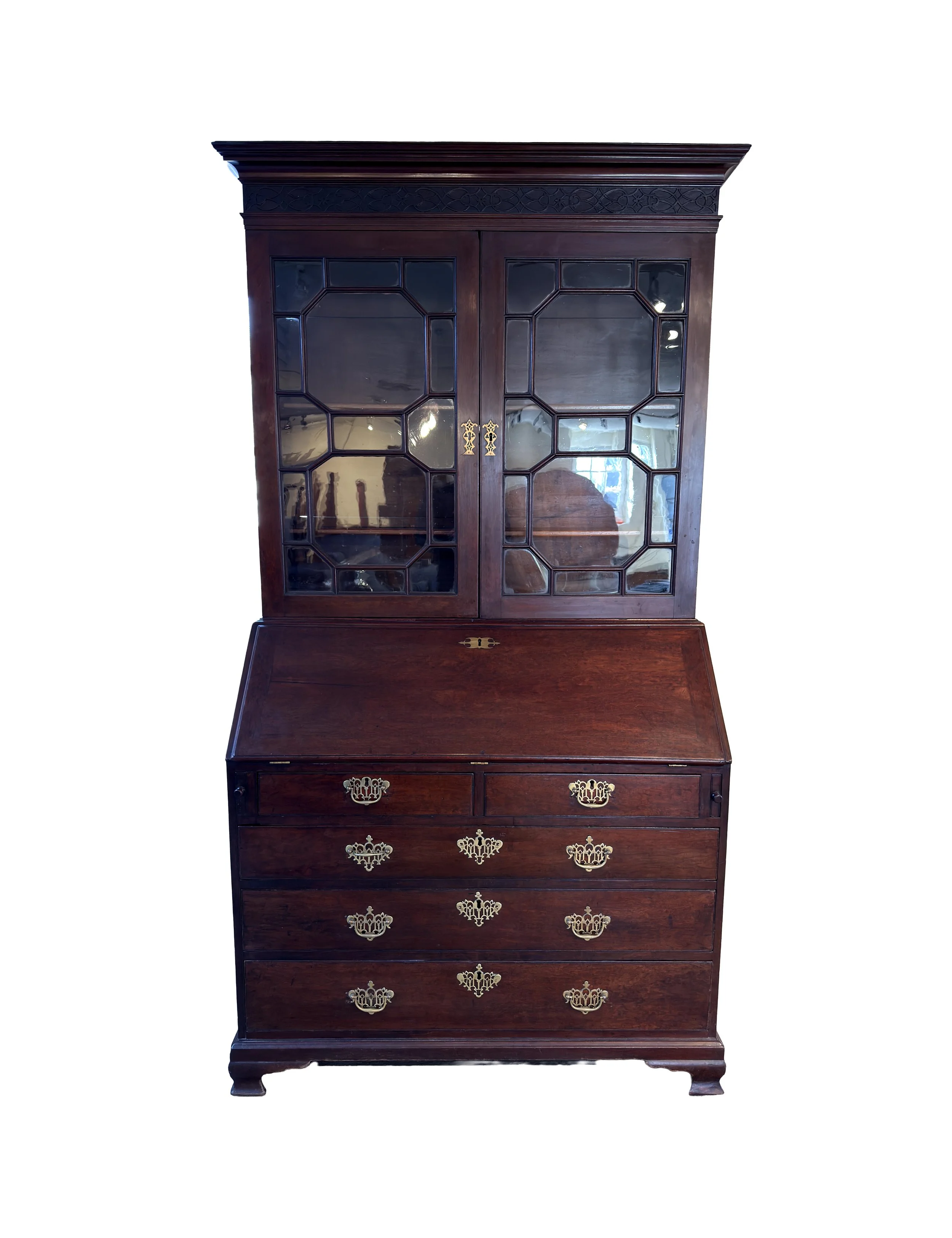
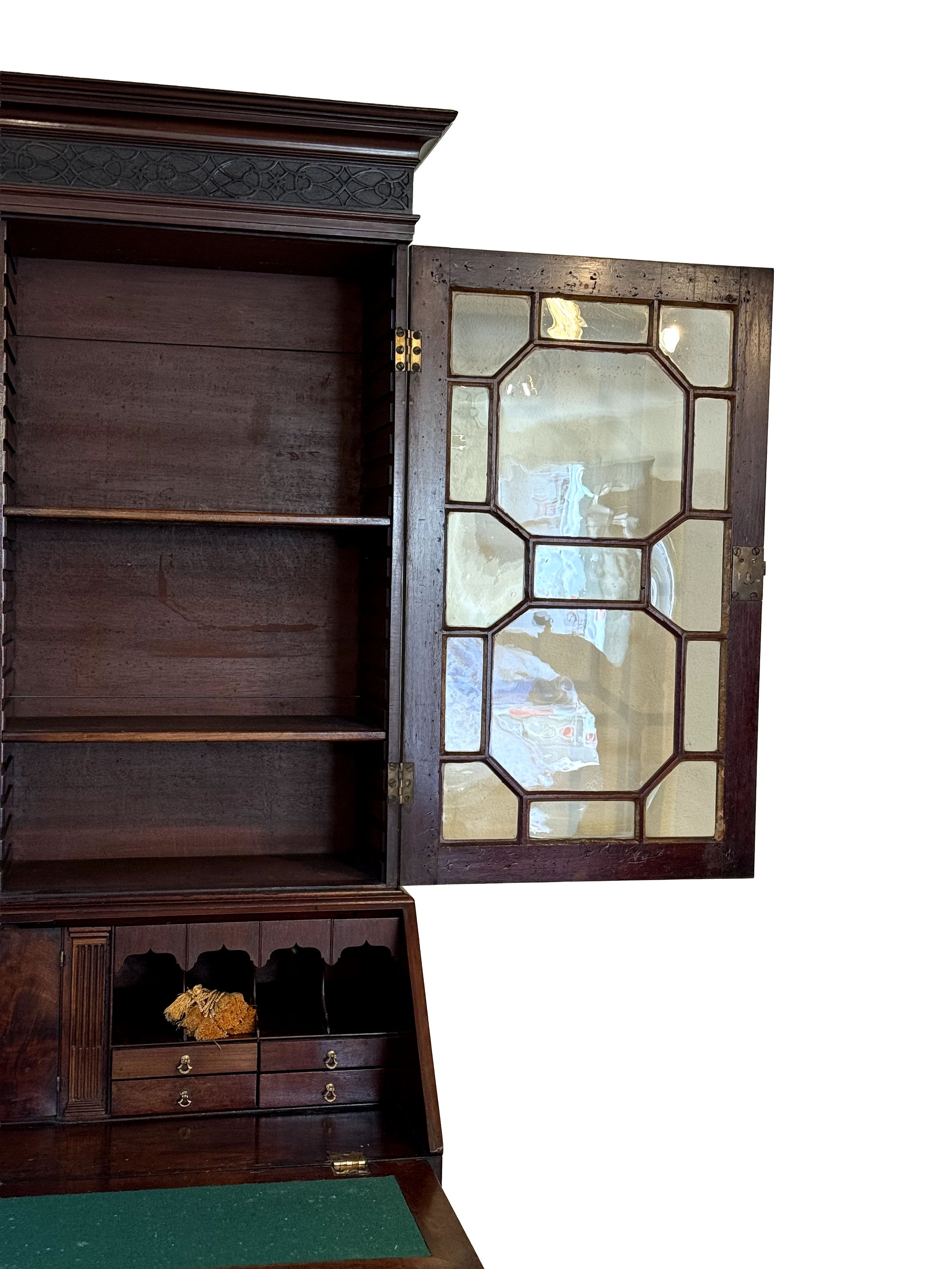
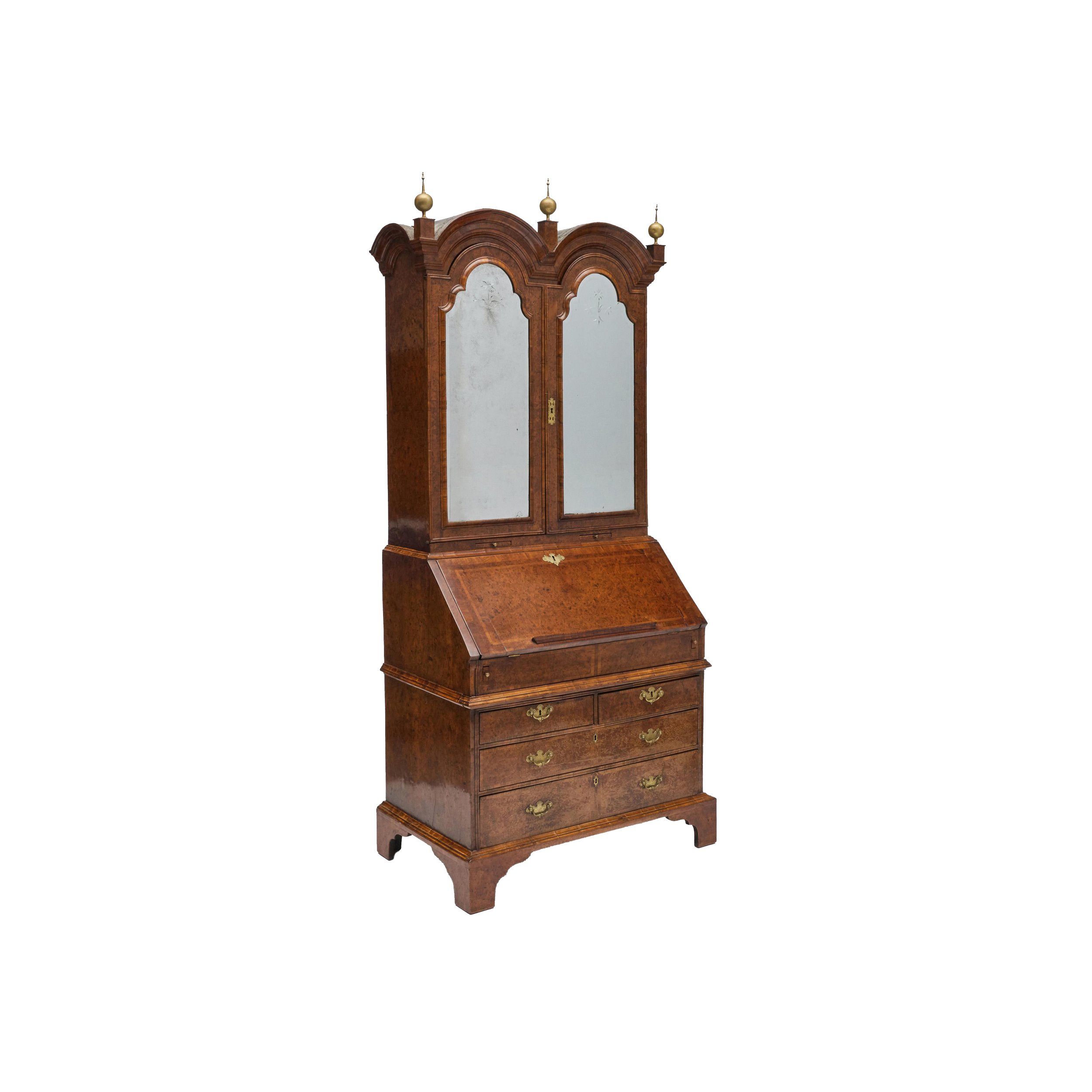
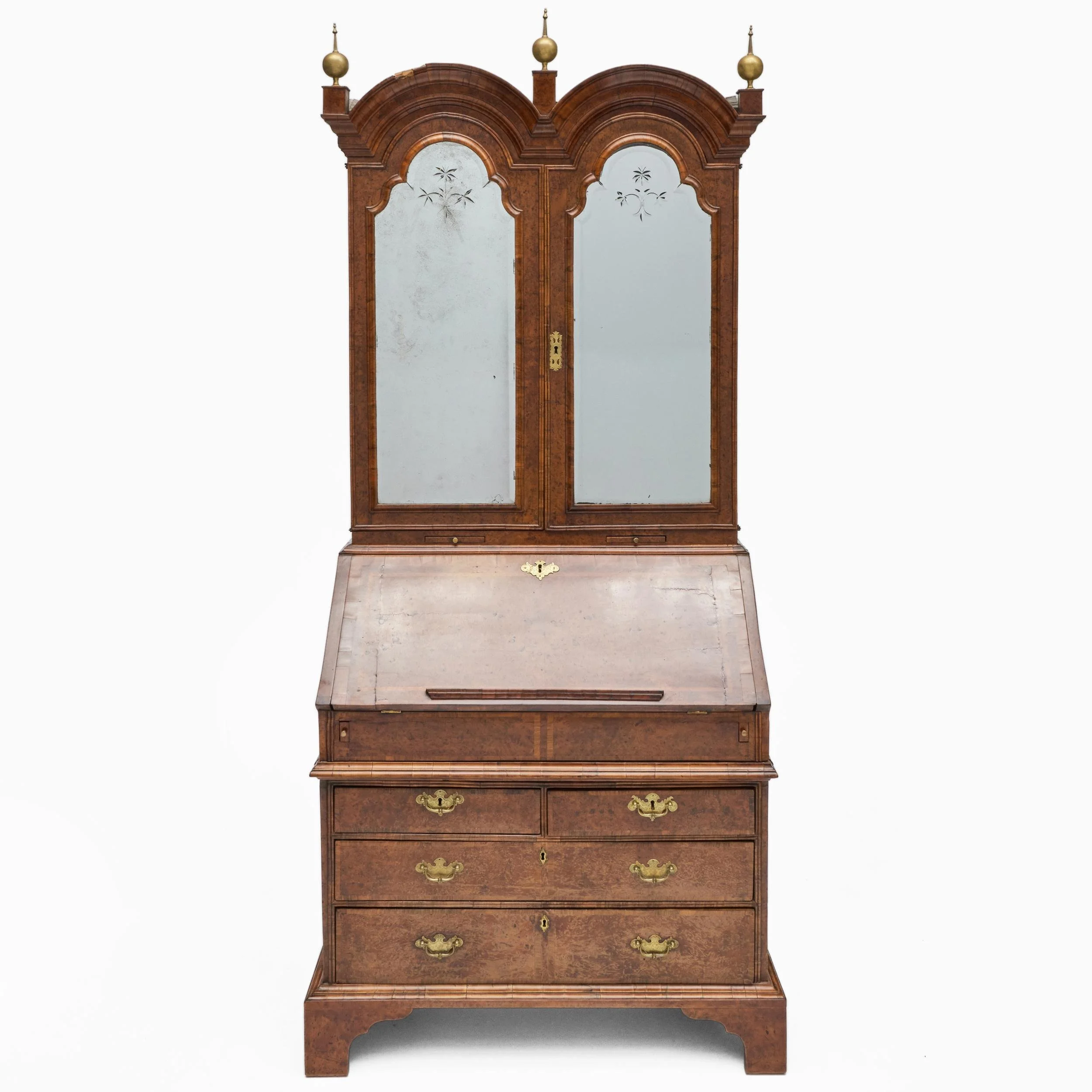
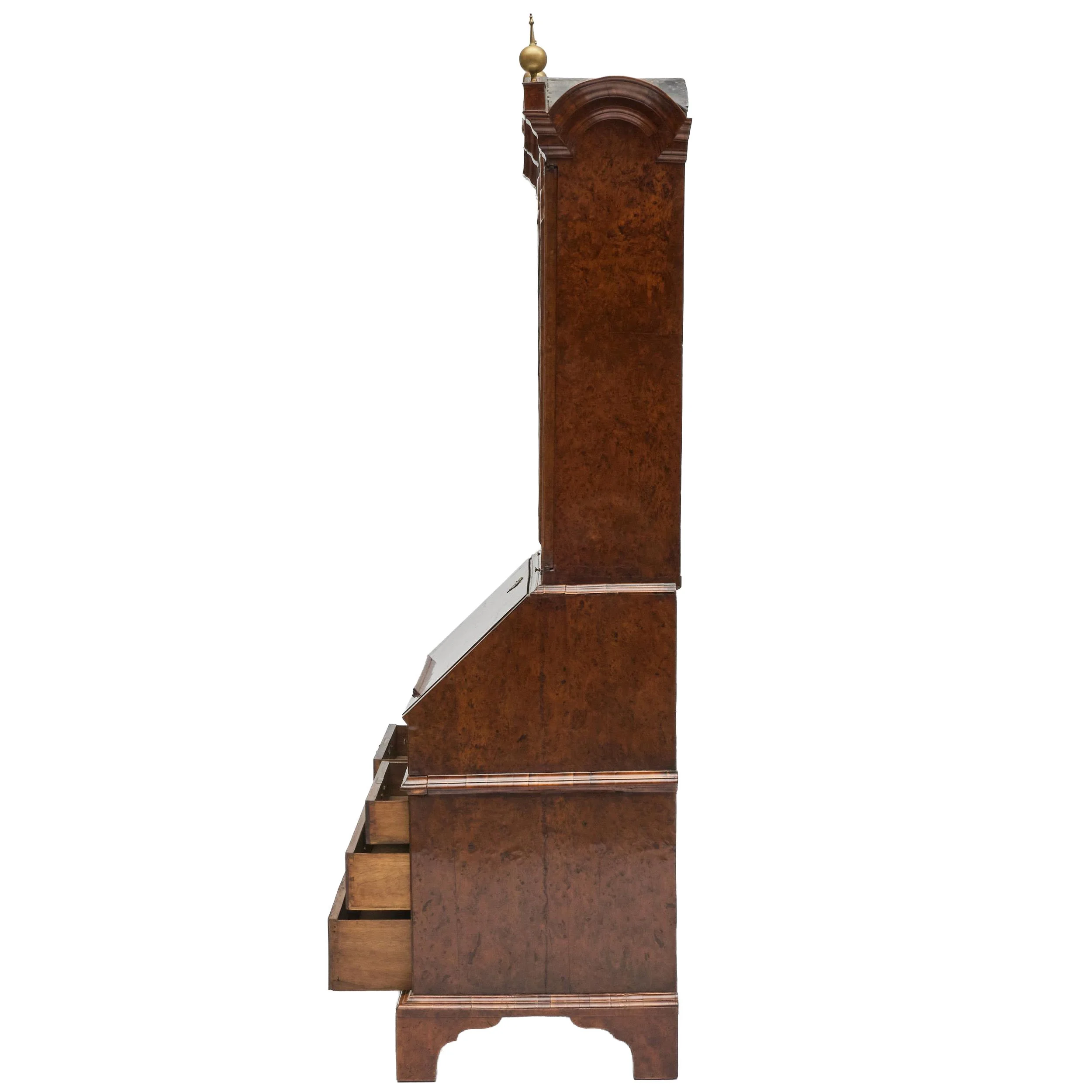
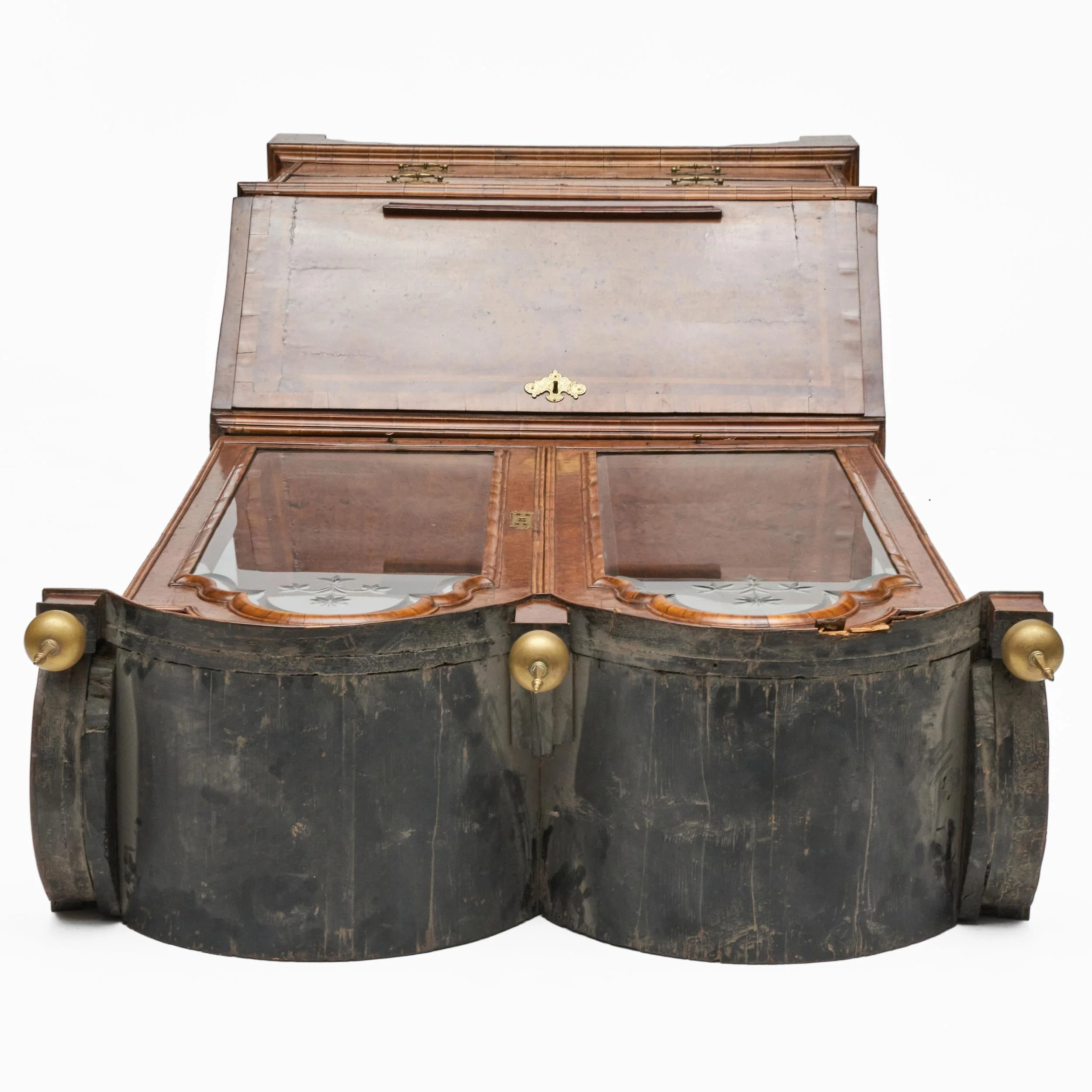
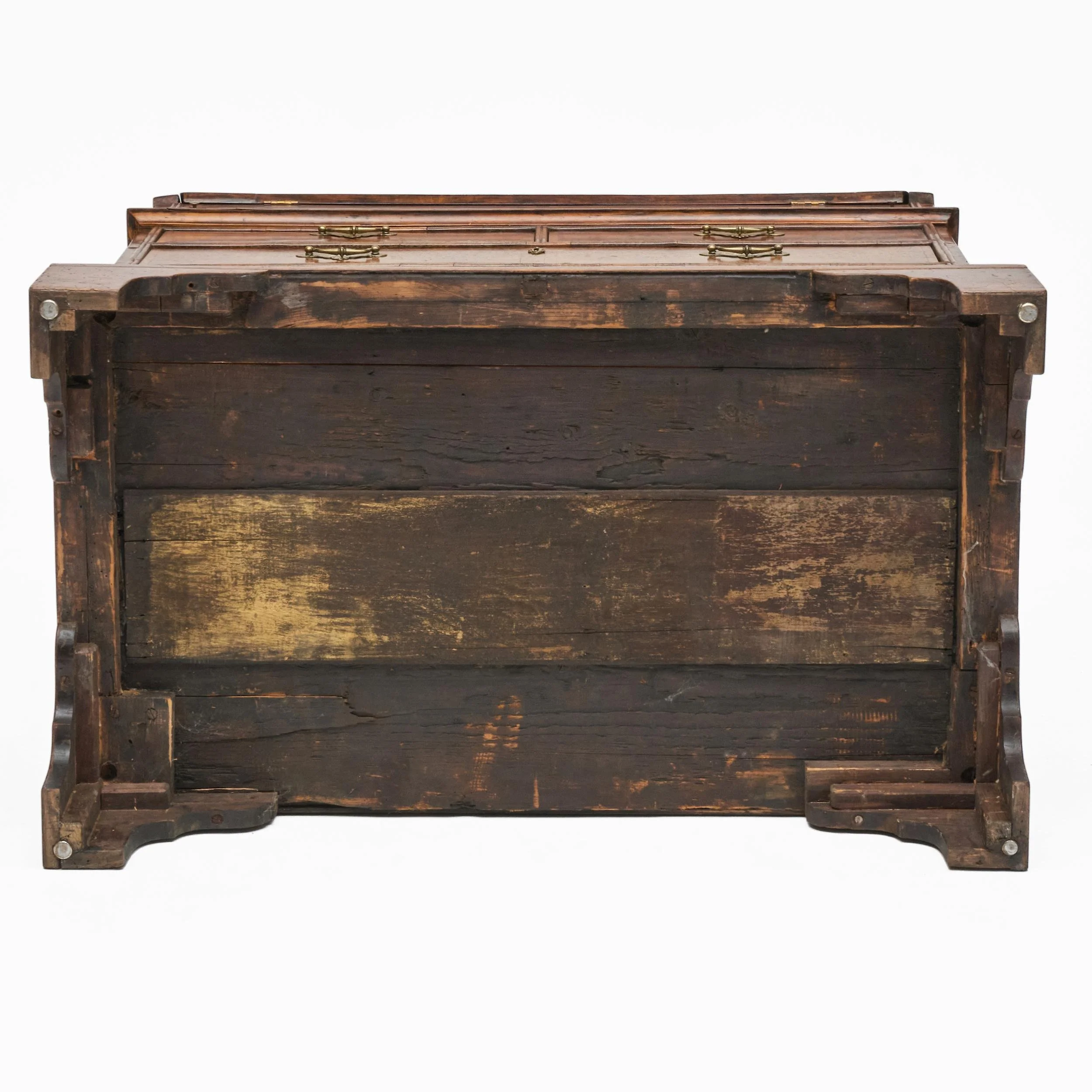
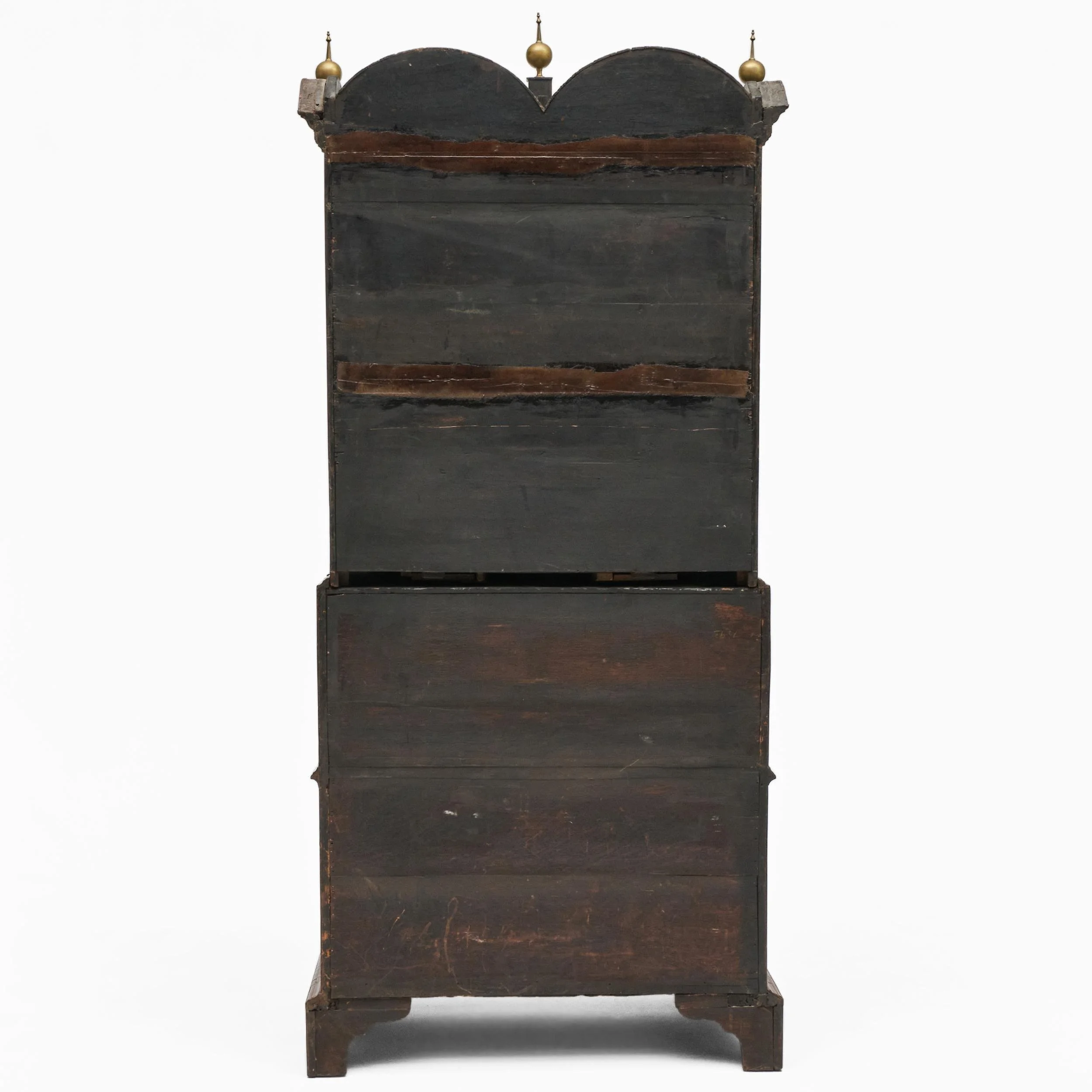
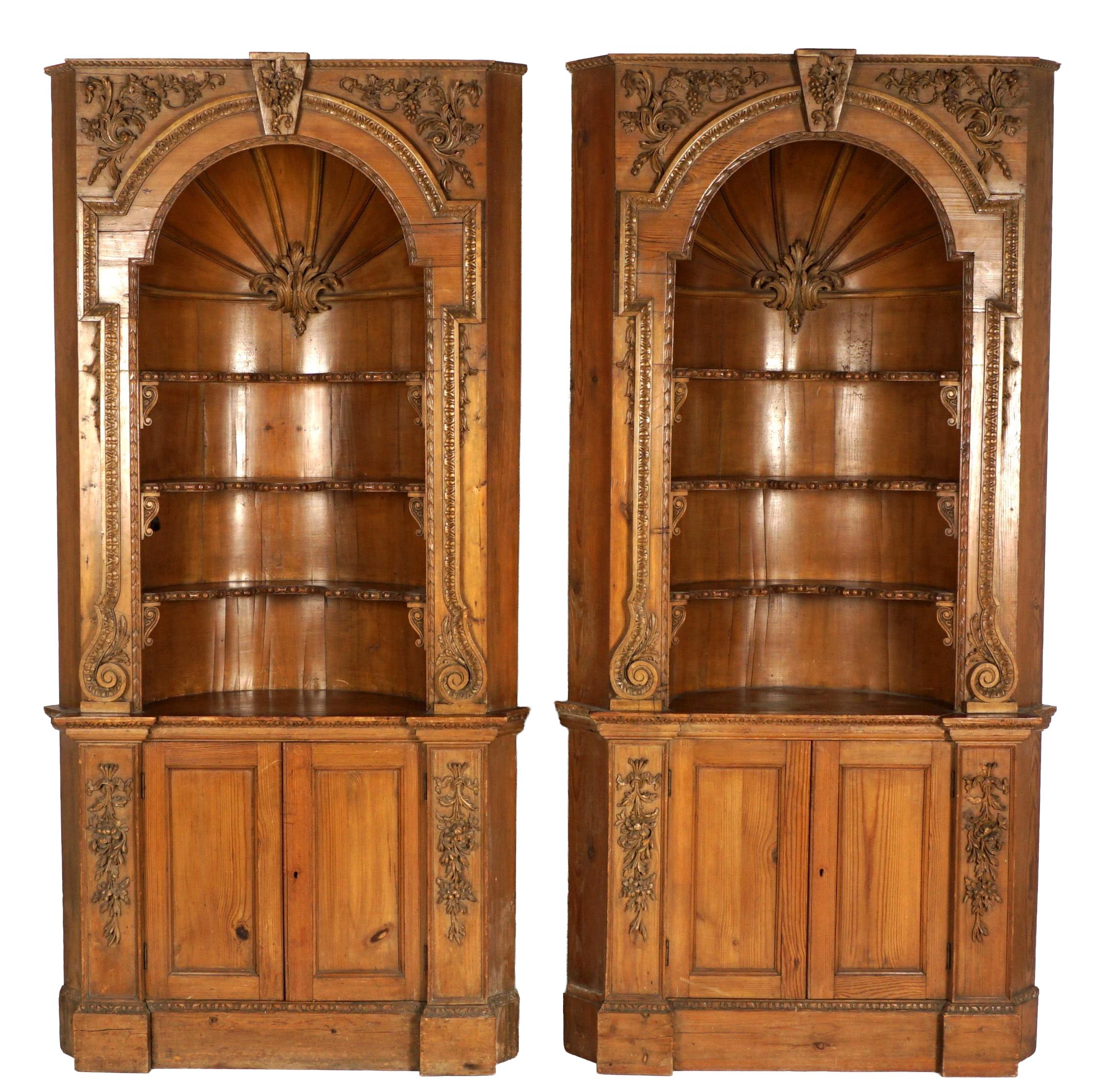
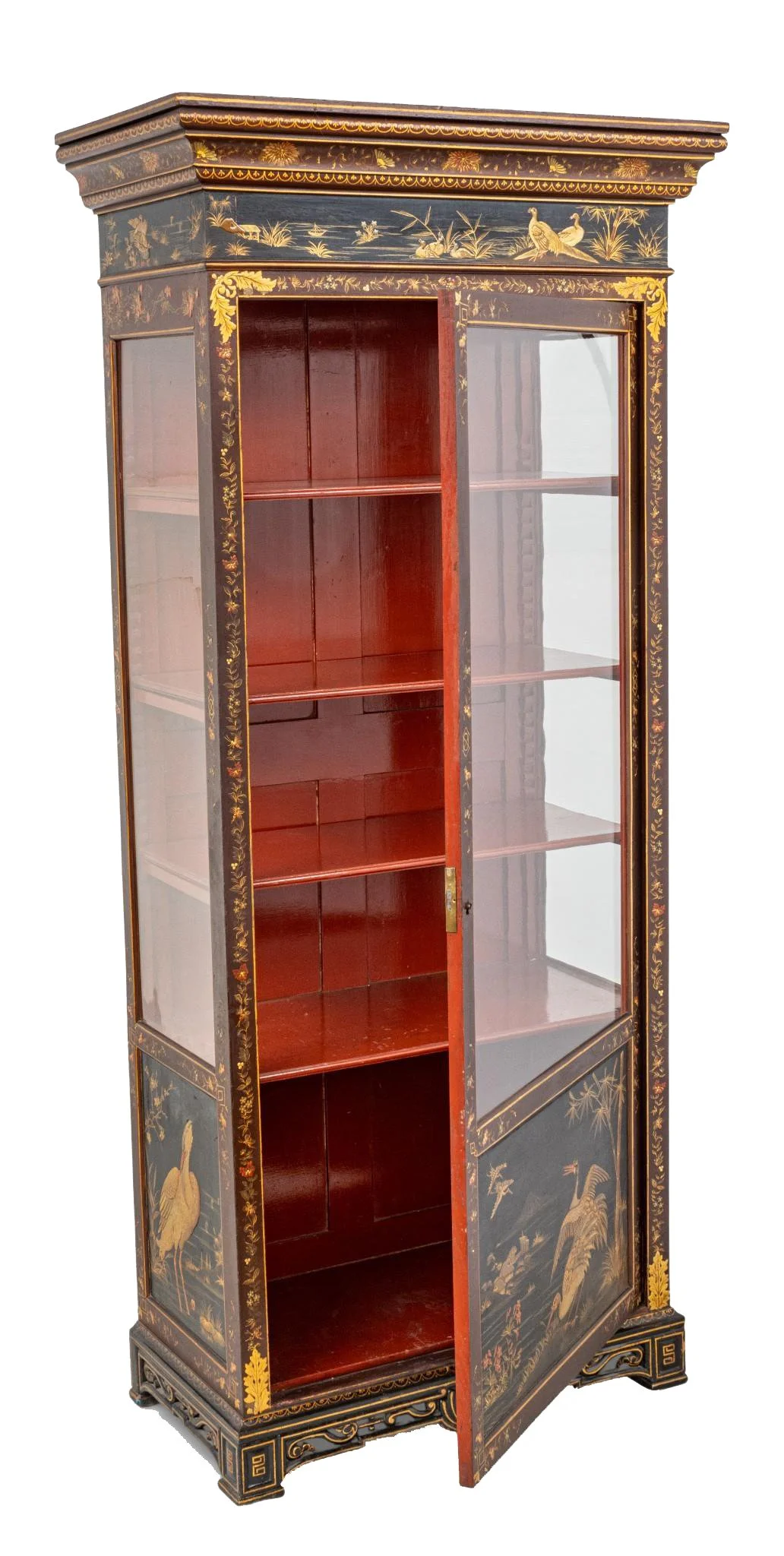
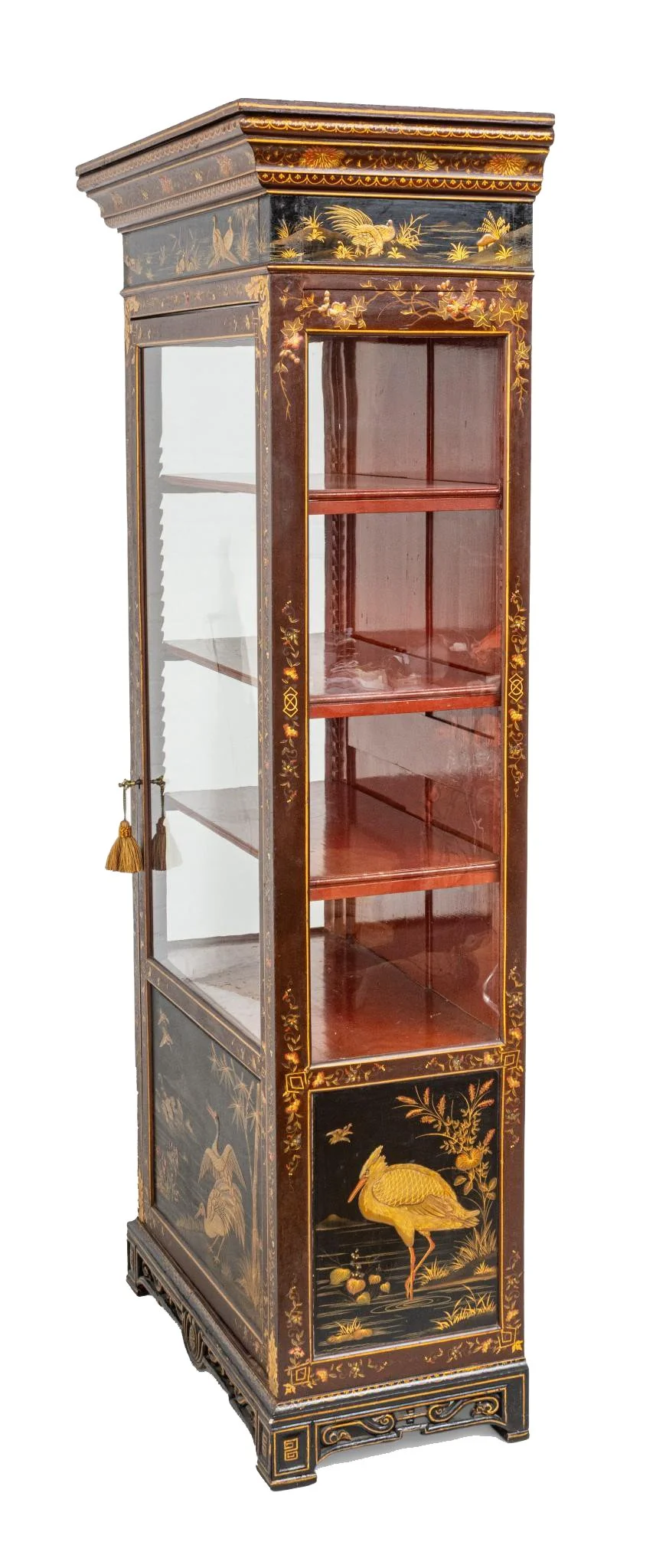
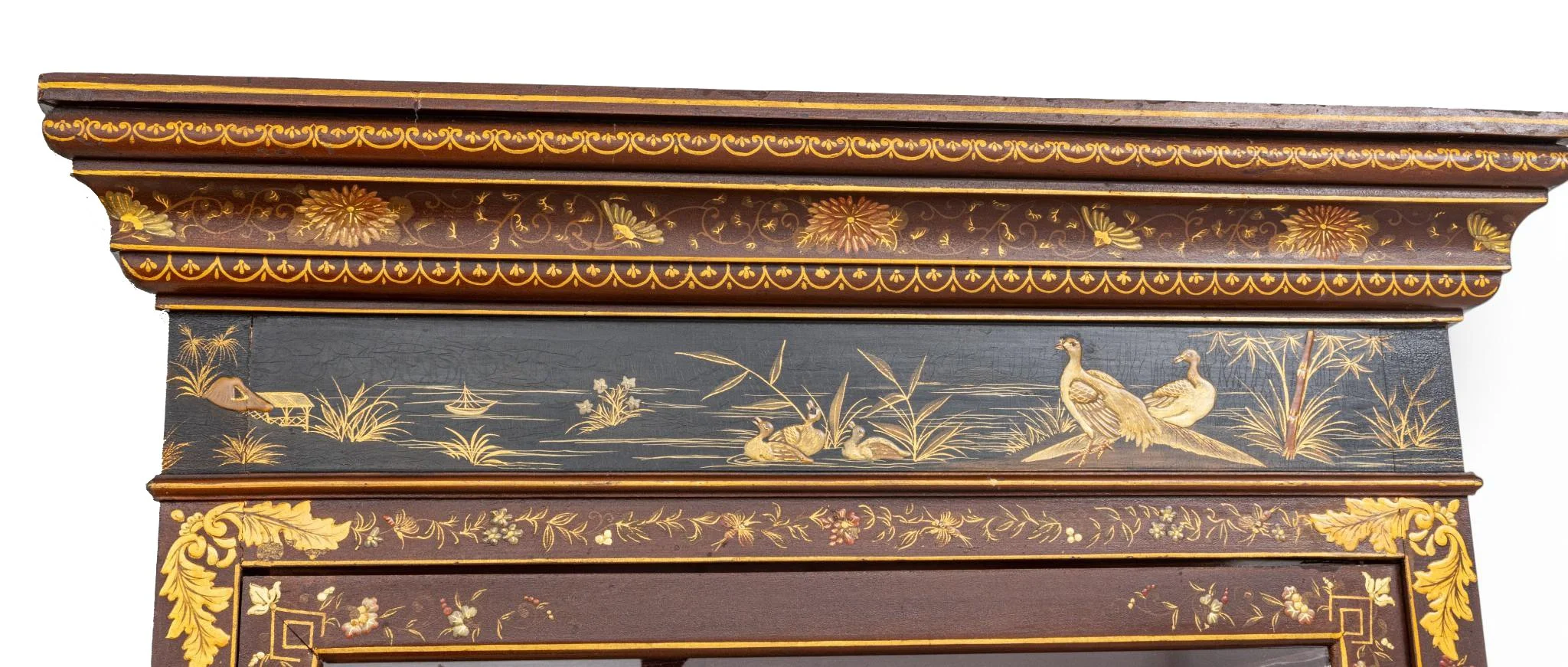
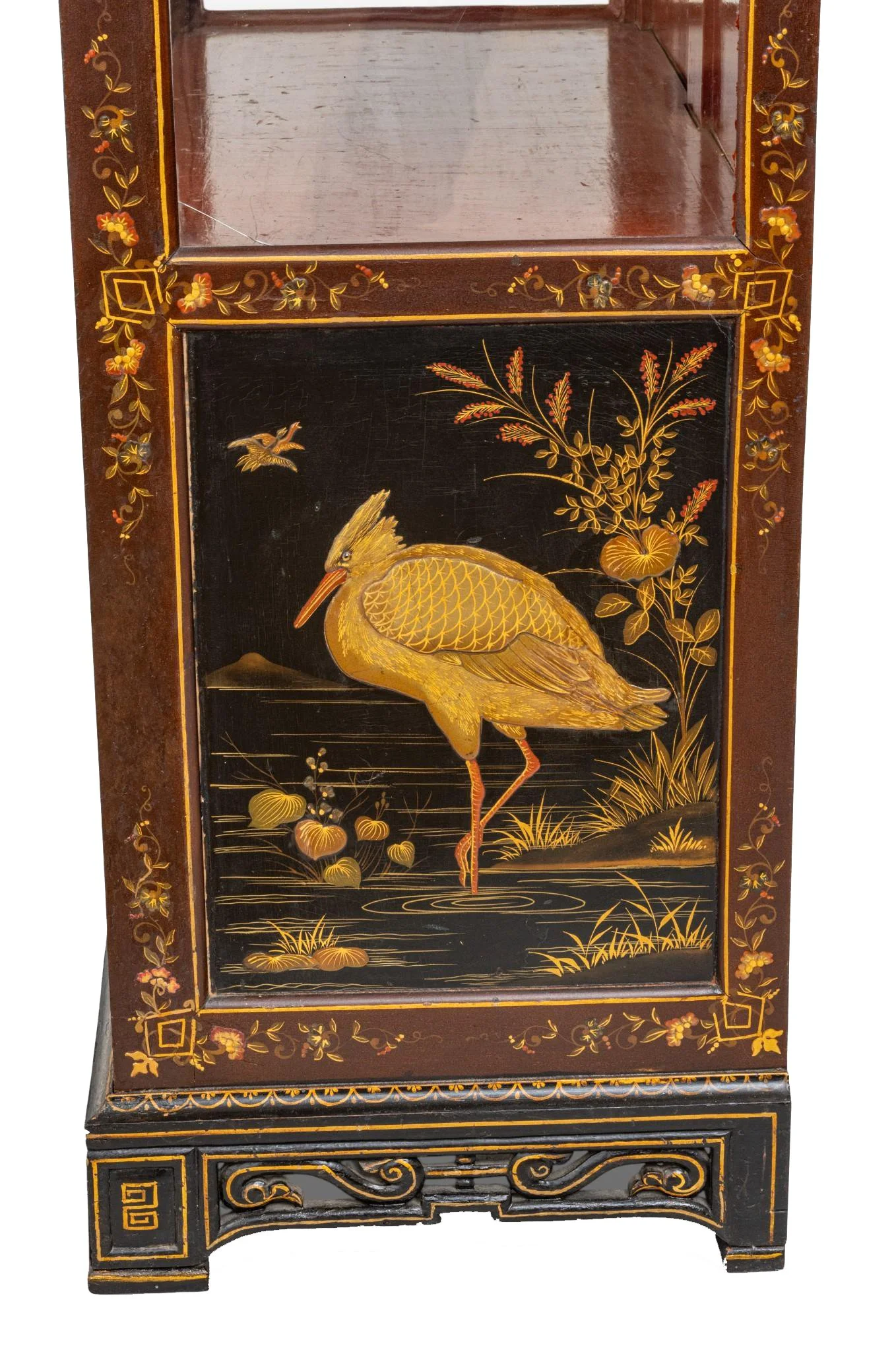
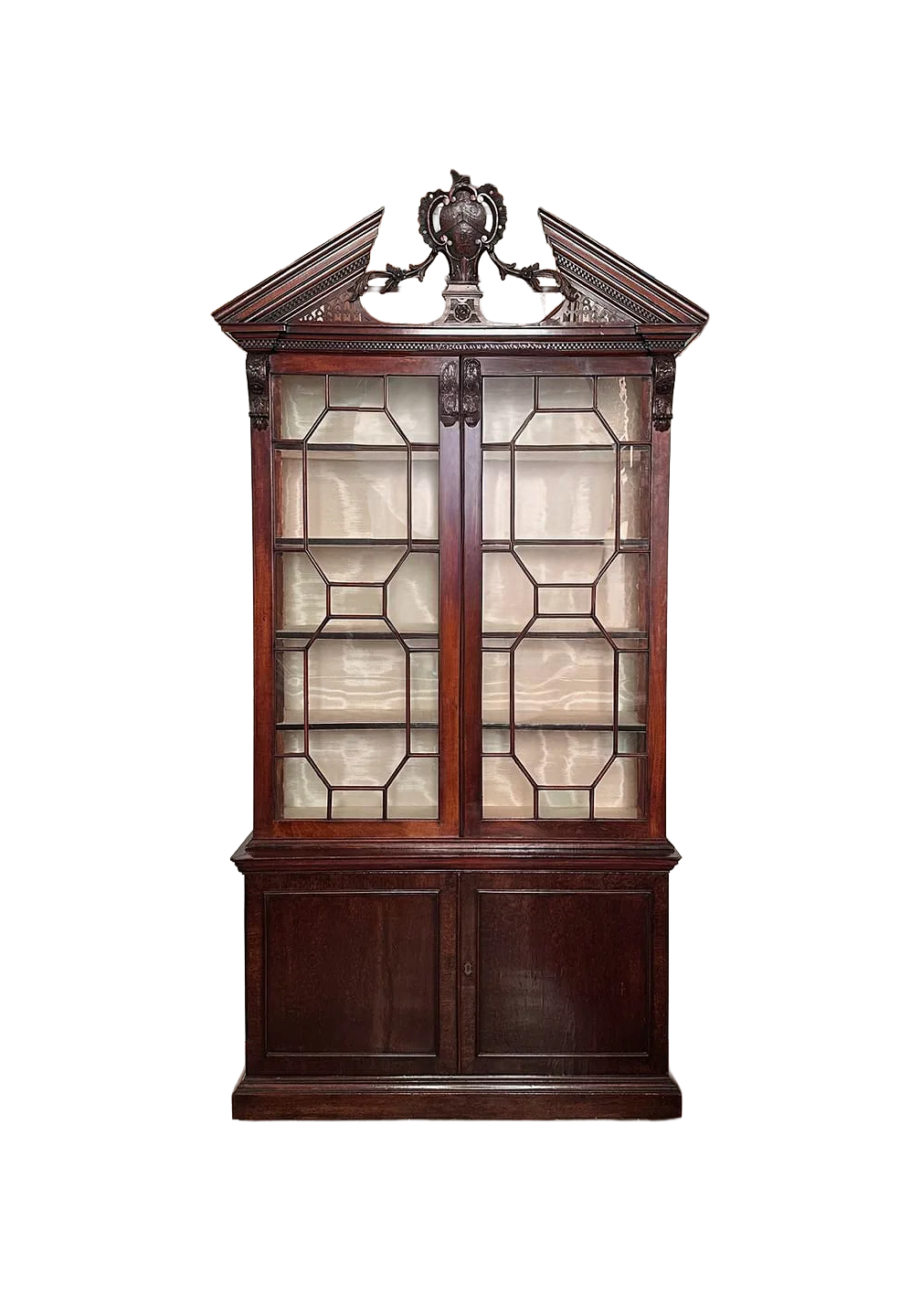
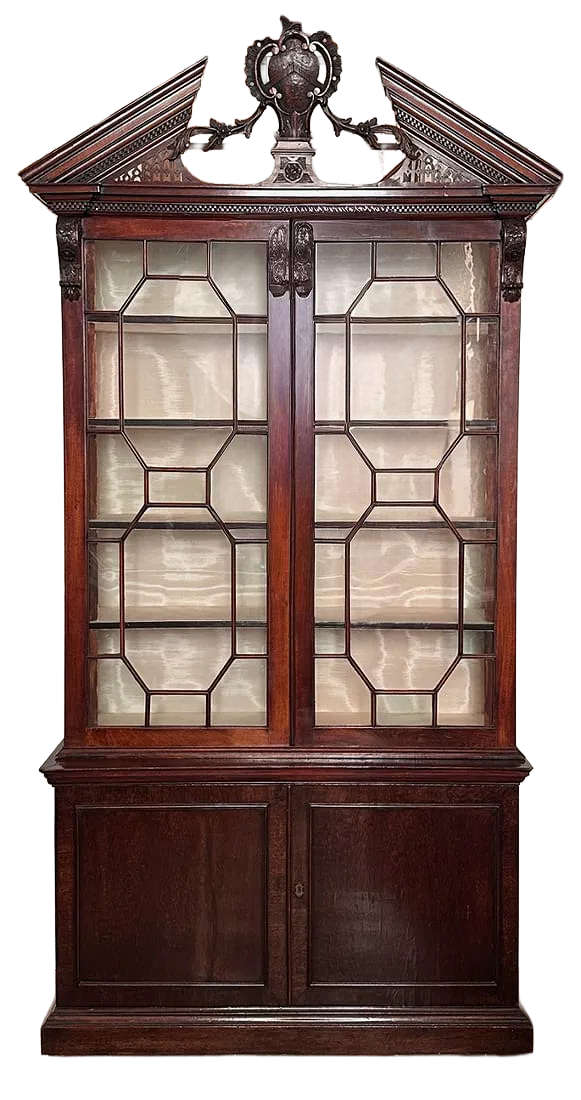
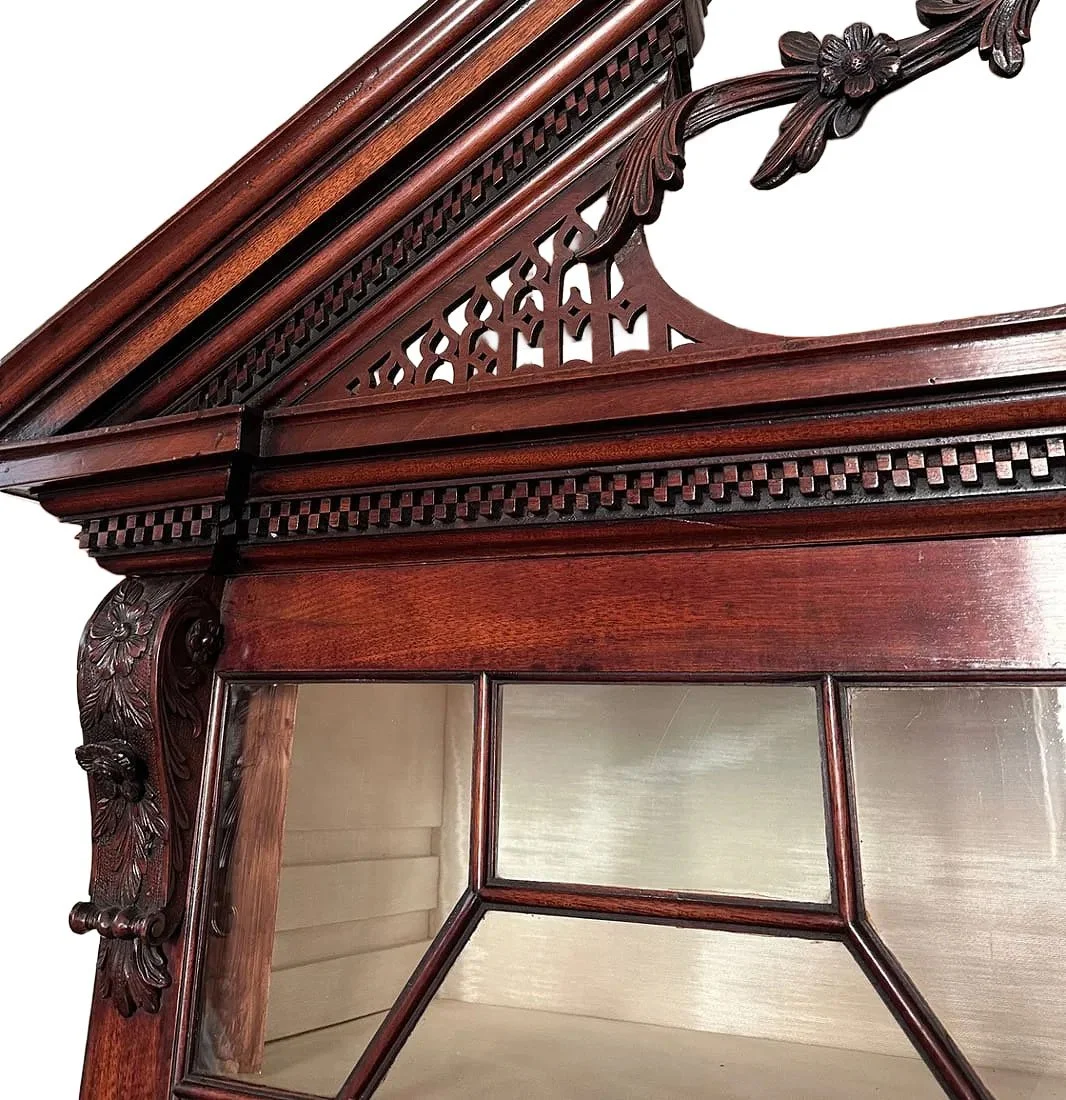
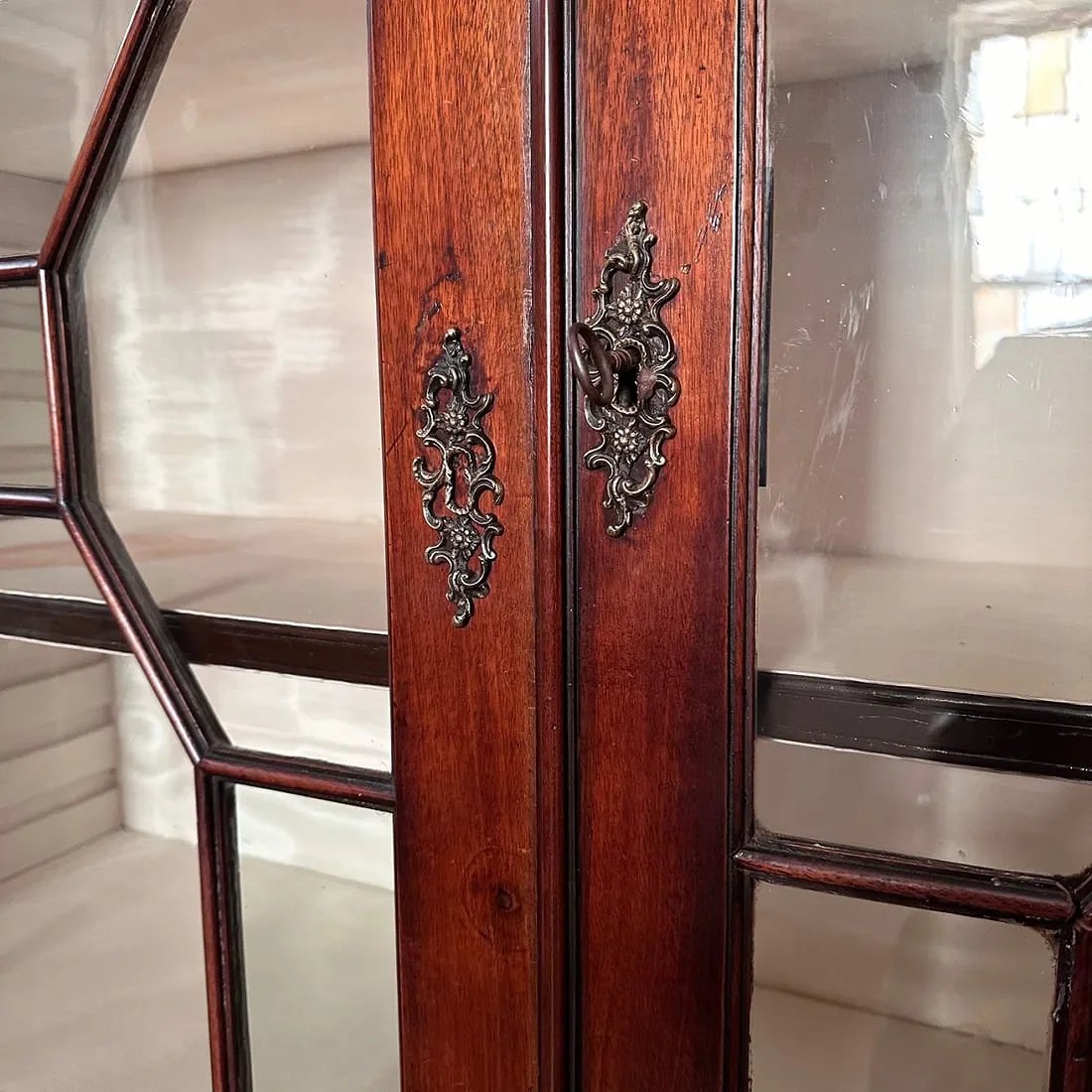
An exquisite George III mahogany servants’ secretary, crafted in two parts, comprises an upper bookcase section and a lower secretaire chest. These components are united by a harmonious sense of proportion and refined craftsmanship.
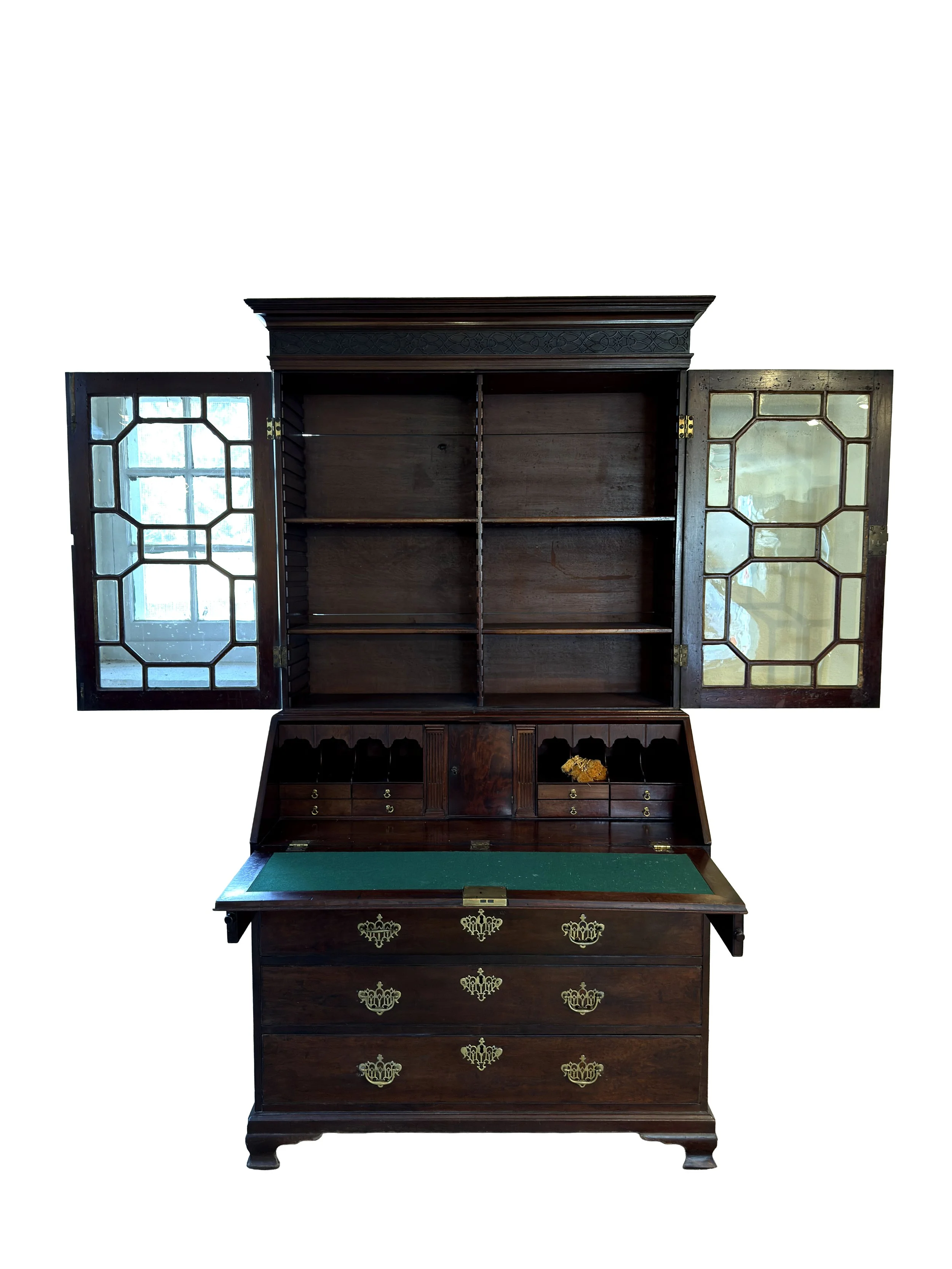
The glazed upper bookcase is adorned with intricately interlaced curved astragals (glazing bars) on the doors, providing both decorative appeal and protection for the shelves within. This design allows for an agreeable view of books and objects displayed inside.
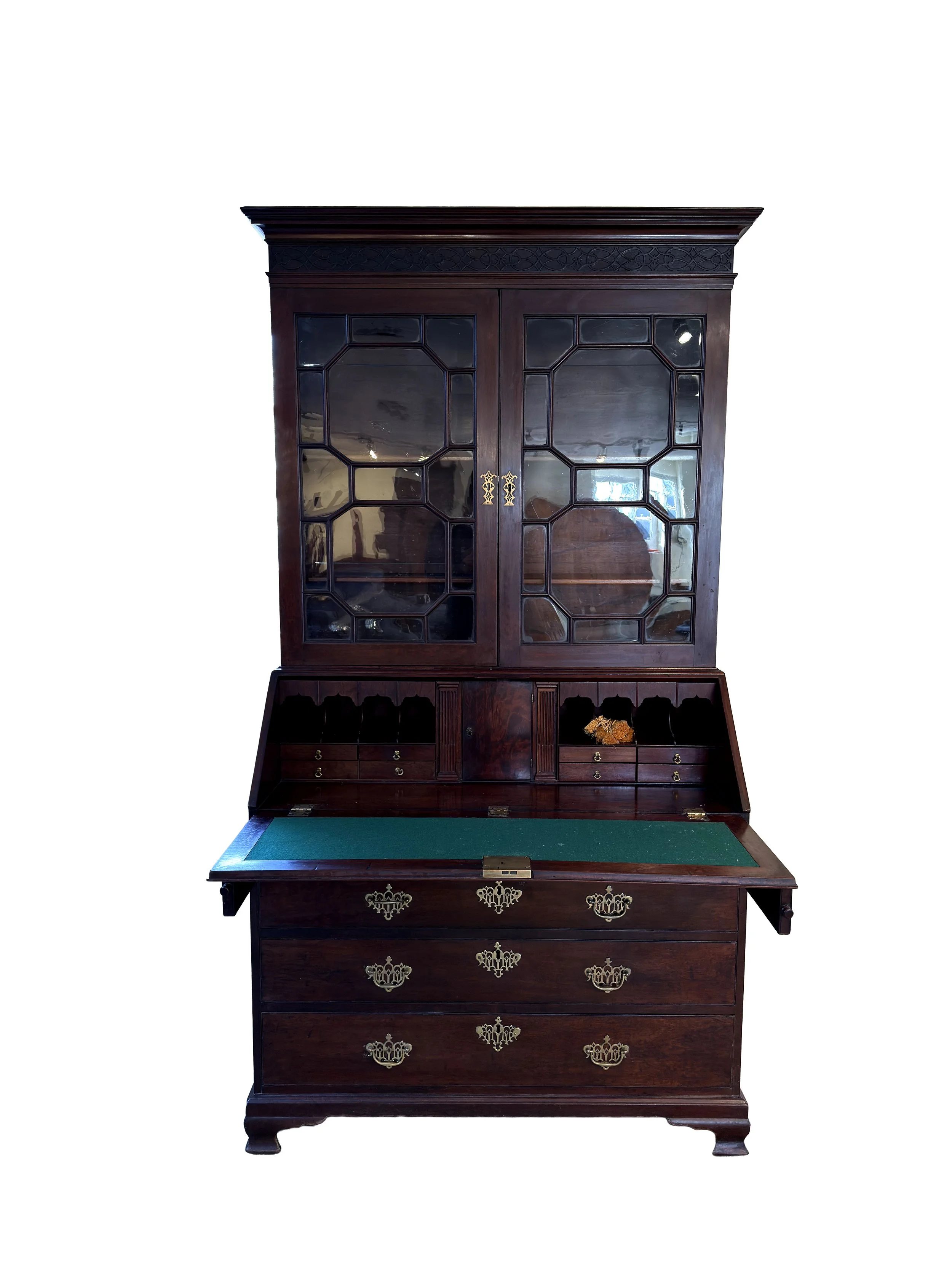
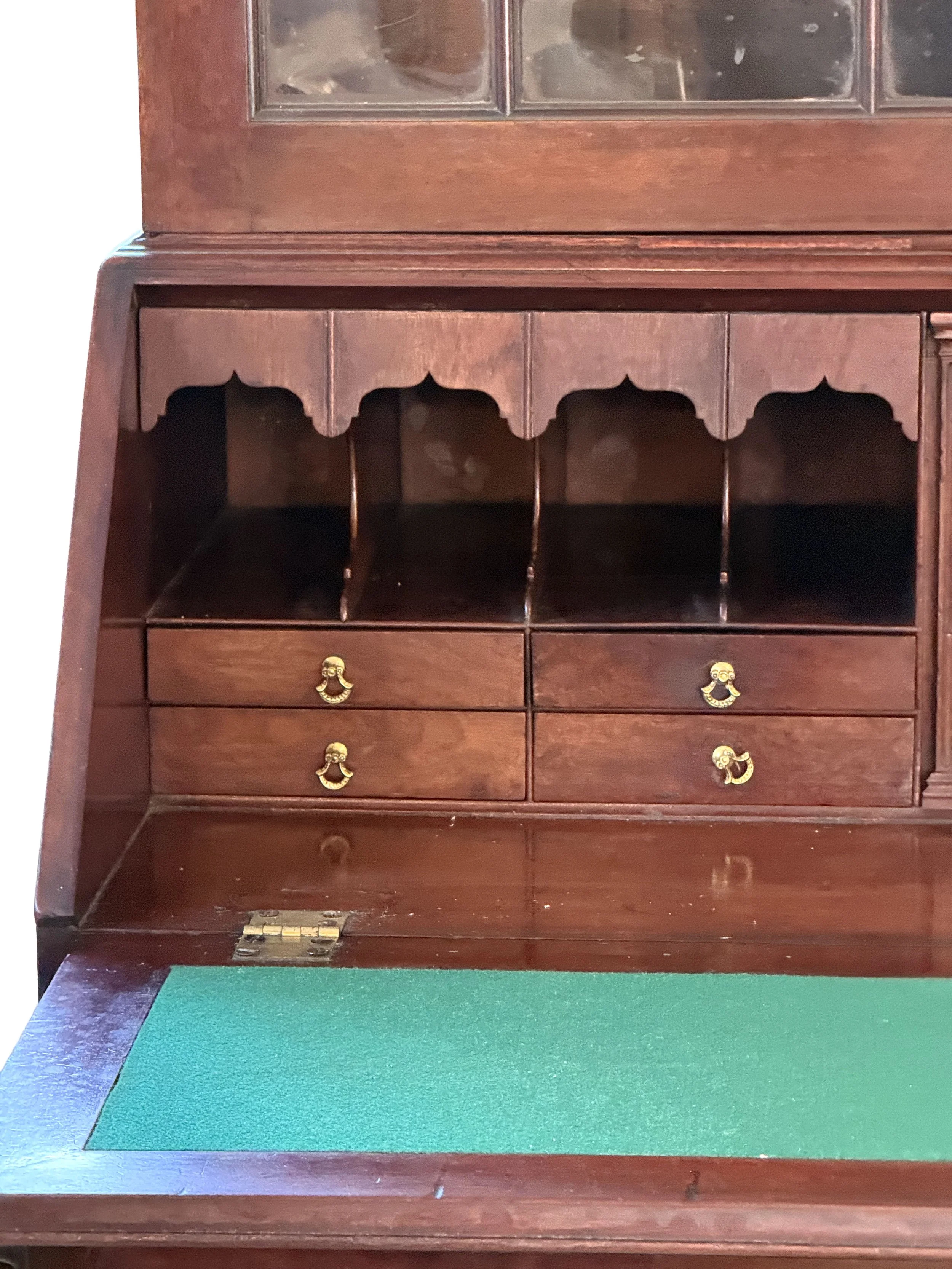
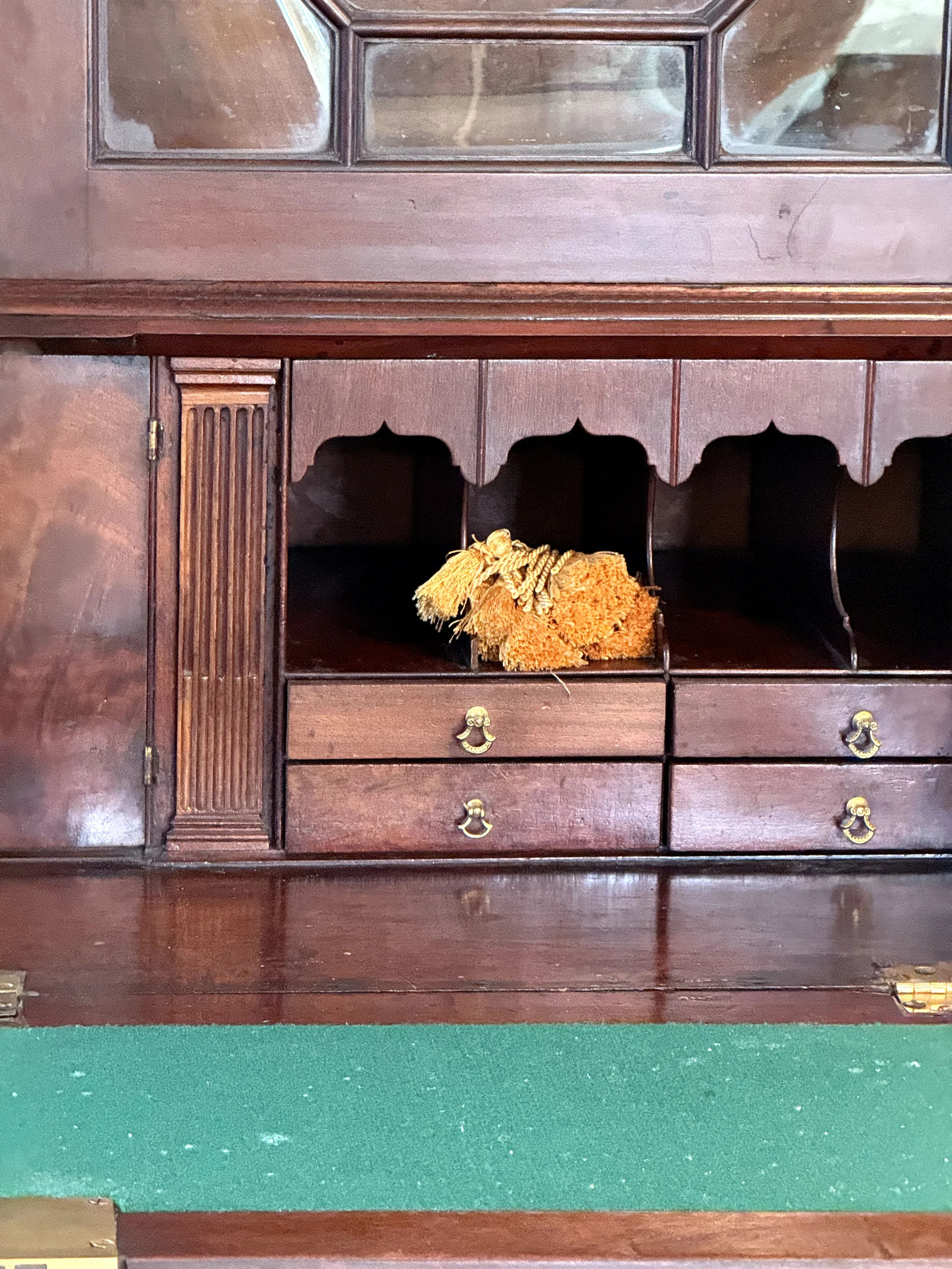
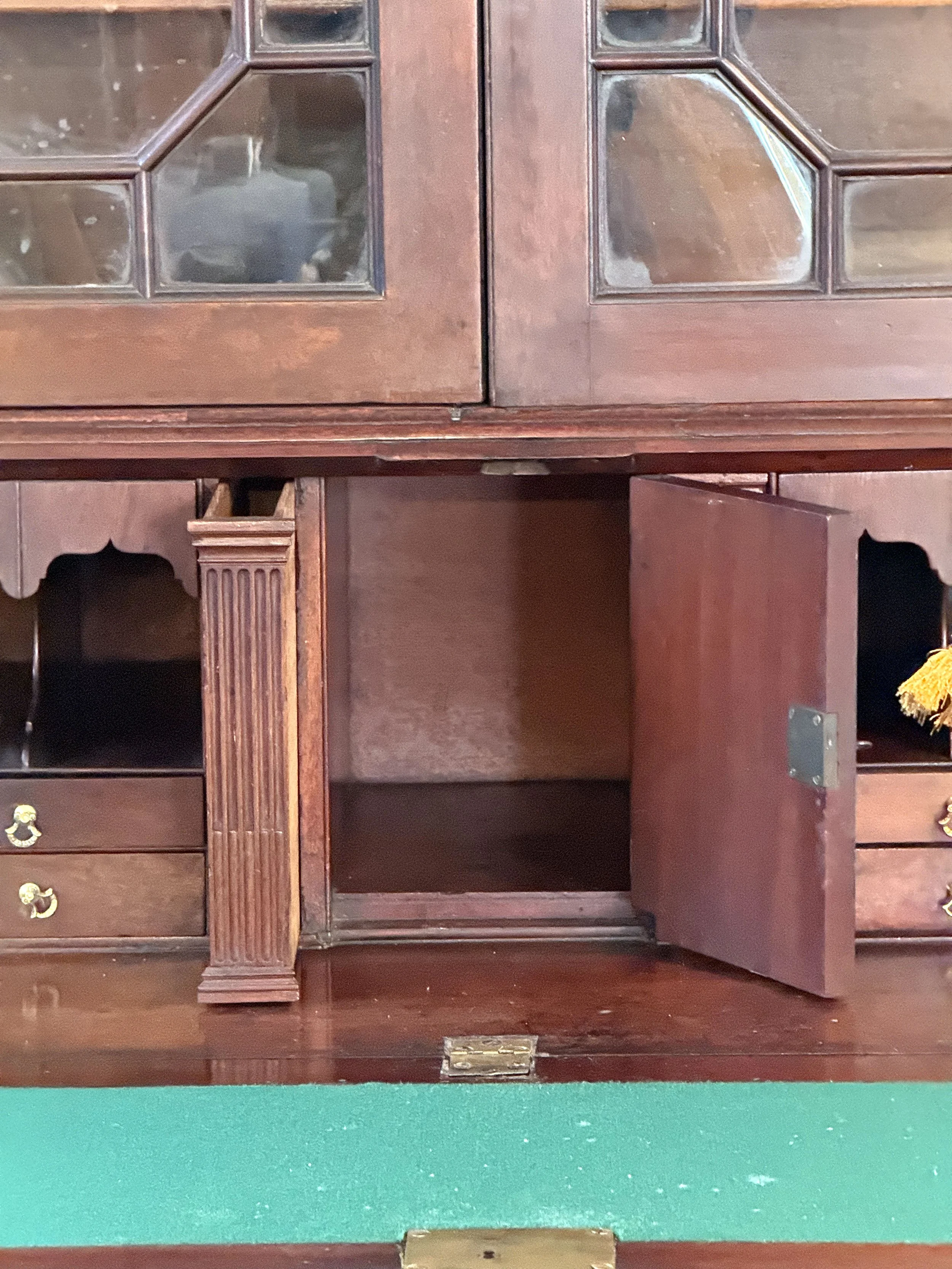
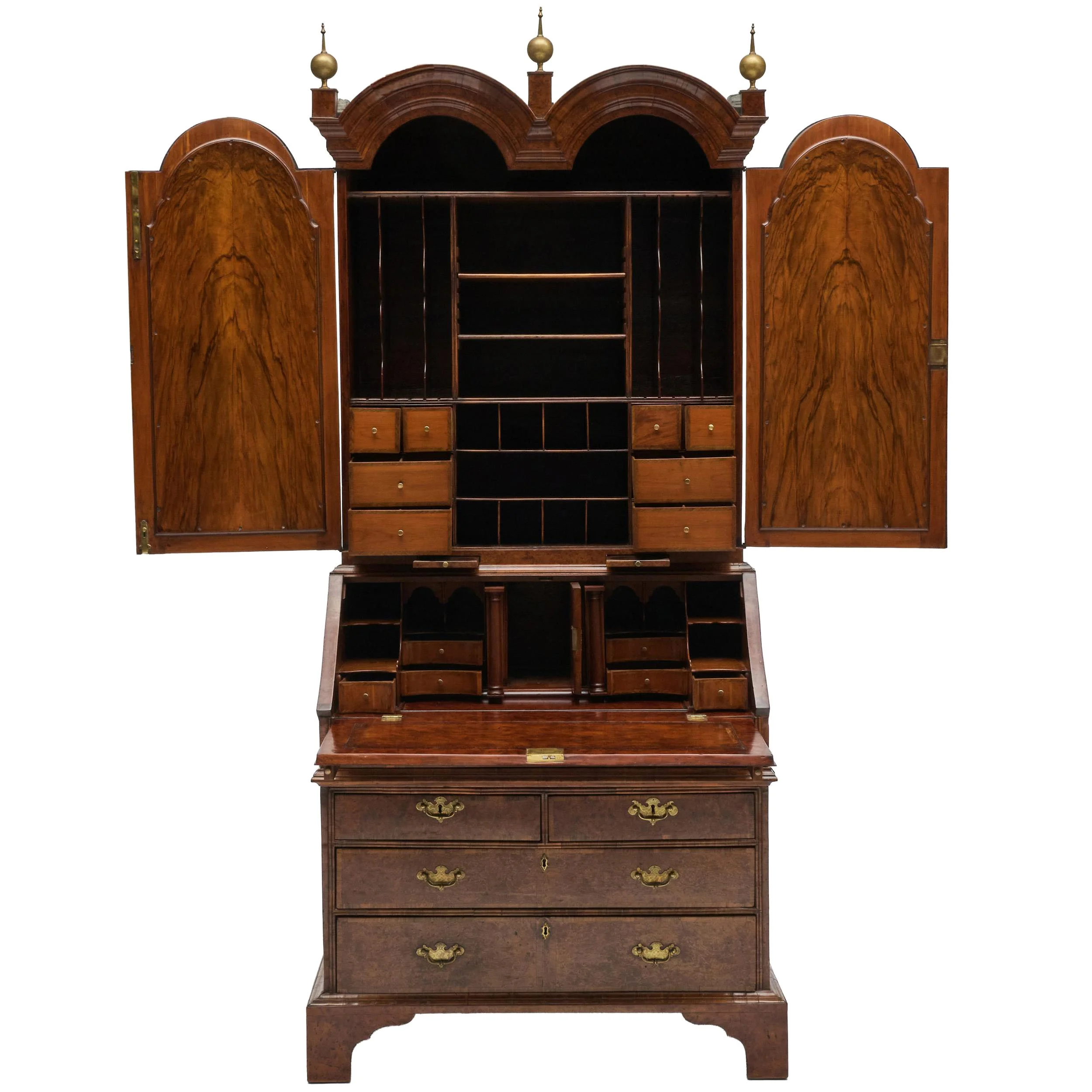
The lower section features a fall-front secretaire that smoothly lowers to reveal a neatly fitted interior. This interior includes a practical writing surface, small pigeonholes and drawers for stationery and documents, and additional compartments designed for orderly storage.
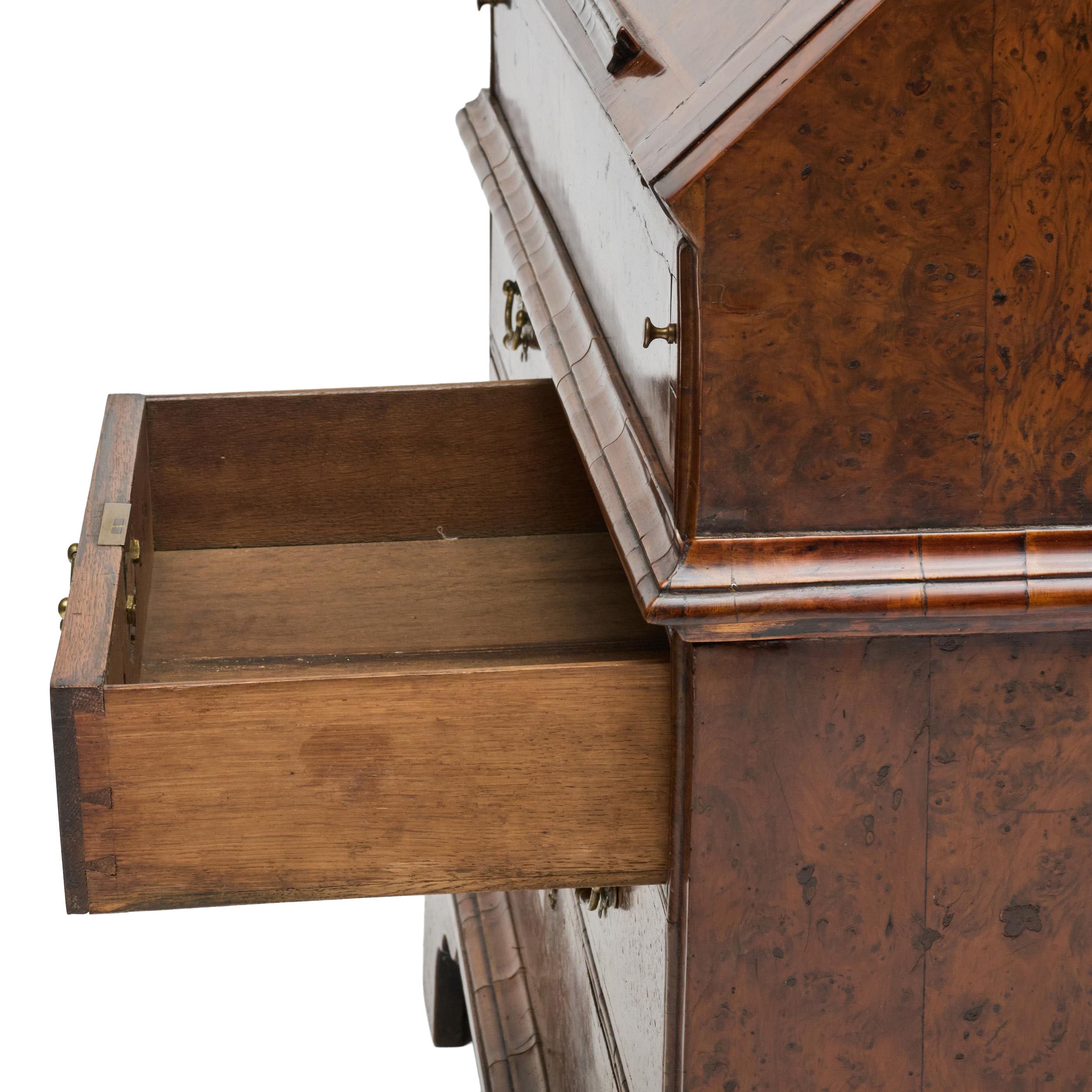
Beneath this fitted writing bay are two doors opening to spacious storage cabinets, providing further capacity for larger items. The entire piece stands on gently flaring French feet and exemplifies the restrained Neoclassical influence prevalent during the late Georgian era. This influence emphasizes symmetry, clean lines, and well-proportioned design, with subtle elegance rather than ostentation.
Size: 91.5" H x 47.25" W x 22.25" D
C. 1780, England
An exquisite George III mahogany servants’ secretary, crafted in two parts, comprises an upper bookcase section and a lower secretaire chest. These components are united by a harmonious sense of proportion and refined craftsmanship.
The glazed upper bookcase is adorned with intricately interlaced curved astragals (glazing bars) on the doors, providing both decorative appeal and protection for the shelves within. This design allows for an agreeable view of books and objects displayed inside.
The lower section features a fall-front secretaire that smoothly lowers to reveal a neatly fitted interior. This interior includes a practical writing surface, small pigeonholes and drawers for stationery and documents, and additional compartments designed for orderly storage.
Beneath this fitted writing bay are two doors opening to spacious storage cabinets, providing further capacity for larger items. The entire piece stands on gently flaring French feet and exemplifies the restrained Neoclassical influence prevalent during the late Georgian era. This influence emphasizes symmetry, clean lines, and well-proportioned design, with subtle elegance rather than ostentation.
Size: 91.5" H x 47.25" W x 22.25" D
C. 1780, England

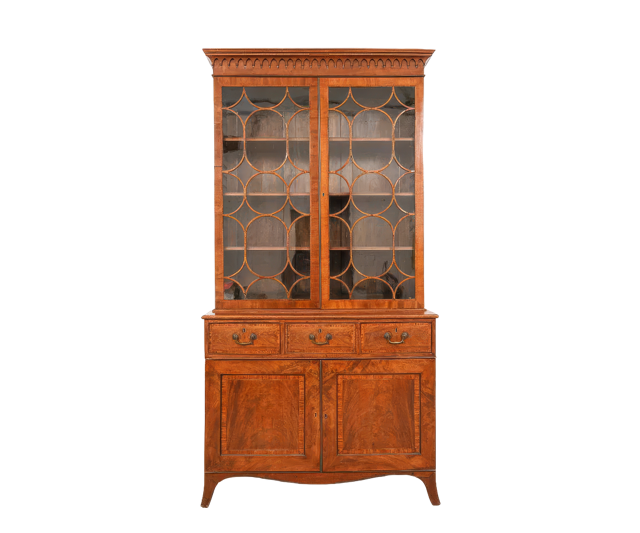 Image 1 of 7
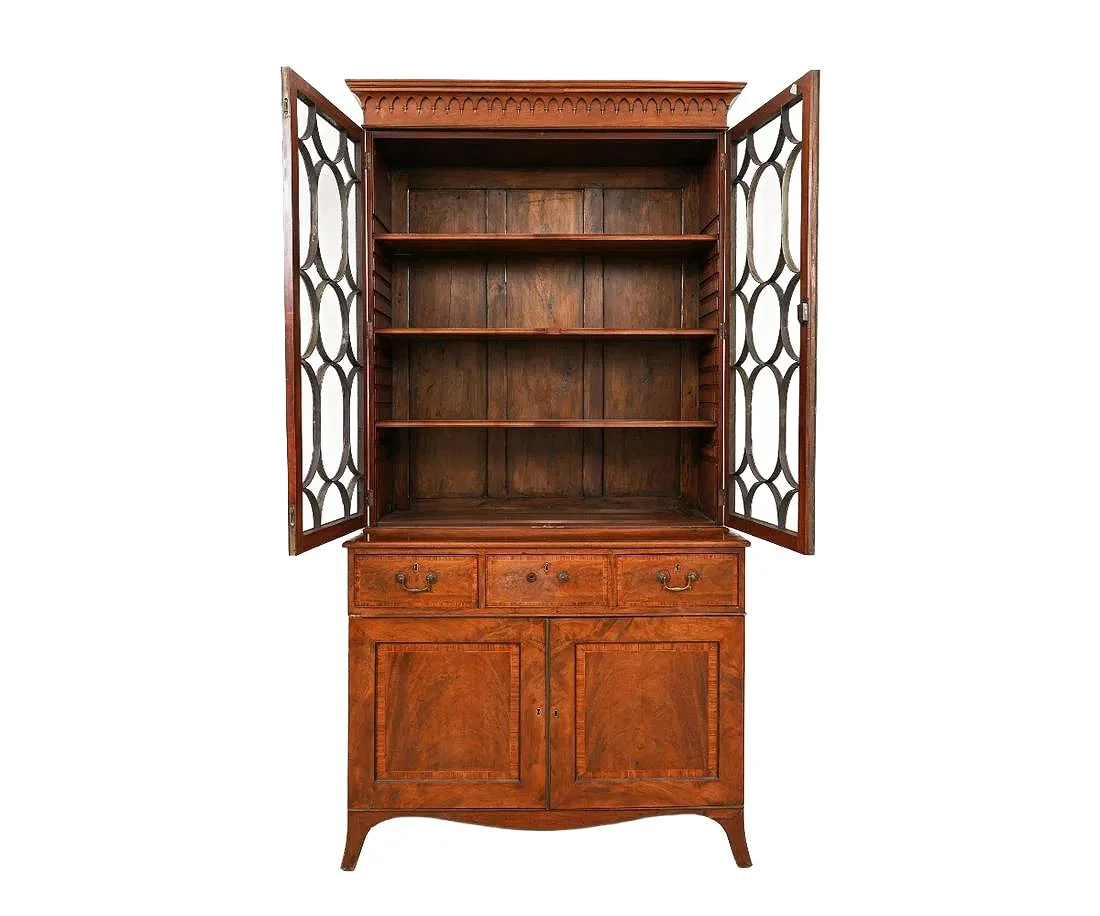 Image 2 of 7
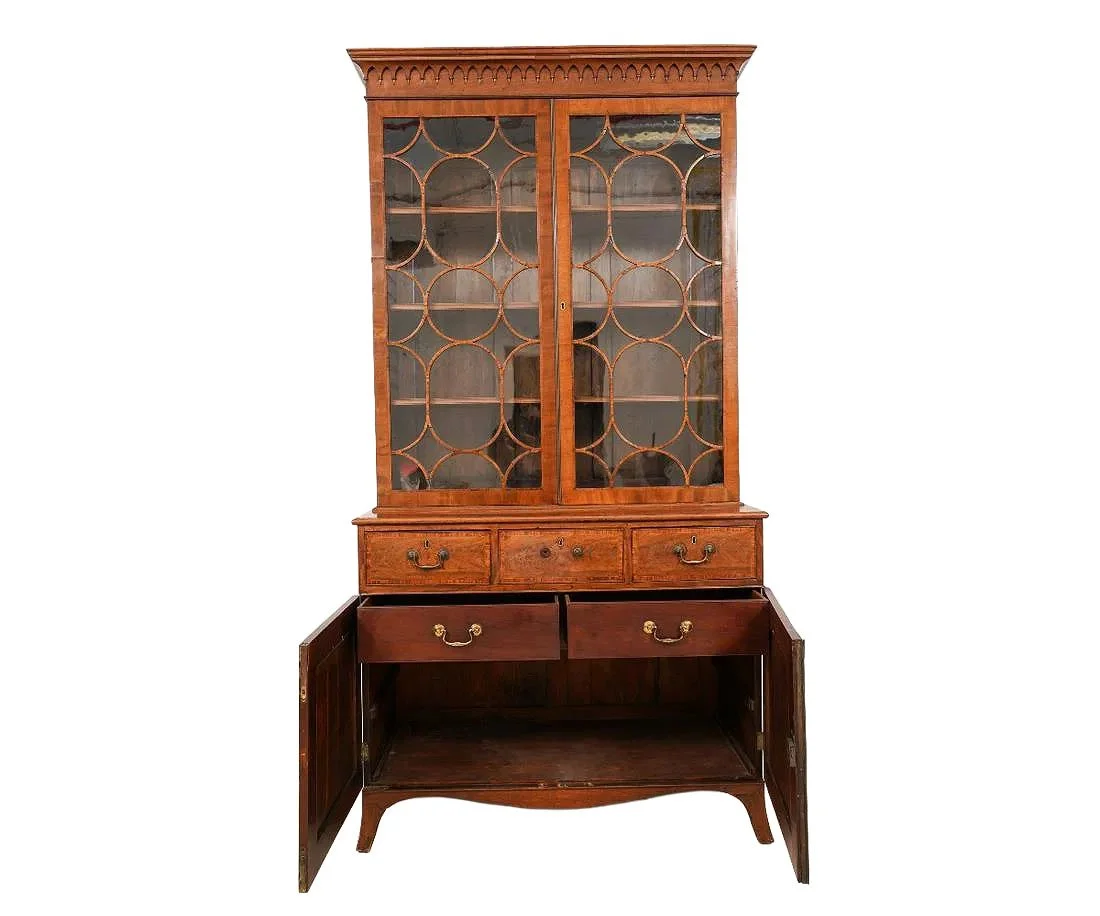 Image 3 of 7
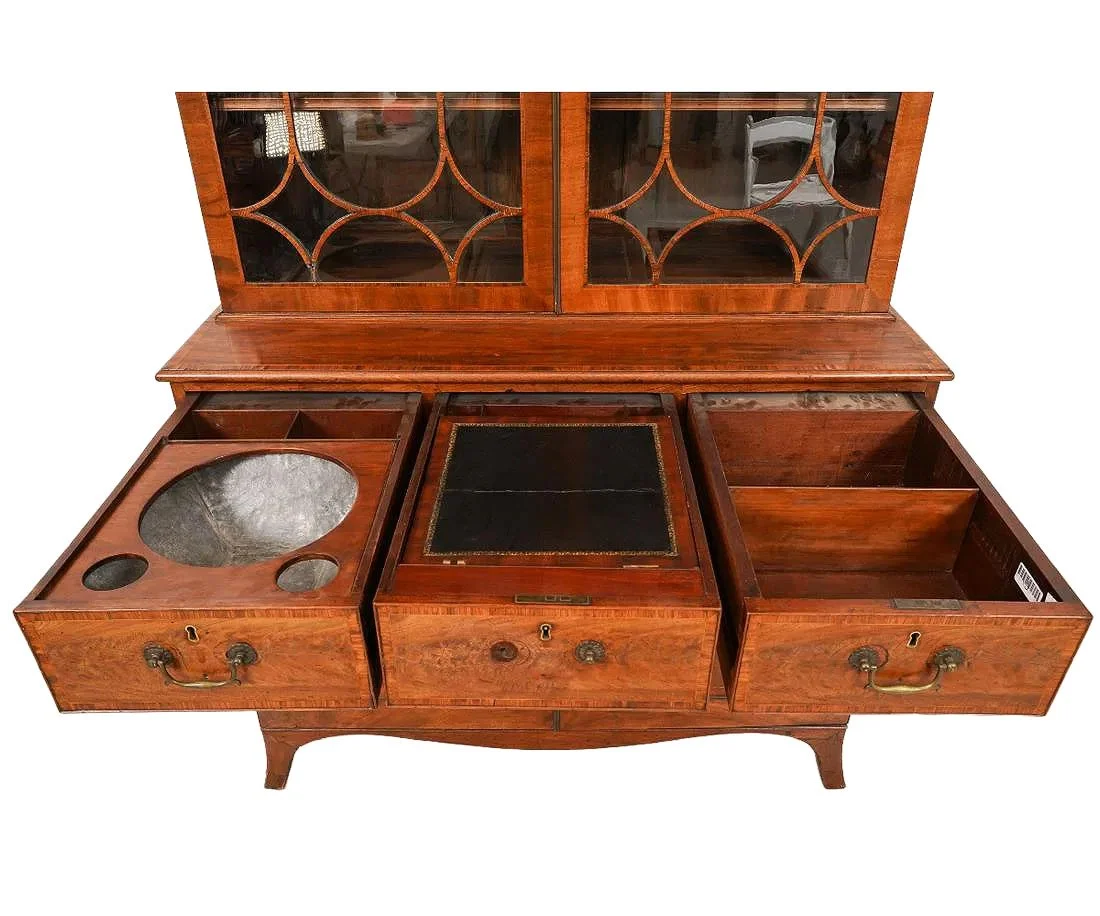 Image 4 of 7
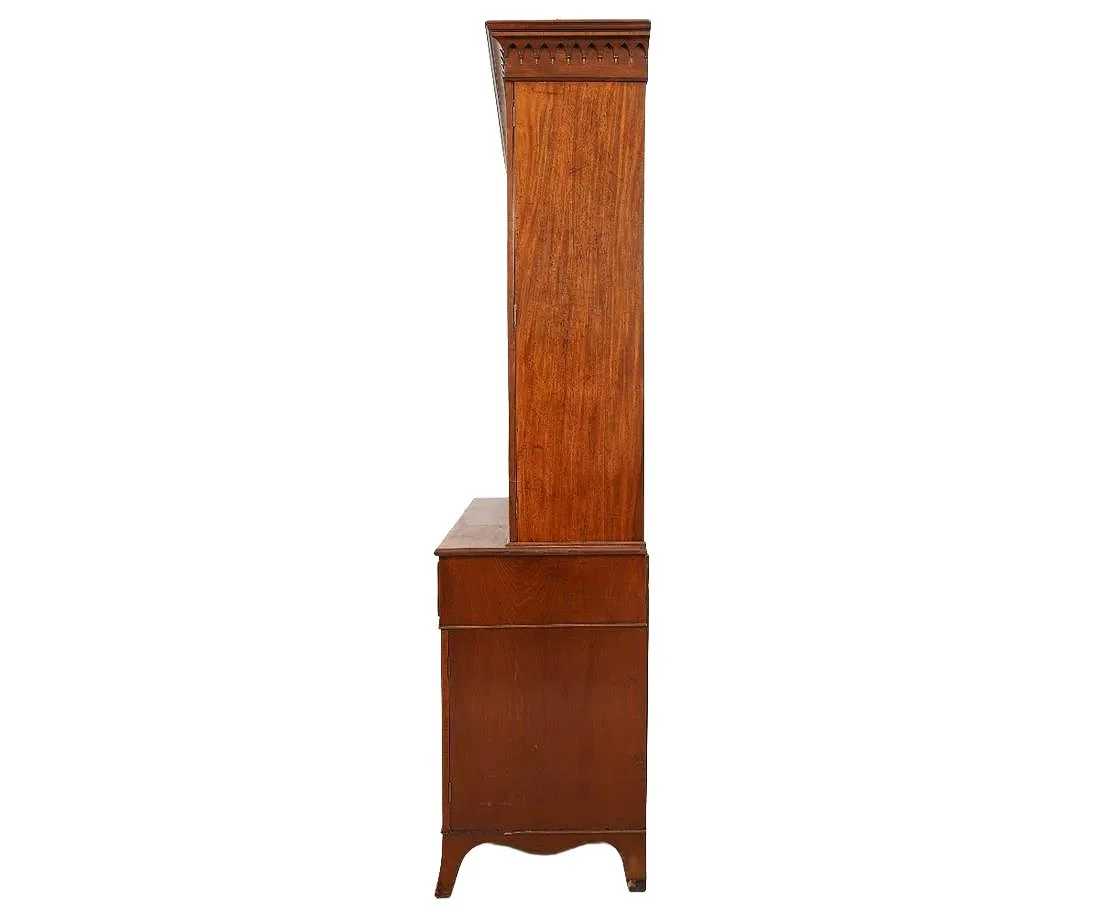 Image 5 of 7
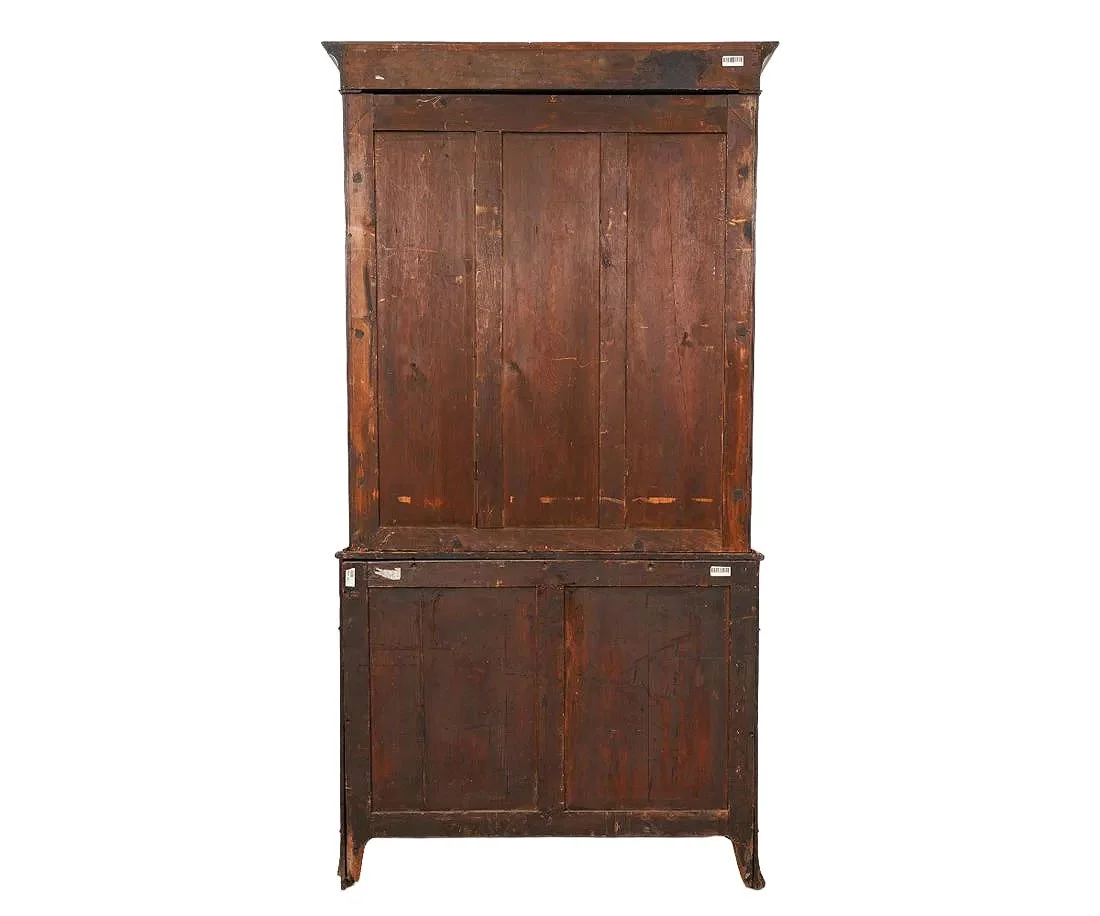 Image 6 of 7
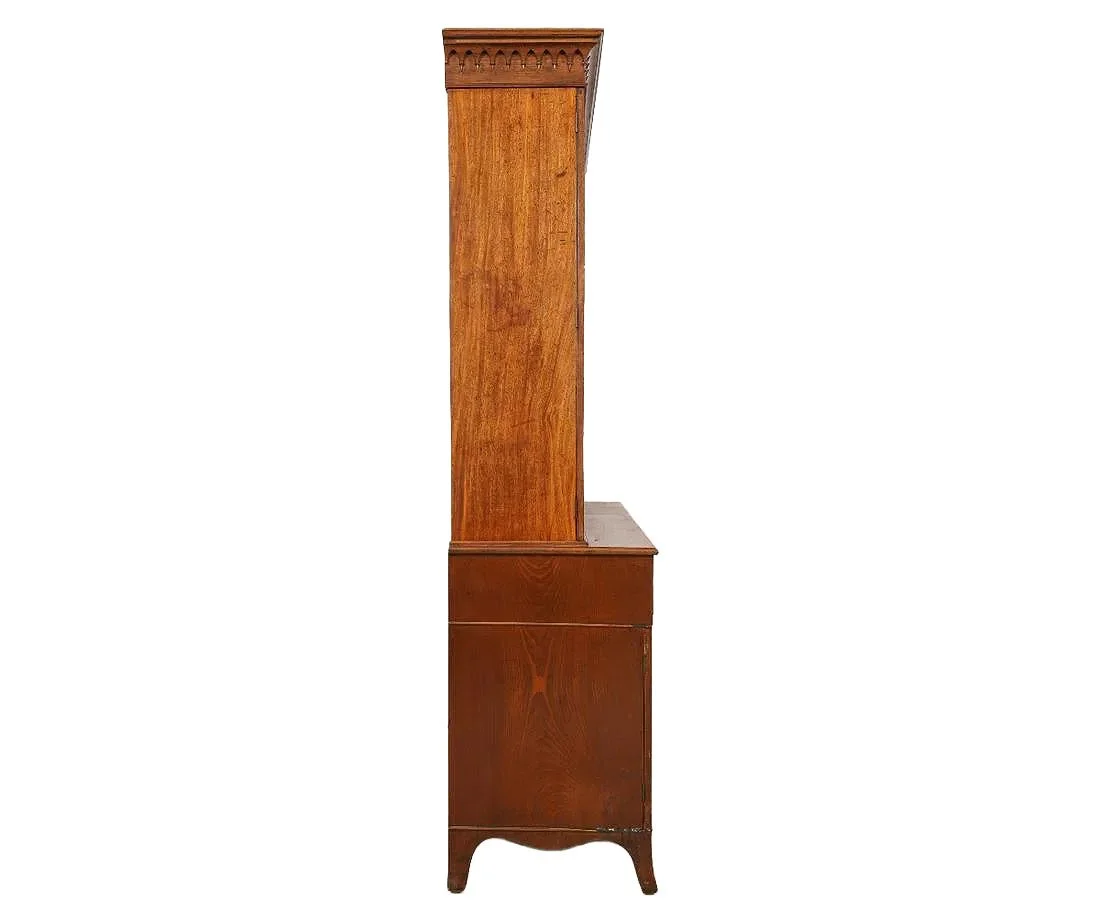 Image 7 of 7