
 Image 1 of 4
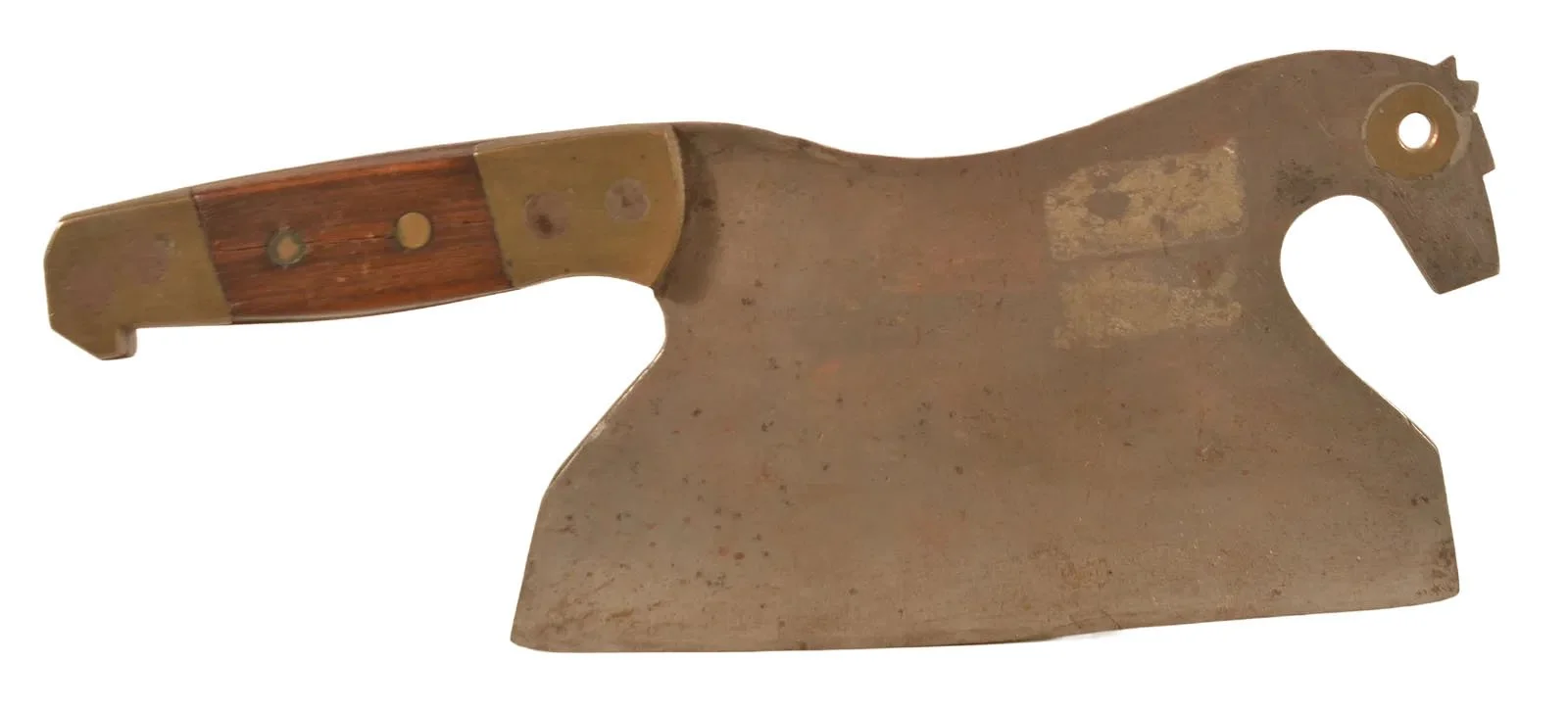 Image 2 of 4
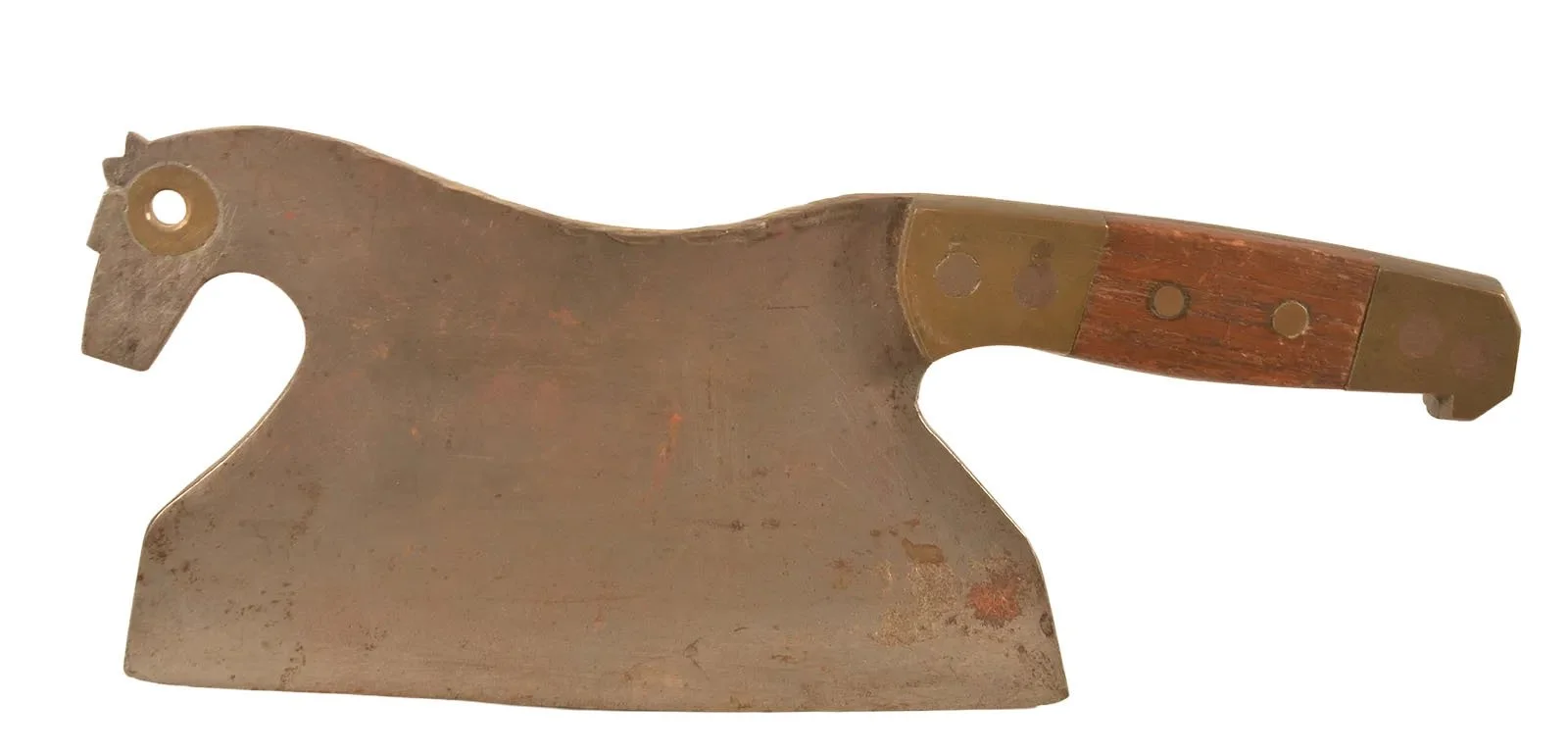 Image 3 of 4
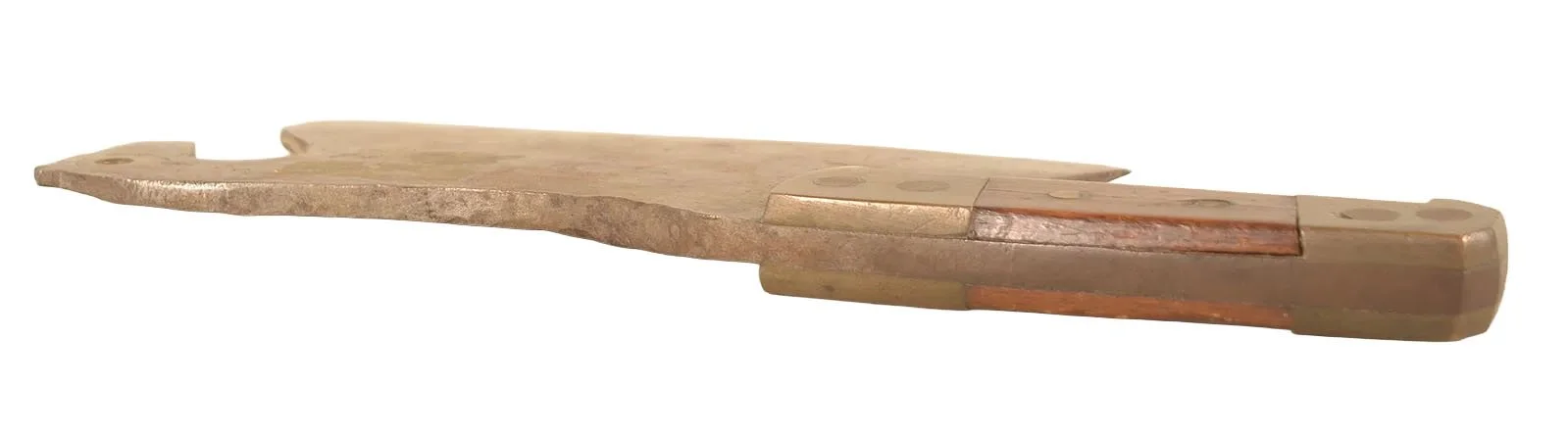 Image 4 of 4
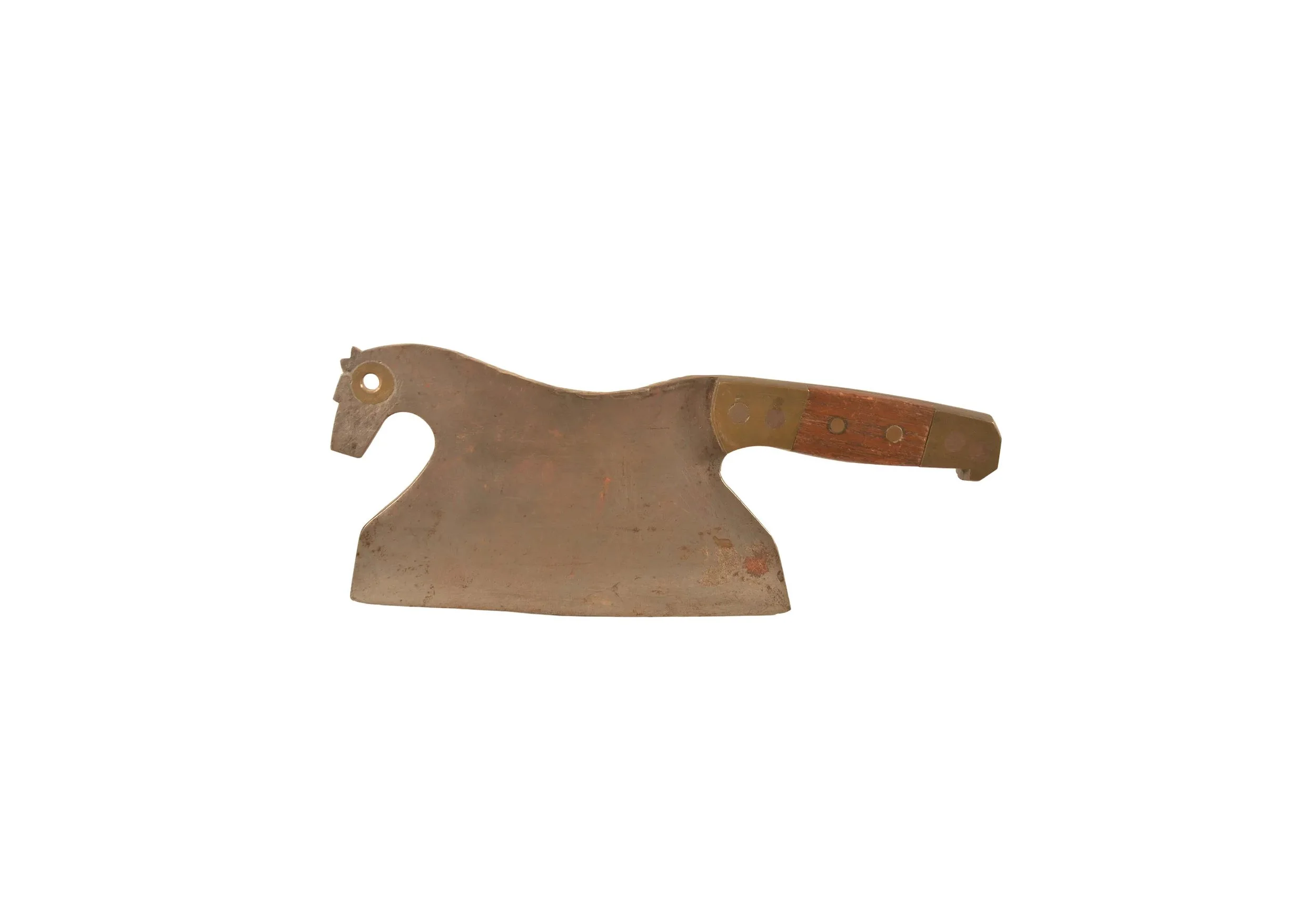
A masterfully crafted piece of historical culinary folk art, this late 19th-century figurative food chopper merges exceptional utility with striking sculptural form. Hand-forged by an expert cutler or blacksmith, the heavy-gauge carbon steel blade is meticulously hand-hammered into a distinct horse silhouette. The stylized cutout forming the horse’s eye serves a dual functional purpose, acting as an integrated hanging point for safe kitchen storage on a wall nail or peg.
Unlike modern stamped kitchenware, the spine reveals a beautifully irregular, undulating texture that bears the authentic hammer marks of its anvil-forged origin. This tool features a robust full-tang construction, where a single continuous slab of steel extends through the entirety of the grip. The handle scales are meticulously fashioned from rich antique wood, seamlessly sandwiched and pinned flush against the steel core. Substantial brass bolsters trim the front and butt of the handle, expertly engineered to provide forward-weight balance for efficient chopping while protecting the aged timber from splitting under heavy impact.
While closely resembling a standard meat cleaver, specialized figurative tools of this caliber were prized implements in high-end European kitchens—particularly across France and England—used to break down large blocks of hard loaf sugar, salt cones, or ice. Preserving its highly coveted, undisturbed deep brown and subtle reddish-amber patina, this remarkable specimen exhibits a tight, structurally sound assembly with minimal separation between the wood and metal. A premier acquisition for serious collectors of primitive Americana, antique kitchenalia, or exceptional ironwork, this chopper serves as an exquisite decorative object or a functional statement piece for the modern culinary enthusiast.
Size: 4 .25" H x 10.75" W
C. 1880, France
A masterfully crafted piece of historical culinary folk art, this late 19th-century figurative food chopper merges exceptional utility with striking sculptural form. Hand-forged by an expert cutler or blacksmith, the heavy-gauge carbon steel blade is meticulously hand-hammered into a distinct horse silhouette. The stylized cutout forming the horse’s eye serves a dual functional purpose, acting as an integrated hanging point for safe kitchen storage on a wall nail or peg.
Unlike modern stamped kitchenware, the spine reveals a beautifully irregular, undulating texture that bears the authentic hammer marks of its anvil-forged origin. This tool features a robust full-tang construction, where a single continuous slab of steel extends through the entirety of the grip. The handle scales are meticulously fashioned from rich antique wood, seamlessly sandwiched and pinned flush against the steel core. Substantial brass bolsters trim the front and butt of the handle, expertly engineered to provide forward-weight balance for efficient chopping while protecting the aged timber from splitting under heavy impact.
While closely resembling a standard meat cleaver, specialized figurative tools of this caliber were prized implements in high-end European kitchens—particularly across France and England—used to break down large blocks of hard loaf sugar, salt cones, or ice. Preserving its highly coveted, undisturbed deep brown and subtle reddish-amber patina, this remarkable specimen exhibits a tight, structurally sound assembly with minimal separation between the wood and metal. A premier acquisition for serious collectors of primitive Americana, antique kitchenalia, or exceptional ironwork, this chopper serves as an exquisite decorative object or a functional statement piece for the modern culinary enthusiast.
Size: 4 .25" H x 10.75" W
C. 1880, France